Kjellberg iQ 3000
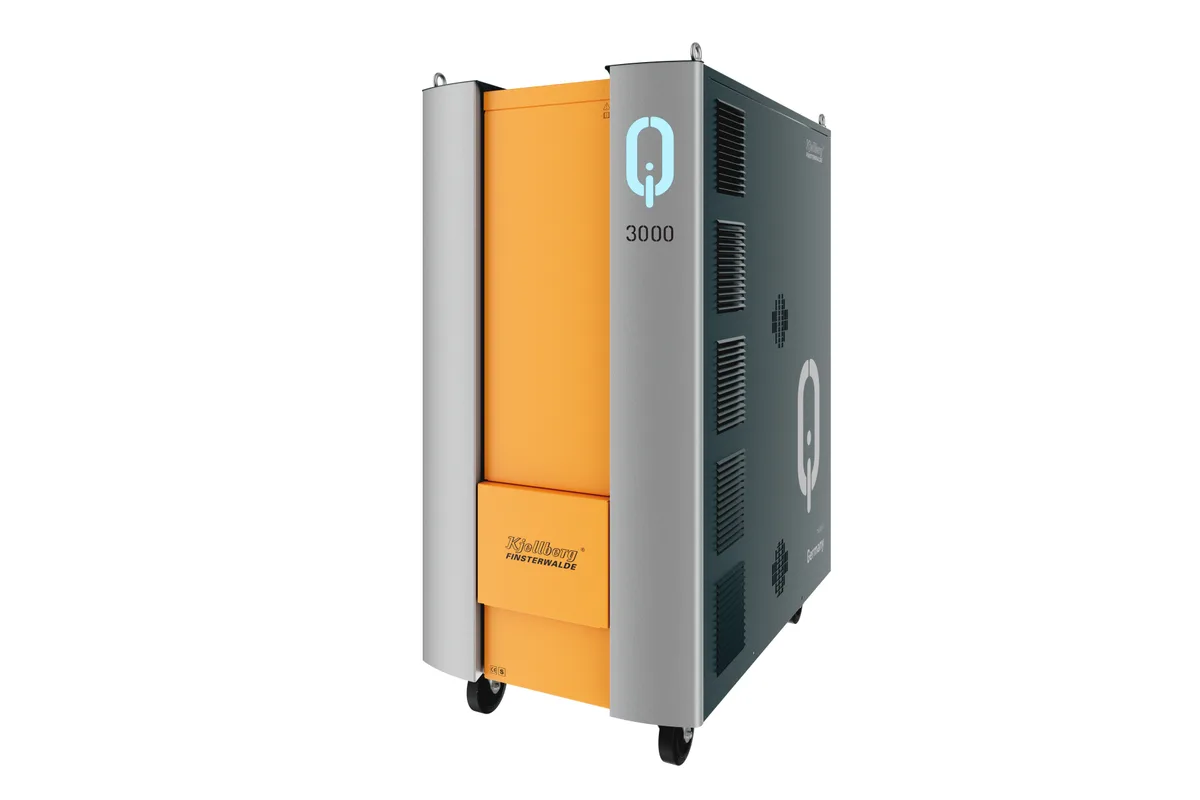
Image: kjellberg.de, Kjellberg
Key Specifications
cutting current
marking current
cutting range mild steel recommended
cutting range mild steel maximum
piercing mild steel
cutting range stainless steel maximum iq gas o2
How much does the Kjellberg iQ 3000 cost?
Price estimate
We do not have a price for the Kjellberg iQ 3000 that we can stand behind, so we show no number. Configuration, options and installation move the final price a long way: a quote is the reliable figure.
Overview
Kjellberg describes the iQ 3000 as the versatile model of its iQ-Series, and the figures bear that out. It is a 20 - 300 A plasma power source for automated cutting and marking that cuts mild steel up to 80 mm (3.1 in), with a recommended range of 0.5 - 60 mm (0.02 - 2.4 in) and piercing at 50 mm (2.0 in).
With the iQ-Gas version, all three materials line up. Mild steel, stainless steel and aluminium are each listed at an 80 mm maximum and 50 mm piercing, so a job shop can quote one thickness limit for whatever arrives. The iQ-Gas O2 version is narrower in the non-ferrous columns: stainless steel 60 mm maximum with 30 mm (1.2 in) piercing, aluminium 60 mm with 40 mm (1.6 in).
Several of the listed technologies carry their own thickness limits, and they are tighter than the power source's. Q-Bevel is given for material thicknesses from 6 to 50 mm. N2 plasma cutting of stainless steel and aluminium goes up to 60 mm. HiFinox applies from 1 to 6 mm. Q-Hole produces holes in mild steel at a diameter-to-thickness ratio of 0.75:1.
Installation figures sit between its siblings: a 125 A slow fuse and a maximum connected load of 72 kVA, against 35 kVA for the iQ 1500 and 109 kVA for the iQ 4500. The mains row lists 380 - 400 V, 415 - 440 V and 440 - 480 V at 50/60 Hz, the cabinet is 1150 x 695 x 1510 mm, and protection class is IP 21S.
Full Specifications
| Parameter | Value |
|---|---|
| Cutting Current | 20 - 300 A (at 100% d.c., ambient temperature 40 °C) |
| Marking Current | 5 - 60 A (at 100% d.c., ambient temperature 40 °C) |
| Cutting Range Mild Steel Recommended | 0.5 - 60 mm (0.02 - 2.4 in) |
| Cutting Range Mild Steel Maximum | 80 mm (3.1 in) |
| Piercing Mild Steel | 50 mm (2.0 in) |
| Cutting Range Stainless Steel Maximum Iq Gas O2 | 60 mm (2.4 in) |
| Piercing Stainless Steel Iq Gas O2 | 30 mm (1.2 in) |
| Cutting Range Stainless Steel Maximum Iq Gas | 80 mm (3.1 in) |
| Piercing Stainless Steel Iq Gas | 50 mm (2.0 in) |
| Cutting Range Aluminium Maximum Iq Gas O2 | 60 mm (2.4 in) |
| Piercing Aluminium Iq Gas O2 | 40 mm (1.6 in) |
| Cutting Range Aluminium Maximum Iq Gas | 80 mm (3.1 in) |
| Piercing Aluminium Iq Gas | 50 mm (2.0 in) |
| Cutting Gases Iq Gas O2 | O2, N2, Air |
| Cutting Gases Iq Gas | O2, N2, Air, Ar, H2, F5 |
| Marking Gases | Ar, N2, Air |
| Mains Voltage | 380 - 400 V, 50/60 Hz; 415 - 440 V, 50/60 Hz; 440 - 480 V, 50/60 Hz |
| Fuse Slow | 125 A |
| Max Connected Load | 72 kVA |
| Protection Class | IP 21S |
| Machine Dimensions | 1150 x 695 x 1510 mm (45.3 x 27.4 x 59.4 in) |
| Machine Weight | 298/318 kg (657/701 lb) |
Specifications sourced from kjellberg.de — verified 2026-10-06
Strengths & Limitations
Strengths
- With iQ-Gas, mild steel, stainless steel and aluminium are all listed at an 80 mm (3.1 in) maximum and 50 mm (2.0 in) piercing
- Mild steel recommended range of 0.5 - 60 mm (0.02 - 2.4 in)
- Cutting current of 20 - 300 A and marking current of 5 - 60 A at 100% d.c.
- Q-Bevel bevel cutting for material thicknesses from 6 to 50 mm
- Three mains voltage bands at 50/60 Hz in the standard table
- Integration via EtherCAT or RS-485
Limitations
- With iQ-Gas O2, stainless steel piercing drops to 30 mm and the maximum to 60 mm
- Q-Bevel is listed only up to 50 mm, below the 80 mm cutting maximum
- Needs a 125 A slow fuse and a maximum connected load of 72 kVA
- The mass row reads "298/318 kg" without saying which figure belongs to which version
Best For
Frequently Asked Questions
01
Kjellberg states that with a cutting current of up to 300 A the iQ 3000 cuts mild steel up to 80 mm thick. The table lists a recommended range of 0.5 - 60 mm (0.02 - 2.4 in) and piercing at 50 mm.
02
With the iQ-Gas version both are listed at an 80 mm maximum and 50 mm piercing. With iQ-Gas O2 the maximum is 60 mm for both, with piercing at 30 mm in stainless steel and 40 mm in aluminium. N2 plasma cutting of both metals is listed up to 60 mm.
03
The slow fuse is 125 A and the maximum connected load is 72 kVA. The mains voltages row covers 380 - 400 V, 415 - 440 V and 440 - 480 V, each at 50/60 Hz, so the same model is listed for all three supply bands.
04
Yes. Q-Bevel is listed for bevel cutting of material thicknesses from 6 to 50 mm. That limit is lower than the straight-cut maximum of 80 mm, which is normal for bevels because the torch travels a longer path through the plate.
More from Kjellberg
Other CNC Plasma Cutting
Lincoln Electric Tomahawk 2500
Arclight Dynamics Arc Max Elite 5x5
Ermak EPL 3/5 Axis Plasma 20120
Lincoln Electric Precision Plasma 3000
Machitech Silver Cut 5x10