DATRON neo Entry
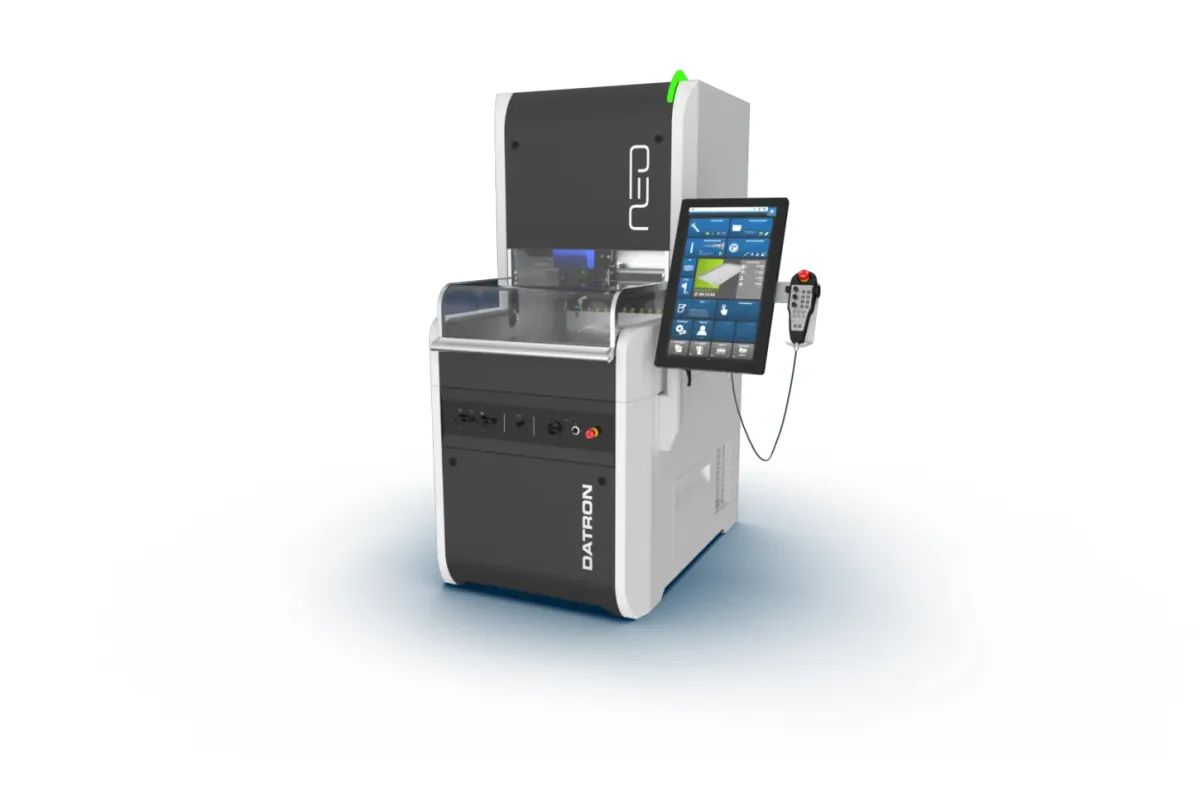
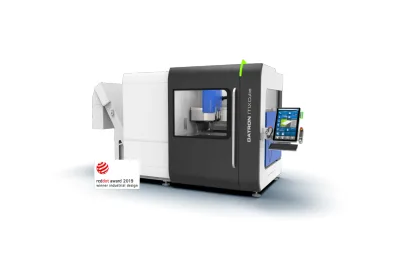
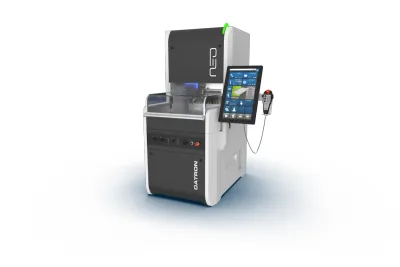
Image: datron.de, DATRON
Key Specifications
Max Spindle
Spindle Taper
Tool Capacity
Spindle Power
axes
x axis travel
How much does the DATRON neo Entry cost?
Price estimate
We do not have a price for the DATRON neo Entry that we can stand behind, so we show no number. Configuration, options and installation move the final price a long way: a quote is the reliable figure.
Overview
The DATRON neo Entry is the reduced version of the neo: the same 520 x 420 x 220 mm (20.5 x 16.5 x 8.7 in) travels and 500 mm x 400 mm x 175 mm (19.7 in x 15.7 in x 6.9 in) work envelope, with a 1.0 kW (1.3 hp) HF spindle that tops out at 27,000 rpm. The rest of the specification is scaled to that spindle.
Where the neo has 2.0 kW (2.7 hp) and 40,000 rpm, the neo Entry has half the power and about two thirds of the speed. Feed and rapid traverse are up to 12 m/min (472 ipm), against up to 28 m/min (1,102 ipm) on the neo. Tools are still held by direct shank. On the same part that means smaller cutters, lighter cuts and a longer cycle.
The equipment list is shorter too. The tool-holding fixture has 12 stations and is listed together with a tool length probe and the word optional, so confirm what a base machine includes. Workpiece measurement uses the 3D probe Entry, also optional. The control is DATRON next Entry, and DATRON states that no additional software options are available for it. No rotary axis appears: the axes row says 3, where the neo offers the DATRON Axis4. Minimum-quantity lubrication comes from a 2.5 liter tank through a 2-nozzle spray ring.
Construction is spelled out for this model: a mineral-cast portal and machine bed, an aluminium table and a steel stand. At approximately 700 kg (1,543 lb) it is only slightly lighter than the neo at approximately 740 kg (1,631 lb), so the two differ in spindle, tooling and control far more than in mass. With the operating terminal, a 24-inch multi-touch screen with hand-held control unit, it measures 1,320 mm x 1,300 mm x 1,855 mm (52.0 in x 51.2 in x 73.0 in).
Full Specifications
| Parameter | Value |
|---|---|
| Axes | 3 |
| X Axis Travel | 520 mm (20.5 in) |
| Y Axis Travel | 420 mm (16.5 in) |
| Z Axis Travel | 220 mm (8.7 in) |
| Work Envelope | 500 mm x 400 mm x 175 mm (19.7 in x 15.7 in x 6.9 in), Z = portal passage |
| Spindle Motor Power | 1.0 kW (1.3 hp) HF spindle |
| Max Spindle Speed | 27,000 rpm |
| Spindle Taper | Direct shank |
| Tool Capacity | 12 stations tool-holding fixture with tool length probe (optional) |
| CNC Control | DATRON next Entry (no additional software options available) |
| Operating Terminal | 24-inch multi-touch screen with hand-held control unit |
| Workpiece Measurement | 3D probe Entry (optional) |
| Coolant System | Minimum-quantity cooling lubrication, 2.5 liters coolant tank; 2-nozzle spray ring |
| Rapid Traverse Xyz | Up to 12 m/min (472 ipm) |
| Cutting Feed Rate | Up to 12 m/min (472 ipm) |
| Machine Dimensions | 1,320 mm x 1,300 mm x 1,855 mm (52.0 in x 51.2 in x 73.0 in) with operating terminal |
| Machine Dimensions Without Terminal | 805 mm x 1,300 mm x 1,880 mm (31.7 in x 51.2 in x 74.0 in) |
| Machine Weight | Approx. 700 kg (1,543 lb) |
Specifications sourced from datron.de — verified 2026-10-03
Strengths & Limitations
Strengths
- Same 500 mm x 400 mm x 175 mm (19.7 in x 15.7 in x 6.9 in) work envelope as the neo
- Mineral-cast portal and machine bed with an aluminium table on a steel stand, at approximately 700 kg (1,543 lb)
- 24-inch multi-touch screen with hand-held control unit, the same terminal description as the neo
- Compact footprint: 805 mm x 1,300 mm (31.7 in x 51.2 in) without the operating terminal
- Direct-shank HF spindle running to 27,000 rpm for small-tool work
Limitations
- 1.0 kW (1.3 hp) and 27,000 rpm, where the neo has 2.0 kW (2.7 hp) and 40,000 rpm
- Feed and rapid traverse are limited to 12 m/min (472 ipm); the neo is listed at up to 28 m/min (1,102 ipm)
- DATRON next Entry control: no additional software options are available
- The 12-station tool fixture with tool length probe and the 3D probe Entry are both marked optional
- No rotary axis option is listed, and the coolant tank holds 2.5 liters
Best For
Frequently Asked Questions
01
Spindle power and speed first: 1.0 kW (1.3 hp) and 27,000 rpm on the neo Entry, 2.0 kW (2.7 hp) and 40,000 rpm on the neo. The neo Entry lists 12 tool stations where the neo has 24, feed up to 12 m/min (472 ipm) where the neo reaches up to 28 m/min (1,102 ipm), and no rotary axis where the neo offers the DATRON Axis4. Its control is DATRON next Entry. Travels and work envelope are the same.
02
The table says no. The control is listed as DATRON next Entry with the note that no additional software options are available. The neo is listed with DATRON next, without that restriction, so the control is one of the points to weigh between the two machines.
03
DATRON lists a mineral-cast portal and machine bed, an aluminium table and a steel stand. The machine weighs approximately 700 kg (1,543 lb). Minimum-quantity lubrication is supplied from a 2.5 liter tank through a 2-nozzle spray ring.
04
Both are listed with the word optional. The tool row reads 12 stations tool-holding fixture with tool length probe (optional), and workpiece measurement is the 3D probe Entry (optional). Ask DATRON which of these a base machine includes and get the answer on the quotation.
05
With the operating terminal DATRON gives 1,320 mm x 1,300 mm x 1,855 mm (52.0 in x 51.2 in x 73.0 in). Without it the figures are 805 mm x 1,300 mm x 1,880 mm (31.7 in x 51.2 in x 74.0 in). The two rows state slightly different heights, so plan headroom around the larger one.
More from DATRON
Other Vertical Machining Centers (VMC)
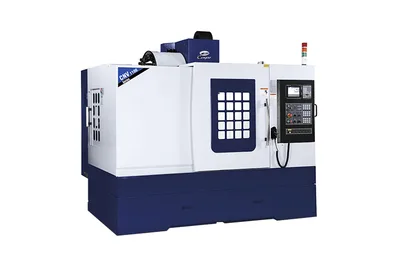
Campro CNV-1100
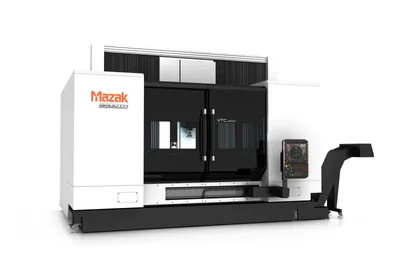
Mazak VTC-800/30SR
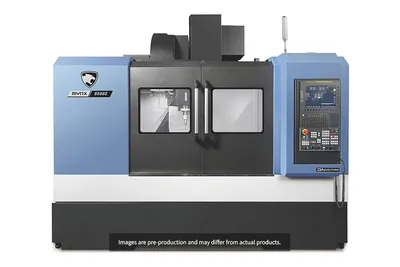
DN Solutions MYNX 9500
AXA VPC 50 power
Haas VF-2YT