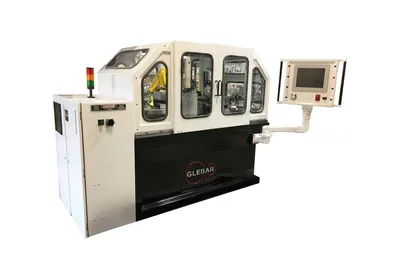
Danobat IRDc
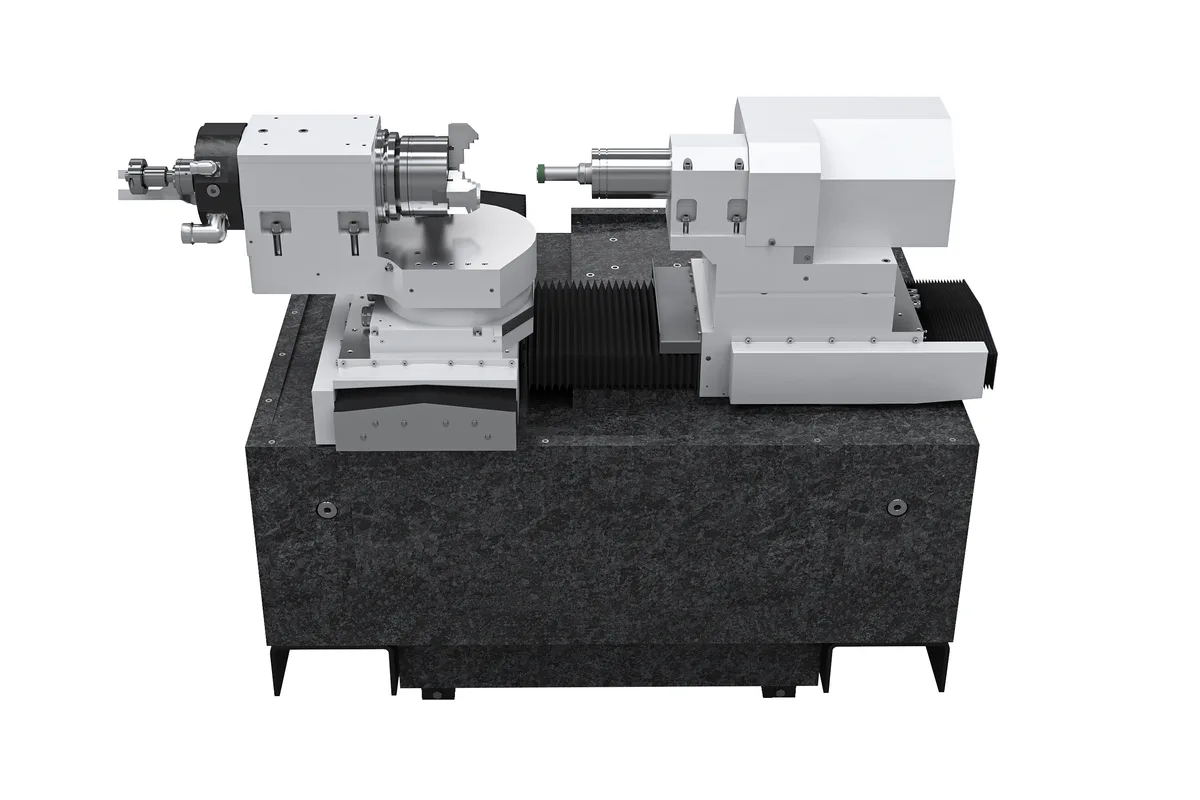
Image: danobat.com, Danobat
Key Specifications
max internal grinding diameter
max external grinding diameter
max external grinding length
max swing diameter
max workpiece weight incl clamping
x axis travel
How much does the Danobat IRDc cost?
Price estimate
We do not have a price for the Danobat IRDc that we can stand behind, so we show no number. Configuration, options and installation move the final price a long way: a quote is the reliable figure.
Overview
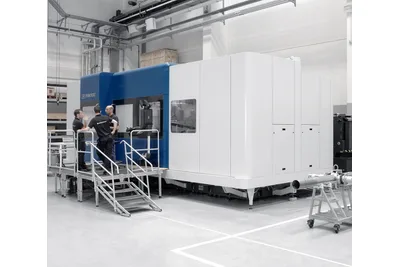
The Danobat IRDc is a single-purpose machine: an Overbeck grinder set up for regrinding the worn punches and dies of can production. Danobat says it handles every punch, ironing die and redraw die used in canmaking, and covers ID, OD, radius and profile grinding in one compact machine.
Its capacities follow from the tooling it serves. Internal and external grinding diameters both go up to 100 mm (3.9 in), and the external grinding length is 254 mm (10 in), which is punch territory. Swing is 215 mm (8.5 in) and the workpiece with its clamping system may weigh 80 kg (176 lb). Axis travels are 400 mm (15.75 in) in X and 300 mm (11.81 in) in Z, and the B0 axis swivels +91° / -15° so that nose radii and die back angles are ground in the same clamping as the diameters.
Danobat publishes results rather than spindle data. On dies it quotes Ra < 0.03 μm, runout < 2.5 μm and roundness tighter than 0.5 μm. On punches it quotes major diameters held to ±2.5 μm with surface finishes between Ra 0.05 and 0.08 μm. These are process outcomes on canmaking tools, so they depend on wheel, dressing and coolant as much as on the machine.
The second half of the offer is unattended running. The IRDc can be equipped with a robotic cell for dies, with shifts of up to 11 hours without operator intervention and up to 90 dies finished per load. DoGrind+ supplies pre-programmed cycles for standard geometries, automatic profile correction and a graphical catalog of saved custom shapes. The X and Z strokes, the swing and the B0 range are those of the IRD-300.
Full Specifications
| Parameter | Value |
|---|---|
| Max Internal Grinding Diameter | 100 mm (3.9 in) |
| Max External Grinding Diameter | 100 mm (3.9 in) |
| Max External Grinding Length | 254 mm (10 in) |
| Max Swing Diameter | 215 mm (8.5 in) |
| Max Workpiece Weight Incl Clamping | 80 kg (176 lb) |
| X Axis Travel | 400 mm (15.75 in) |
| Z Axis Travel | 300 mm (11.81 in) |
| B0 Axis Swivel | +91° / -15° |
| Die Grinding Results | Ra < 0.03 μm, runout < 2.5 μm, roundness tighter than 0.5 μm |
| Punch Grinding Results | major diameters ±2.5 μm, surface finish Ra 0.05 to 0.08 μm |
| Robotic Cell Capacity | up to 90 dies, shifts of up to 11 hours without operator intervention (optional robotic cell) |
Specifications sourced from danobat.com — verified 2026-10-05
Strengths & Limitations
Strengths
- Covers punches, ironing dies and redraw dies on one machine, with ID, OD, radius and profile grinding
- External grinding length of 254 mm (10 in) for can punches, against 100 mm (3.94 in) on the IRD-300
- Published die results: Ra < 0.03 μm, runout < 2.5 μm, roundness tighter than 0.5 μm
- Optional robotic cell runs up to 90 dies and shifts of up to 11 hours without an operator
- Pre-programmed canmaking cycles and automatic profile correction in DoGrind+
Limitations
- Grinding diameters stop at 100 mm (3.9 in) inside and outside, so it is not a general-purpose grinder
- The robotic cell is an option, and Danobat describes it for dies rather than for punches
- No internal grinding length, spindle count or machine dimensions appear in the IRDc table
- Software and cycles are dedicated to canmaking geometries
Best For
Frequently Asked Questions
01
Canmaking tooling. Danobat states it is built for canmakers to bring worn tools back into production and that it handles every punch, ironing die and redraw die used in canmaking. On punches it grinds the OD, steps and nose transitions; on dies the back angles, lands and faces, all in one clamping.
02
For dies: Ra < 0.03 μm, runout < 2.5 μm and roundness tighter than 0.5 μm. For punches: major diameters within ±2.5 μm and surface finishes between Ra 0.05 and 0.08 μm. They are stated as results on canmaking tools, not as machine positioning figures, and no axis accuracy is published.
03
With the robotic cell, Danobat describes shifts of up to 11 hours with no operator intervention, with up to 90 dies finished from one load. The cell is something the machine can be equipped with, so it has to be ordered. Automatic profile correction in the software is what keeps the profile consistent across such a run.
04
The two share a 400 mm (15.75 in) X stroke, a 300 mm (11.81 in) Z stroke, a +91° / -15° B0 swivel and an 80 kg (176 lb) weight limit. The IRDc narrows the diameters to 100 mm (3.9 in) and lengthens external grinding to 254 mm (10 in), where the IRD-300 grinds bores up to 200 mm (7.87 in) over 100 mm (3.94 in).
Videos

DANOBAT
More from Danobat
Other CNC Grinding Machines
Junker QUICKPOINT 1000
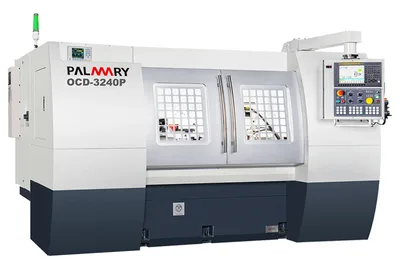
Palmary OCD-3220P
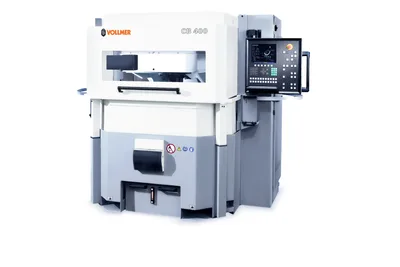
Vollmer CB 400 / CBF 400
Mikrosa Kronos M
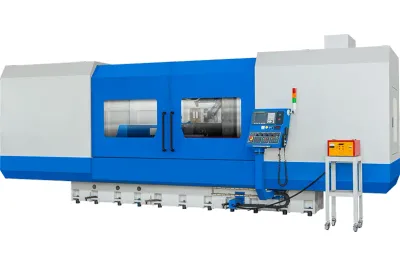
Supertec TPL-2460CNC