Mikrosa Kronos M
Key Specifications
model variant
workpiece length max infeed grinding
grinding wheel diameter max
grinding wheel width max
grinding wheel bore
grinding wheel peripheral speed
How much does the Mikrosa Kronos M cost?
Estimated price range
Our best estimate for a cnc grinding machine in this class — not a quote from United Grinding (Mikrosa). Configuration moves it a long way.
Overview
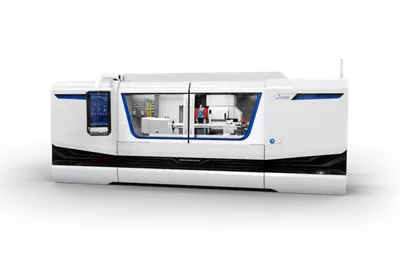
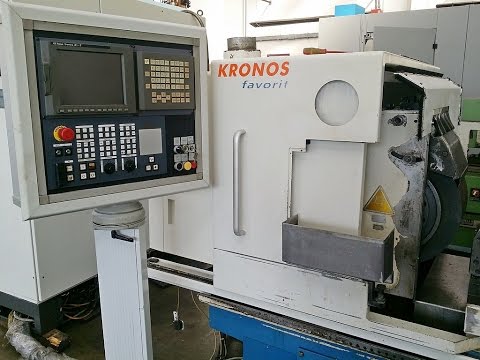
The Mikrosa Kronos M is a centerless grinder, and the figures here are those of the KRONOS M 400. It sets a grinding wheel of up to 610 mm in diameter and 400 mm in width against a regulating wheel of up to 350 mm by 400 mm, and in infeed grinding it takes workpieces up to 395 mm long.
The 400 mm wheel width is the figure to read first. The 395 mm limit for infeed grinding follows from it, because a part ground by plunging has to sit inside the width of both wheels. The table gives no workpiece diameter range, so that has to be confirmed for your part family.
Grinding wheel drive power is listed as 37/51 kW. Peripheral speed is 63 m/s, and 90/120 m/s for CBN is listed as an option. Drive power and wheel speed are best chosen together with the abrasive, so ask which motor is paired with which speed. The grinding wheel bore is 304.8 mm.
The regulating wheel has its own 5.7 kW drive and an rpm range of 5...450 rpm. Its dressing speed is 450 rpm, the top of that range, so the wheel is dressed at full speed and then slowed to control the rotation of the part. Three regulating wheel bores are listed, 127/152/177,8 mm, which matters if you already hold wheel stock.
Floor space is 5,696 x 3,330 mm, maximum height is 2,300 mm and the machine weighs 11 t. The Schaudt CamGrind L, a between-centers machine from the same group, weighs 12-14 t as the CamGrind L1, so the foundation work is of a similar order.
Full Specifications
| Parameter | Value |
|---|---|
| Model Variant | KRONOS M 400 |
| Workpiece Length Max Infeed Grinding | 395 mm |
| Grinding Wheel Diameter Max | 610 mm |
| Grinding Wheel Width Max | 400 mm |
| Grinding Wheel Bore | 304.8 mm |
| Grinding Wheel Peripheral Speed | 63 m/s |
| Grinding Wheel Peripheral Speed Cbn | 90/120 m/s (option) |
| Grinding Wheel Drive Power | 37/51 kW |
| Regulating Wheel Diameter Max | 350 mm |
| Regulating Wheel Width Max | 400 mm |
| Regulating Wheel Bore | 127/152/177,8 mm |
| Regulating Wheel RPM Range | 5...450 rpm |
| Regulating Wheel Dressing Speed | 450 rpm |
| Regulating Wheel Drive Power | 5.7 kW |
| Floor Space Required | 5,696 x 3,330 mm |
| Height Max | 2,300 mm |
| Machine Weight | 11 t |
Specifications sourced from cdn.grinding.com — verified 2026-10-03
Strengths & Limitations
Strengths
- Grinding wheel up to 610 mm in diameter and 400 mm wide
- CBN peripheral speeds of 90/120 m/s are available as an option above the 63 m/s base figure
- Grinding wheel drive power of 37/51 kW
- The regulating wheel has its own 5.7 kW drive with a range of 5...450 rpm
- Three regulating wheel bores are listed: 127/152/177,8 mm
Limitations
- Infeed grinding is limited to workpieces 395 mm long
- The 90/120 m/s CBN speeds are an option; the base peripheral speed is 63 m/s
- Needs 5,696 x 3,330 mm of floor space and a foundation for 11 t
- The table states no workpiece diameter range
Best For
Frequently Asked Questions
01
The grinding wheel is up to 610 mm in diameter and 400 mm wide on a 304.8 mm bore. The regulating wheel is up to 350 mm in diameter and 400 mm wide, with bores of 127/152/177,8 mm.
02
In infeed grinding the maximum workpiece length is 395 mm, just inside the 400 mm width of the grinding and regulating wheels. Mikrosa's table for this model does not state a workpiece diameter range, so give the diameters of your parts when you ask for a quotation.
03
Grinding wheel peripheral speed is 63 m/s. For CBN, 90/120 m/s is listed as an option. Grinding wheel drive power is 37/51 kW, and the table does not say which power goes with which speed, so confirm the pairing for the abrasive you intend to run.
04
It has a separate 5.7 kW drive with a range of 5...450 rpm. The regulating wheel dressing speed is 450 rpm, which is the top of that range. In grinding, the low end of the range is what sets how fast the workpiece turns.
05
The footprint is 5,696 x 3,330 mm and the maximum height is 2,300 mm. Machine weight is 11 t. Allow extra room around that footprint for wheel changes, since both wheels are 400 mm wide and the grinding wheel is up to 610 mm in diameter.
Videos

grindingmachines1
Mimu Mach

Mimu Mach