TRUMPF TruLaser 5030 fiber
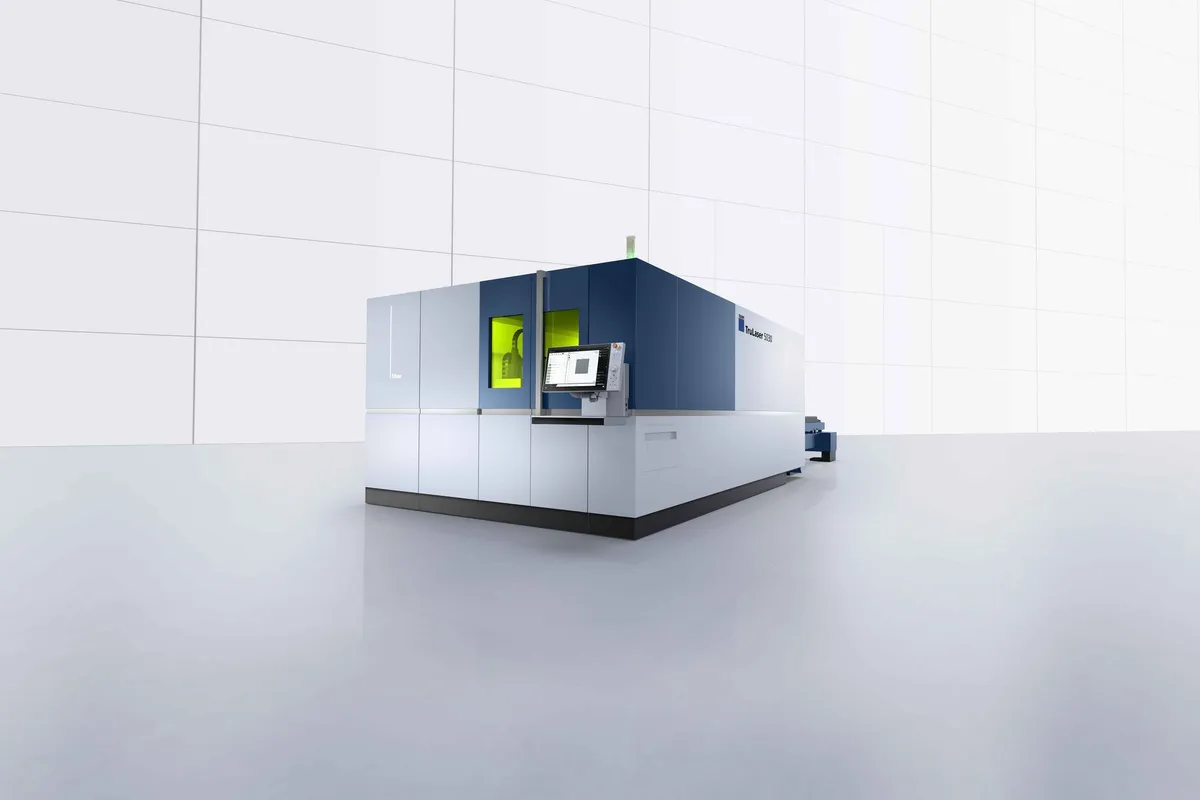
Image: trumpf.com, TRUMPF
Key Specifications
X Travel
Y Travel
max sheet thickness mild steel
max sheet thickness aluminum
acceleration
machine weight
How much does the TRUMPF TruLaser 5030 fiber cost?
Estimated price range
Our best estimate for a cnc laser cutting machine in this class — not a quote from TRUMPF. Configuration moves it a long way.
Overview
The TRUMPF TruLaser 5030 fiber is a 2D fiber laser cutting machine with a 3,000 × 1,500 mm (118 × 59.1 in) working range and a choice of four TruFiber lasers from 6 to 24 kW. Its axes position at up to 280 m/min with acceleration of up to 20 m/s², and the table takes sheets up to 1,100 kg (2,425 lb).
The laser decides what the machine can cut. With the TruFiber 6001 (6 kW) the listed maximum is 25 mm (0.98 in) in mild steel, stainless steel and aluminum, and 10 mm (0.39 in) in copper and brass. The TruFiber 9001 (9 kW) and 12001 (12 kW) share one set of limits: 30 mm (1.18 in) in mild steel and aluminum, 40 mm (1.57 in) in stainless, 16 mm (0.63 in) in copper and 12.7 mm (0.50 in) in brass. On thickness alone, then, the step from 9 to 12 kW changes nothing, and the case for it has to rest on cutting speed in the sheet you already run. Only the TruFiber 24001 (24 kW) lifts mild steel and aluminum to 40 mm (1.57 in).
Trumpf states that with 24 kW the TruFiber 24001 cuts up to three times faster and credits Active Speed Control for its reliability at that power. The statement names no baseline, so ask which laser and sheet thickness it refers to before building a capacity plan on it.
The machine weighs 11,700 kg (25,794 lb) and occupies 9,229 × 6,145 × 2,200 mm (363 × 242 × 86.6 in), about three times the sheet length and four times the sheet width. Trumpf's description of the series also mentions sheet measuring 6 x 2 m. That is the format of the TruLaser 5060, whose travel is 6,000 × 2,000 mm (236 × 78.7 in), and it does not apply to the TruLaser 5030. The TruLaser 5040 sits between the two at 4,000 × 2,000 mm (157 × 78.7 in) with a 2,000 kg (4,409 lb) sheet limit.
Full Specifications
| Parameter | Value |
|---|---|
| Max Sheet Thickness Mild Steel | 25 / 30 / 30 / 40 mm (0.98 / 1.18 / 1.18 / 1.57 in) with TruFiber 6001 / 9001 / 12001 / 24001 |
| Max Sheet Thickness Aluminum | 25 / 30 / 30 / 40 mm (0.98 / 1.18 / 1.18 / 1.57 in) with TruFiber 6001 / 9001 / 12001 / 24001 |
| Acceleration | up to 20 m/s² |
| Machine Weight | 11,700 kg (25,794 lb) |
| Maximum Laser Power and Minimal Rejects | With 24 kW, the TruFiber 24001 cuts up to three times faster and is particularly reliable thanks to Active Speed Control |
| Cut Oversized Sheets | Quickly and easily machine sheet metal measuring 6 x 2 m. |
| Max Positioning Speed | 280 m/min |
| X-Axis Travel | 3,000 mm (118 in) |
| Y-Axis Travel | 1,500 mm (59.1 in) |
| Max Workpiece Weight | 1,100 kg (2,425 lb) |
| Laser Power Options | 6 / 9 / 12 / 24 kW with TruFiber 6001 / 9001 / 12001 / 24001 |
| Max Sheet Thickness Stainless Steel | 25 / 40 / 40 / 40 mm (0.98 / 1.57 / 1.57 / 1.57 in) with TruFiber 6001 / 9001 / 12001 / 24001 |
| Max Sheet Thickness Copper | 10 / 16 / 16 / 16 mm (0.39 / 0.63 / 0.63 / 0.63 in) with TruFiber 6001 / 9001 / 12001 / 24001 |
| Max Sheet Thickness Brass | 10 / 12.7 / 12.7 / 12.7 mm (0.39 / 0.50 / 0.50 / 0.50 in) with TruFiber 6001 / 9001 / 12001 / 24001 |
| Floor Space Required | 9,229 × 6,145 × 2,200 mm (363 × 242 × 86.6 in) |
Specifications sourced from trumpf.com — verified 2026-10-03
Strengths & Limitations
Strengths
- Four TruFiber lasers on one machine frame: 6, 9, 12 or 24 kW
- Positions at up to 280 m/min, with acceleration of up to 20 m/s²
- Stainless steel up to 40 mm (1.57 in) from the TruFiber 9001 upward
- Copper to 16 mm (0.63 in) with the TruFiber 9001, 12001 or 24001
- With the TruFiber 24001, mild steel and aluminum both reach 40 mm (1.57 in)
Limitations
- Sheet weight is capped at 1,100 kg (2,425 lb), so full-size sheets in the thickest listed gauges need a weight check before the material is ordered
- The TruFiber 12001 has the same thickness limits as the 9001 in all five listed materials
- Brass stays at 12.7 mm (0.50 in) with every laser above the TruFiber 6001, including the 24001
- The working range ends at 3,000 × 1,500 mm; 4,000 × 2,000 mm sheet needs the TruLaser 5040
Best For
Frequently Asked Questions
01
It depends on the laser. With the TruFiber 6001 the listed limits are 25 mm (0.98 in) in mild steel, stainless steel and aluminum and 10 mm (0.39 in) in copper and brass. The TruFiber 9001 and 12001 reach 30 mm (1.18 in) in mild steel and aluminum, 40 mm (1.57 in) in stainless, 16 mm (0.63 in) in copper and 12.7 mm (0.50 in) in brass. The TruFiber 24001 takes mild steel and aluminum to 40 mm (1.57 in).
02
Four: 6 kW with the TruFiber 6001, 9 kW with the TruFiber 9001, 12 kW with the TruFiber 12001 and 24 kW with the TruFiber 24001. The 9 and 12 kW lasers have identical thickness limits in every listed material, so the choice between them is about cutting speed. Trumpf says the 24 kW laser cuts up to three times faster and names Active Speed Control as the feature behind its reliability.
03
The working range is 3,000 mm (118 in) in X and 1,500 mm (59.1 in) in Y, and the maximum workpiece weight is 1,100 kg (2,425 lb). For 4,000 × 2,000 mm (157 × 78.7 in) sheet, the TruLaser 5040 carries up to 2,000 kg (4,409 lb).
04
The listed footprint is 9,229 × 6,145 mm (363 × 242 in) with a height of 2,200 mm (86.6 in), and the machine weighs 11,700 kg (25,794 lb). Those are machine figures only. Space for sheet handling, material storage and service access around the machine has to be added when the cell is laid out.
05
Maximum positioning speed is 280 m/min and acceleration is up to 20 m/s². Positioning speed applies to moves between cuts, so it shortens the cycle most on nests with many small contours. Cutting speed itself depends on the laser, the material and the thickness, and the table gives no cutting speeds.
Videos

TRUMPFtube

TRUMPFtube

TRUMPFtube

TRUMPF Inc.
Community Discussions
Troubleshooting and problem-solving
Links to community discussions. Summaries are editorial — visit the original thread for full context.
More from TRUMPF
Other CNC Laser Cutting Machines
GF Machining CHARMILLES LASER P 400 Femto Flexipulse
HSG R2 PRO
Penta Laser WPC 12050 / 9050