Industrial CNC Machine Directory

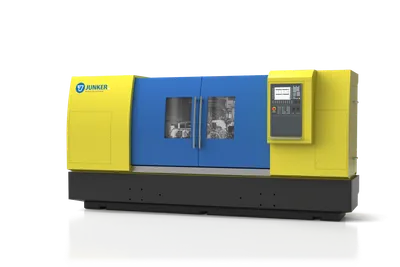
Junker Grindor 2

$500,000 – $950,000 Updated 2026-03-17
01

Key Specifications

grinding length

Up to 650 mm (25.6 in) between centers (configuration-dependent)

center height

125 mm (4.9 in)

wheel speed

80 – 140 m/s (QUICK-POINT CBN configuration)

table travel

700 mm (27.6 in)

workpiece weight

50 kg (110 lb) between centers

grinding accuracy

Roundness < 0.5 µm, diameter tolerance ± 2 µm in production

02

Overview

The Junker Grindor 2 is a CNC cylindrical grinding machine designed for high-productivity external cylindrical grinding of shafts, pins, and rotationally symmetric components. Built by Erwin Junker Maschinenfabrik GmbH (Junker Group), the Grindor 2 is positioned as a production-oriented platform for the automotive, bearing, and industrial component manufacturing sectors, where cycle time, process reliability, and consistent dimensional output across high-volume runs are the primary machine selection criteria.

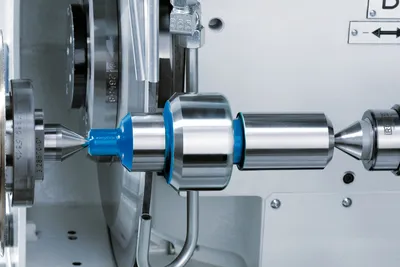
Junker's engineering approach on the Grindor series emphasizes QUICK-POINT grinding technology, a high-speed CBN grinding method that uses a narrow grinding wheel — often just a few millimeters wide — running at very high peripheral speeds. QUICK-POINT grinding allows the wheel to traverse across the workpiece at high feedrates, removing material from the full workpiece length in a series of rapid passes rather than a single wide plunge. This approach reduces grinding forces dramatically compared to wide-wheel plunge grinding, enabling high material removal rates without the deflection and chatter that wide-wheel grinding can produce on slender or flexible workpieces.

The Grindor 2 is built around a high-speed CBN wheel spindle capable of peripheral speeds significantly higher than conventional abrasive grinding — typically in the 80–140 m/s range for QUICK-POINT operations. At these speeds, CBN abrasive operates at its optimal thermal and mechanical cutting conditions, providing long wheel life, consistent surface finish, and predictable dimensional control across long production runs. The machine's headstock and tailstock arrangement supports workpieces in the typical automotive shaft and pin production range, with the workhead drive providing the controlled workpiece rotation needed for consistent helical traverse grinding.

Junker's CNC grinding control integrates with in-process gauging systems that measure workpiece diameter during grinding and feed correction signals back to the machine in real time. This closed-loop diameter control compensates for wheel wear, thermal effects, and material variation, maintaining diameter tolerance without operator measurement intervention between parts. For high-volume automotive camshaft, crankshaft pin, and transmission shaft grinding, this automatic diameter compensation is essential for maintaining process capability indices required by automotive quality programs.

03

Full Specifications

Parameter Value
Grinding Length Up to 650 mm (25.6 in) between centers (configuration-dependent)
Center Height 125 mm (4.9 in)
Wheel Speed 80 – 140 m/s (QUICK-POINT CBN configuration)
Table Travel 700 mm (27.6 in)
Workpiece Weight 50 kg (110 lb) between centers
Grinding Accuracy Roundness < 0.5 µm, diameter tolerance ± 2 µm in production
Control System Junker CNC with integrated in-process gauging
Grinding Method QUICK-POINT traverse grinding (narrow CBN wheel)
Machine Weight Approx. 6,500 kg (14,300 lb)

Specifications sourced from junker-usa.com — verified 2026-03-28

04

Strengths & Limitations

Strengths

  • QUICK-POINT high-speed CBN grinding reduces grinding forces on slender workpieces — enables aggressive material removal rates without deflection or chatter on automotive shaft components
  • CBN wheel at 80–140 m/s peripheral speed provides extended wheel life and consistent surface finish, reducing wheel change frequency on high-volume production programs
  • Integrated in-process gauging with automatic diameter compensation maintains tight diameter tolerances across long runs without operator measurement intervention
  • Production-optimized design for automotive, bearing, and industrial shaft grinding — machine architecture prioritizes throughput and process reliability over universal flexibility

Limitations

  • QUICK-POINT narrow-wheel traverse grinding is optimized for cylindrical features — complex profile grinding requiring wide profiled wheels is not the machine's primary strength
  • CBN wheel specification and dressing requirements demand grinding process expertise — not ideal for shops without prior high-speed CBN cylindrical grinding experience
  • Specialized Junker QUICK-POINT process requires operator and programmer training specific to traverse grinding strategies that differ from conventional plunge grinding approaches
05

Best For

Automotive powertrain manufacturers grinding camshaft journals, crankshaft pins, transmission input/output shafts, and ABS sensor ring gear features at high production volumes Bearing and precision shaft manufacturers running high-volume cylindrical grinding programs in hardened steel with strict roundness and surface finish requirements Industrial component producers grinding hydraulic cylinder rods, precision guide rails, and linear motion shafts where diameter consistency and surface finish are critical Contract grinding shops specializing in high-volume automotive and industrial cylindrical grinding programs where CBN wheel economics justify the investment
06

Frequently Asked Questions

01 What is QUICK-POINT grinding and how does it differ from conventional cylindrical grinding?

QUICK-POINT is Junker's high-speed traverse grinding method using a narrow CBN wheel — typically 3 to 10 mm wide — running at very high peripheral speeds (80–140 m/s). The narrow wheel traverses along the workpiece length, removing material in a series of fast passes rather than a single wide plunge. This dramatically reduces radial grinding forces compared to wide-wheel plunge grinding, enabling higher material removal rates on slender workpieces without deflection. The high CBN wheel speed optimizes abrasive cutting conditions for long wheel life and consistent surface finish.

02 What role does in-process gauging play in the Junker Grindor 2?

The Grindor 2 integrates in-process diameter gauging that measures the workpiece diameter continuously during grinding. The gauge feeds diameter readings back to the CNC control in real time, allowing the machine to compensate for wheel wear, thermal drift, and material hardness variation by adjusting the grinding cycle automatically. This closed-loop diameter control maintains tight tolerances across long production runs without requiring the operator to measure parts and make manual corrections between cycles, which is essential for automotive and bearing production quality requirements.

03 What materials can the Junker Grindor 2 grind effectively?

The Grindor 2 with CBN wheel specification is primarily suited for hardened ferrous materials including case-hardened and through-hardened steels typically used in automotive powertrain shafts, bearing rings, and industrial shafts. CBN abrasive is specifically optimized for ferrous materials and performs poorly on aluminum, brass, and non-ferrous metals. For non-ferrous or ceramic workpieces, diamond wheel specifications can be used, though the machine's primary application focus is hardened steel cylindrical grinding.

07

Videos

Maximum productivity - Save time with fast automated loading and unloading | JUNKER | RETROFiT

Maximum productivity - Save time with fast automated loading and unloading | JUNKER | RETROFiT

JUNKER Group

JUNKER | JUCRANK | non-cylindrical grinding machines | crankshaft grinding

JUNKER | JUCRANK | non-cylindrical grinding machines | crankshaft grinding

JUNKER Group

Impressive high-speed crankshaft grinding machine | JUNKER | JUCRANK

Impressive high-speed crankshaft grinding machine | JUNKER | JUCRANK

JUNKER Group

Educational Unranked to Top 500 Junker Queen only - Ep. 1 (92% Winrate Overwatch 2)

Educational Unranked to Top 500 Junker Queen only - Ep. 1 (92% Winrate Overwatch 2)

kraandop

08

Community Discussions

09

Related Machines