Junker Quickpoint
Key Specifications
Max Workpiece ⌀
Accuracy
grinding type
center distance
max grinding length
center height
How much does the Junker Quickpoint cost?
Estimated price range
Our best estimate for a cnc grinding machine in this class — not a quote from Junker Group. Configuration moves it a long way.
Overview
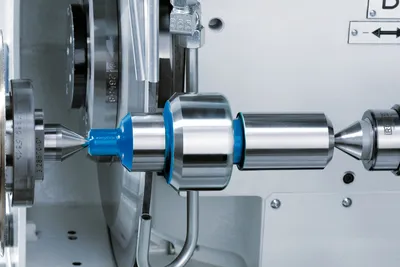
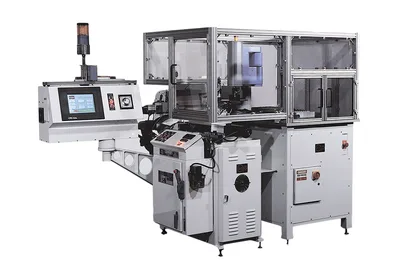
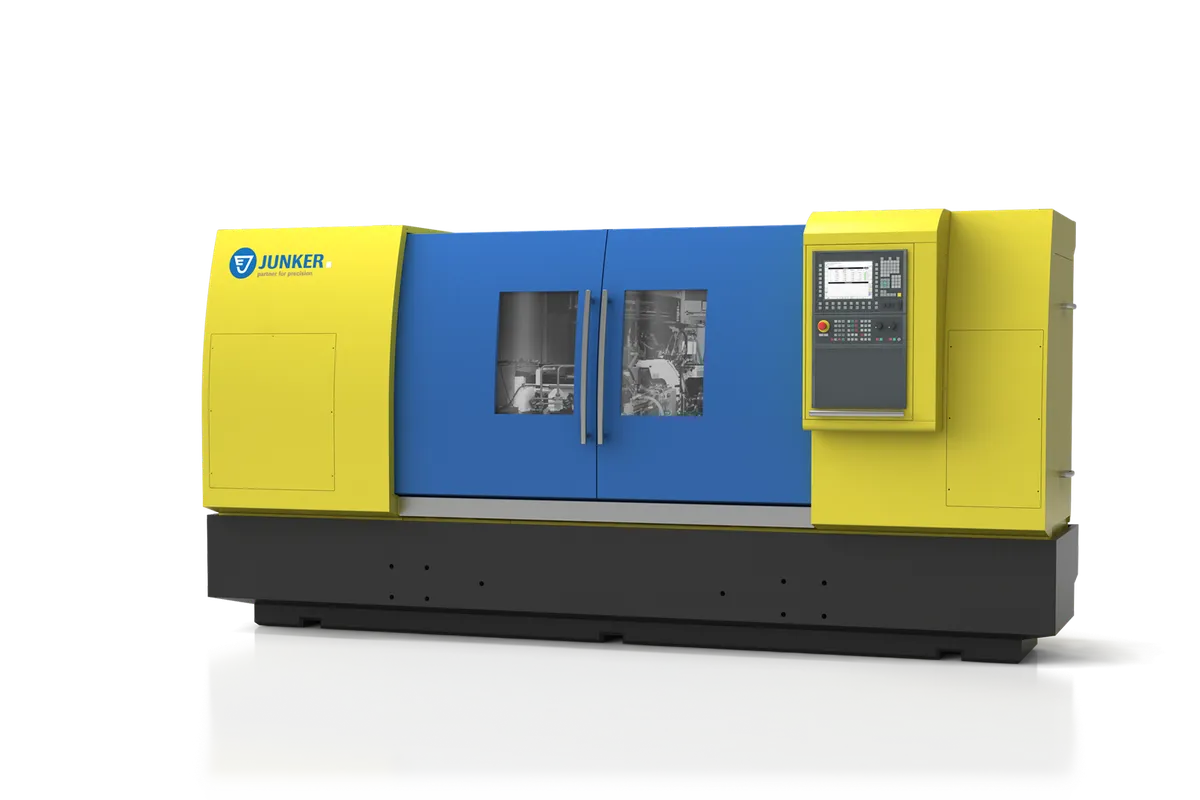
The Junker Quickpoint is listed as a CBN point grinding machine for OD cylindrical, contour, shoulder and thread work, with a wheel peripheral speed of up to 150 m/s. The listed figures give 650 mm (25.6 in) between centers, a maximum grinding length of 500 mm (19.7 in) and a 200 mm (7.9 in) center height. This model name without a size number does not appear on Junker Group's current product pages, and the table has not been checked against a maker document.
The work envelope is a maximum workpiece diameter of 400 mm (15.7 in) and 100 kg (220 lb) between centers. The grinding spindle is rated 45 kW (60 hp) continuous and the workhead reaches up to 5,000 RPM with a C-axis. Five CNC axes are listed, X, Z, B and C plus an optional Y, the B axis being a swiveling grinding head for taper and shoulder access. Positioning accuracy is given as 0.001 mm (0.00004 in), and dimensions as 4,200 x 2,400 x 2,200 mm (165.4 x 94.5 x 86.6 in) on a polymer concrete bed.
These rows do not line up with Junker's numbered models. The QUICKPOINT 3000 is listed with 500 mm of grinding length and a 15 kg workpiece limit at 12,000 kg of machine weight; this table pairs the same 500 mm (19.7 in) with 100 kg (220 lb) and a machine weight of 9,000 kg (19,842 lb). Anyone matching this page to a real machine should work from that machine's own data.
Full Specifications
| Parameter | Value |
|---|---|
| Grinding Type | CBN Point Grinding (OD cylindrical, contour, shoulder, thread) |
| Center Distance | 650 mm (25.6 in) |
| Max Grinding Length | 500 mm (19.7 in) |
| Center Height | 200 mm (7.9 in) |
| Max Workpiece Diameter | 400 mm (15.7 in) |
| Max Workpiece Weight | 100 kg (220 lb) between centers |
| Grinding Wheel Speed | Up to 150 m/s peripheral speed |
| Grinding Spindle Power | 45 kW (60 hp) continuous |
| Workhead Speed | Up to 5,000 RPM with C-axis |
| B Axis | Swiveling grinding head for taper and shoulder access |
| CNC Control | Siemens Sinumerik 840D sl with Junker overlay |
| Number of Axes | 5 CNC axes (X, Z, B, C, plus optional Y) |
| Positioning Accuracy | 0.001 mm (0.00004 in) |
| Bed Material | Polymer concrete (Granitan-type) |
| Machine Weight | 9,000 kg (19,842 lb) |
| Machine Dimensions | 4,200 x 2,400 x 2,200 mm (165.4 x 94.5 x 86.6 in) |
Specifications compiled from manufacturer literature and industry references. Not independently verified against a published spec sheet — confirm with the manufacturer or an authorised dealer before making a purchasing decision.
Strengths & Limitations
Strengths
- Wheel peripheral speed up to 150 m/s with a 45 kW (60 hp) continuous grinding spindle, as listed
- One process listed for OD cylindrical, contour, shoulder and thread grinding
- Swiveling B-axis grinding head for taper and shoulder access
- Workhead up to 5,000 RPM with C-axis
- Positioning accuracy listed as 0.001 mm (0.00004 in)
Limitations
- The listed figures are unverified, and this model name is not on Junker Group's current product pages
- The Y axis is optional, so a machine may have only X, Z, B and C
- Grinding length is 500 mm (19.7 in) of the 650 mm (25.6 in) between centers
- Workpieces are limited to 100 kg (220 lb) between centers
Best For
Frequently Asked Questions
01
The table lists CBN point grinding for OD cylindrical, contour, shoulder and thread work. The grinding head swivels on a B axis for taper and shoulder access and the workhead has a C-axis. The axis row counts 5 CNC axes, of which Y is optional.
02
650 mm (25.6 in) between centers, a maximum grinding length of 500 mm (19.7 in), a center height of 200 mm (7.9 in), a maximum workpiece diameter of 400 mm (15.7 in) and 100 kg (220 lb) between centers. These figures are unverified.
03
Those are the numbered models, each with its own table. The QUICKPOINT 1000 weighs 9,000 kg and the QUICKPOINT 3000 12,000 kg. The table here gives 9,000 kg (19,842 lb) but does not match either model row for row and has not been checked against a maker document, so use the numbered pages when a specific machine is being quoted.
04
A grinding spindle of 45 kW (60 hp) continuous, a wheel peripheral speed of up to 150 m/s and a workhead speed of up to 5,000 RPM with C-axis. Positioning accuracy is listed as 0.001 mm (0.00004 in).
Videos

JUNKER Group

M. BAIER (LANG GMBH)

GINDUMAC GmbH