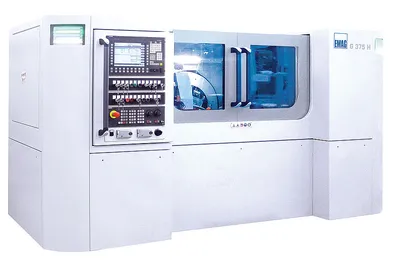
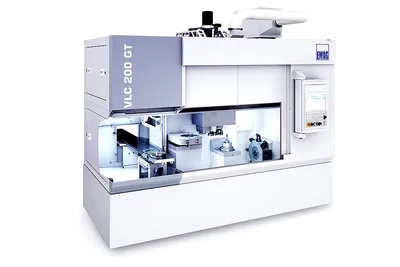
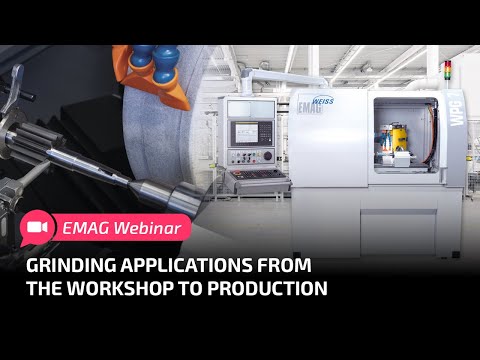
EMAG WPG 7
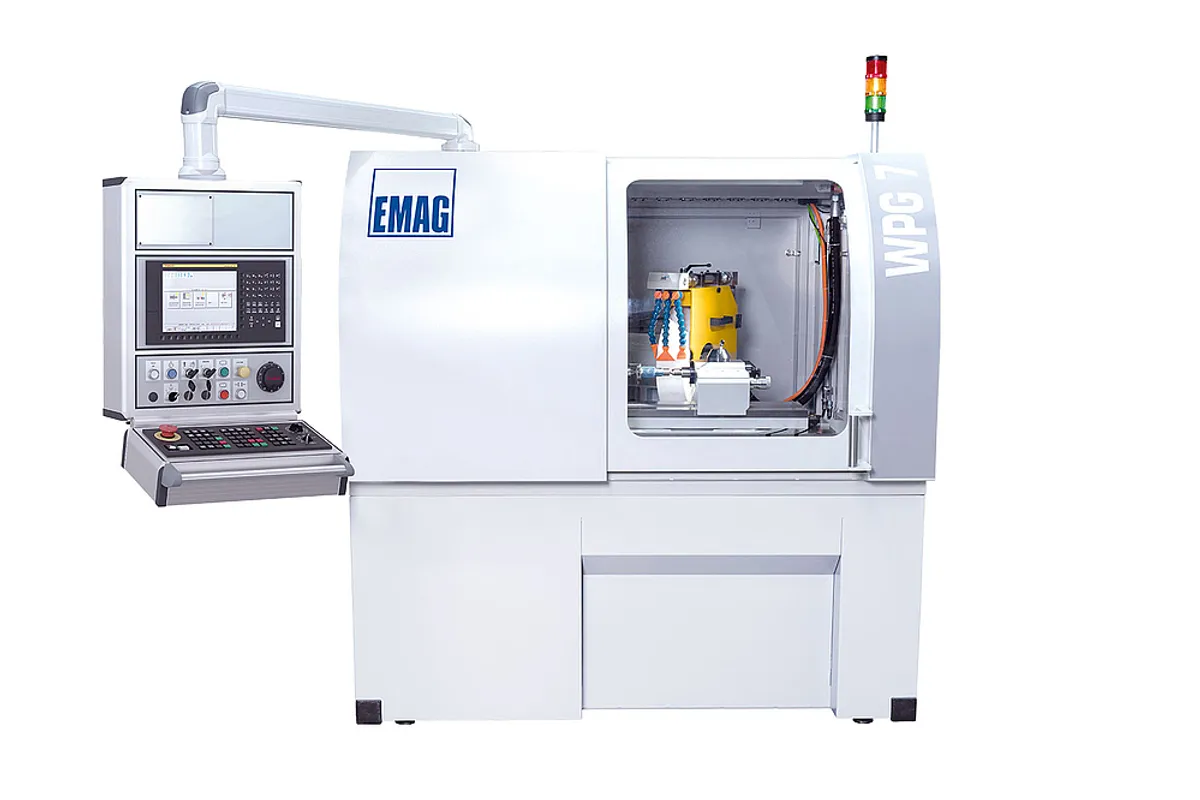
Image: cdn.emag.com, EMAG
Key Specifications
Z Travel
max workpiece length
max grinding diameter
max workpiece weight
x axis travel
z axis feed rate
How much does the EMAG WPG 7 cost?
Estimated price range
Our best estimate for a cnc grinding machine in this class — not a quote from EMAG. Configuration moves it a long way.
Overview
The EMAG WPG 7 is a compact external cylindrical grinder from EMAG's modular WPG range, built for small shafts: maximum grinding diameter 80 mm (3.1 in), workpiece length up to 250 mm (10 in), workpiece weight up to 30 kg (66 lb) and a center height of 100 mm (4 in). The grinding spindle is rated 14 kW (18.8 hp) and runs a 400 / 500 mm (15.5 / 19.5 in) wheel, 80 mm (3 in) wide, at up to 50 m/s.
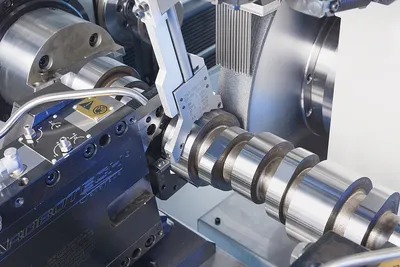
A wide wheel on a small part is the clue to how the machine is meant to work. An 80 mm (3 in) face covers much of a short shaft's bearing seats in one plunge, and the spindle power is high for the part size, which favours fast plunge grinding in volume production over slow traverse passes. Where traverse is needed, the table lists a maximum oscillating stroke of 200 mm (7.9 in), and both X and Z feed at 10 m/min (394 IPM).
Two layouts are offered: a 0 degree straight wheelhead or a 30 degree angled one. The angled version lets one wheel reach a diameter and its adjacent shoulder in the same infeed, which is the usual reason to choose it for shafts with several stepped seats. The Z table can also be adjusted by 10 degrees for tapers. X travel is listed as 190 - 290 mm (7.5 - 11.4 in), and Z travel as 390 mm (15.5 in).
The workpiece headstock takes an MK4 or MK3 cone, wheels can be CBN or corundum, and the control is a FANUC 0i-D with preloaded grinding cycles. The work envelope is the limit to keep in view: anything over 80 mm (3.1 in) in diameter or 250 mm (10 in) long needs a larger machine.
Full Specifications
| Parameter | Value |
|---|---|
| Max Workpiece Length | 250 mm (10 in) |
| Max Grinding Diameter | 80 mm (3.1 in) |
| Max Workpiece Weight | 30 kg (66 lb) |
| X Axis Travel | 190 - 290 mm (7.5 - 11.4 in) |
| Z Axis Feed Rate | 10 m/min (394 IPM) |
| X Axis Feed Rate | 10 m/min (394 IPM) |
| Max Oscillating Stroke | 200 mm (7.9 in) |
| Z Axis Table Adjustment | 10 degrees |
| Grinding Spindle Power | 14 kW (18.8 hp) |
| Grinding Wheel Diameter | 400 / 500 mm (15.5 / 19.5 in) |
| Max Peripheral Speed | 50 m/s |
| Grinding Media | CBN or corundum |
| Workpiece Headstock Cone | MK4 or MK3 |
| Machine Configurations | 0 degree straight or 30 degree angled |
| CNC Control | FANUC 0i-D with preloaded grinding cycles |
| Center Height | 100 mm (4 in) |
| Z-Axis Travel | 390 mm (15.5 in) |
| Grinding Wheel Width | 80 mm (3 in) |
Specifications sourced from emag.com — verified 2026-10-03
Strengths & Limitations
Strengths
- 14 kW (18.8 hp) grinding spindle with an 80 mm (3 in) wide wheel, strong for parts up to 80 mm (3.1 in) in diameter
- Choice of 0 degree straight or 30 degree angled wheelhead
- X and Z feed rates of 10 m/min (394 IPM)
- Runs CBN or corundum wheels at up to 50 m/s
- FANUC 0i-D control with preloaded grinding cycles
Limitations
- Grinding diameter stops at 80 mm (3.1 in) and workpiece length at 250 mm (10 in)
- Workpiece weight is limited to 30 kg (66 lb)
- Center height of 100 mm (4 in) rules out larger flanged parts
- Peripheral speed of 50 m/s caps the cutting speed available to CBN wheels
Best For
Frequently Asked Questions
01
EMAG offers the WPG 7 with a 0 degree straight or a 30 degree angled wheelhead. The straight layout grinds diameters; the angled one can grind a diameter and the shoulder next to it in one infeed, which suits shafts with several stepped seats.
02
Wheel diameter is 400 / 500 mm (15.5 / 19.5 in) and wheel width 80 mm (3 in), in CBN or corundum, at a maximum peripheral speed of 50 m/s. The spindle is rated 14 kW (18.8 hp).
03
Up to 80 mm (3.1 in) in grinding diameter, 250 mm (10 in) in length and 30 kg (66 lb) in weight, with a center height of 100 mm (4 in). Z travel is 390 mm (15.5 in) and the oscillating stroke up to 200 mm (7.9 in).
04
A FANUC 0i-D with preloaded grinding cycles. The table does not name the cycles, so ask EMAG for the list on the machine you are offered and check that it covers the plunge, oscillating and shoulder operations your parts need.
Videos

EMAGLLC
EMAGLLC

EMAGLLC

EMAGLLC