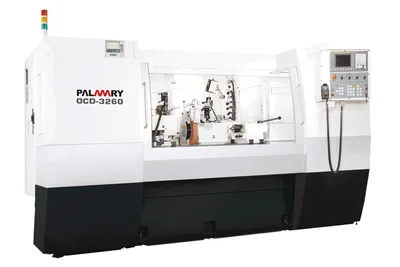
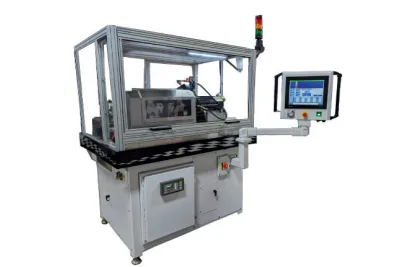
Junker JUMAT 3000
Key Specifications
distance between centers
center height
max workpiece weight
max grinding wheel diameter
grinding spindle type
grinding spindle speed
Overview
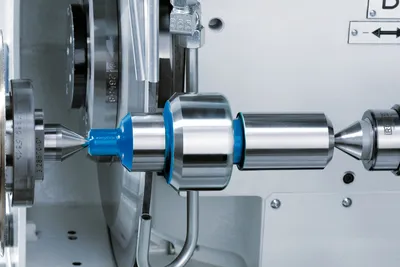
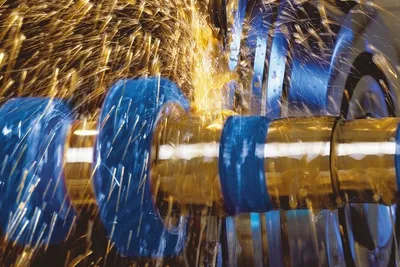
The Junker JUMAT 3000 is a CNC cylindrical grinding machine engineered for high-productivity external and internal grinding of shaft-type components up to 3,000 mm between centers. Built on Junker's high-frequency grinding spindle technology and optimized for CBN and diamond superabrasive wheels, the JUMAT 3000 delivers cycle times that conventional abrasive machines cannot approach — particularly on hardened steel components in automotive, aerospace, and precision engineering.
The machine's foundation is a rigid mineral-cast bed that provides significantly better vibration damping than cast iron, maintaining micron-level tolerances over full production shifts. Junker's hydrostatic guideways on both axes eliminate mechanical wear, ensure consistent positioning accuracy, and contribute to the surface finish consistency that superabrasive grinding demands. The combination of hydrostatic guides and high-frequency spindles is what allows the JUMAT 3000 to sustain high material removal rates with CBN wheels without sacrificing surface integrity.
The JUMAT 3000 supports multiple grinding configurations: plain external cylindrical grinding, angular plunge grinding, and traverse grinding. The wheelhead swivels to accommodate angular approaches for shoulder and taper grinding without repositioning the workpiece. High-frequency spindle speeds enable optimal surface speed for CBN wheels across a wide range of wheel diameters, maintaining consistent cutting conditions as wheels wear down.
Siemens 840D sl control with Junker's proprietary software interface provides conversational programming, dressing cycle management, and in-process gauging integration. The gauging interface accepts signals from Marposs, Renishaw, or equivalent in-process measurement systems, enabling closed-loop size control and automatic compensation for wheel wear and thermal drift.
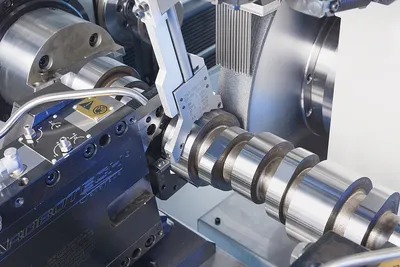
Automation integration is a core design feature: the JUMAT 3000 accepts robot cell integration and gantry loader systems through standardized interfaces. For high-volume automotive component production — camshafts, crankshafts, gearbox shafts — automated loading dramatically increases spindle utilization and shifts the economics toward the superabrasive investment paying off in months rather than years.
Pricing for a new JUMAT 3000 typically falls in the $600,000-$900,000 range, with automation packages adding $100,000-$300,000 depending on configuration. The machine competes with the Studer S41, Landis LT series, and Kellenberger KEL-VERA in the heavy-duty cylindrical grinding segment.
Full Specifications
| Parameter | Value |
|---|---|
| Distance Between Centers | 3,000 mm (118 in) |
| Center Height | 225 mm (8.9 in) |
| Max Workpiece Weight | 300 kg (660 lb) |
| Max Grinding Wheel Diameter | 500 mm (19.7 in) |
| Grinding Spindle Type | High-frequency motorized spindle |
| Grinding Spindle Speed | Up to 10,000 RPM (application-dependent) |
| Wheel Speed | Up to 120 m/s with CBN wheels |
| Wheelhead Swivel | CNC-controlled ±45° |
| Guideways | Hydrostatic on X and Z axes |
| Machine Bed | Mineral cast polymer concrete |
| CNC Control | Siemens 840D sl with Junker software interface |
| In Process Gauging | Marposs / Renishaw interface standard |
| Rapid Traverse X | 10,000 mm/min |
| Rapid Traverse Z | 15,000 mm/min |
| Workhead Speed Range | 1 - 600 RPM |
| Automation Interface | Robot / gantry loader compatible |
Strengths & Limitations
Strengths
- Hydrostatic guideways on both axes eliminate mechanical wear and deliver consistent positioning accuracy across the full production life of the machine
- High-frequency spindle technology supports CBN and diamond wheel surface speeds up to 120 m/s — dramatically cutting cycle times on hardened steel compared to conventional abrasive grinding
- 3,000 mm between-centers capacity handles long shafts including camshafts, crankshafts, and gearbox shafts in a single clamping
- Mineral-cast bed provides superior vibration damping, directly improving surface finish consistency and achievable roundness on long workpieces
- Native robot and gantry loader integration enables lights-out production in high-volume automotive and aerospace environments
- Siemens 840D sl control with in-process gauging interface enables closed-loop size control and automatic wheel wear compensation
Limitations
- At $600,000-$900,000 new, the JUMAT 3000 is a capital-intensive investment suited to high-volume production rather than job shop or low-volume grinding
- CBN wheel systems require significant upfront tooling investment — wheel cost, dressing system, and coolant filtration add $50,000-$150,000 to total system cost
- Hydrostatic guideway systems require clean, temperature-controlled hydraulic oil and disciplined maintenance — operating environment must meet Junker's specifications
- Programming and process optimization for CBN grinding on the JUMAT requires specialist grinding knowledge not always available in general machining shops
Best For
Frequently Asked Questions
01
Hydrostatic guideways operate on a pressurized oil film with no metal-to-metal contact — there is zero mechanical wear over the life of the machine. This means positioning accuracy and slide stiffness remain constant from day one to year twenty. Linear roller guides wear over time, introducing backlash and reducing stiffness. For grinding, where axis positioning accuracy directly determines part size and roundness, hydrostatic guides maintain consistent part quality over longer production runs. They also provide better vibration damping than rolling elements, which improves surface finish on difficult materials.
02
The JUMAT 3000 is optimized for electroplated and vitrified CBN wheels. Electroplated wheels have a single layer of CBN and are used for high-speed, high-removal-rate roughing where wheel profile is critical. Vitrified CBN wheels have multiple layers and can be dressed, making them suitable for precision finishing applications where consistent geometry and surface finish are the priority. Junker typically specifies wheel geometry and bond type based on the workpiece material, hardness, and grinding strategy during application engineering.
03
The standard JUMAT 3000 configuration focuses on external cylindrical grinding. Internal grinding capability can be added via an internal grinding attachment with a dedicated high-speed ID spindle. For mixed OD/ID production, Junker application engineers will specify the appropriate wheelhead configuration. Many customers run dedicated external grinding operations on the JUMAT 3000 and handle ID grinding on separate machines to maximize throughput on each operation.
04
The JUMAT 6000 doubles the between-centers distance to 6,000 mm and increases workpiece weight capacity for very long shafts. The JUMAT 3000 is suited for camshafts, gearbox shafts, and medium-length precision shafts up to 3 meters. The JUMAT 6000 targets large hydraulic cylinders, lead screws, and long roll grinding applications. Both share the same hydrostatic guideway, mineral-cast bed, and high-frequency spindle technology — the 3000 is the more common choice for automotive drivetrain applications.
05
CBN grinding requires high-pressure, high-volume coolant delivered precisely at the wheel-workpiece interface. The JUMAT 3000 requires a filtration system capable of maintaining coolant cleanliness at 10 microns or better — typically a paper-band or magnetic separator system with fine filtration. Oil-based coolant is preferred for CBN grinding to provide better lubrication and reduce thermal shock. The coolant system is typically quoted and installed as part of the complete grinding cell, adding $30,000-$80,000 depending on volume and filtration specification.
Videos
JUNKER Group
JUNKER Group
JUNKER Group
M. BAIER (LANG GMBH)
JUNKER Group
Community Discussions
Community discussion — Junkers engine details ...
Community discussion — Junkers ... - Practical Machinist
Pricing and buying discussion — Centerless Grinder Recomendations ...
Community discussion — Grinding Video
Links to community discussions. Summaries are editorial — visit the original thread for full context.