Industrial CNC Machine Directory

Junker Numerika 10

$400,000 - $700,000 Updated 2026-03-16
01

Key Specifications

grinding capacity

Form and profile grinding, cylindrical and non-cylindrical profiles

max workpiece length

Application-dependent; typically 200-600 mm workpiece range

max grinding wheel diameter

400 mm (15.7 in)

grinding spindle type

High-frequency motorized spindle

wheel speed

Up to 80 m/s (conventional); CBN configuration available

dressing system

CNC diamond roll dresser or point diamond, programmable

02

Overview

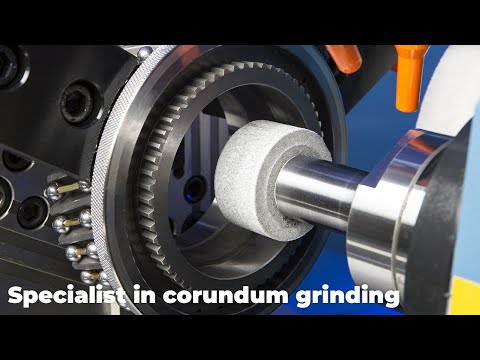
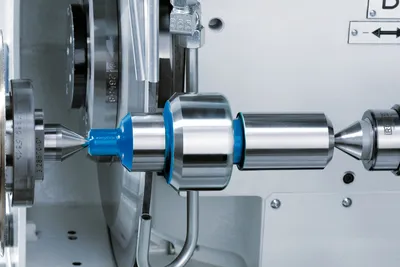
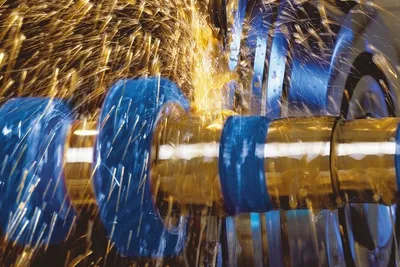
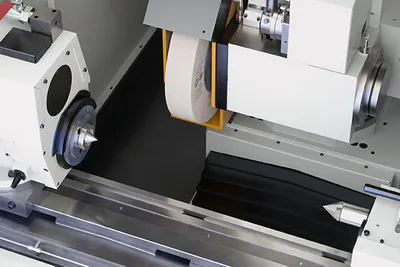
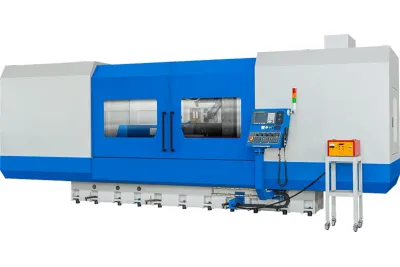
The Junker Numerika 10 is a CNC form grinding machine designed for precision form and profile grinding of complex geometries on cutting tools, cam profiles, and precision components. Where the JUMAT and QUICKPOINT series focus on cylindrical grinding of shaft-type parts, the Numerika targets the form grinding niche: producing accurate complex profiles by dressing the grinding wheel to the desired contour and grinding the form into the workpiece in a single radial plunge.

Form grinding on the Numerika is enabled by the machine's high-rigidity X and Z axes, precision CNC dresser with programmable diamond roll or point diamond dressing, and the ability to hold the dressed wheel profile across a production run while compensating for wheel wear through automatic diameter offset. For high-precision cutting tools — gear hobs, broaches, milling cutter profiles, and thread grinding wheels — this process consistently delivers the profile accuracy that grinding forms with interpolated axes cannot match for true form shapes.

The machine's bed is constructed from reinforced polymer concrete providing the vibration damping and thermal stability essential for form grinding, where profile accuracy is measured in single-digit microns. The wheelhead spindle is a high-frequency motorized type running conventional aluminum oxide or CBN wheels depending on workpiece material. For tool steel and HSS, conventional abrasives are typical; for carbide and hardened steel, CBN or diamond is specified.

The CNC system runs on a Siemens 840D sl platform with Junker's Numerika-specific software for dressing cycle programming, profile definition, and production cycle management. Profile data can be imported from CAD systems, reducing the programming burden for complex form geometries. Integrated measurement capability allows the dressed wheel profile to be verified before grinding production parts.

The Numerika 10 is compact relative to the JUMAT series, suited for cutting tool manufacturers, gear tool producers, and precision component shops where form accuracy is the primary criterion rather than high-volume throughput. Pricing falls in the $400,000-$700,000 range.

03

Full Specifications

Parameter Value
Grinding Capacity Form and profile grinding, cylindrical and non-cylindrical profiles
Max Workpiece Length Application-dependent; typically 200-600 mm workpiece range
Max Grinding Wheel Diameter 400 mm (15.7 in)
Grinding Spindle Type High-frequency motorized spindle
Wheel Speed Up to 80 m/s (conventional); CBN configuration available
Dressing System CNC diamond roll dresser or point diamond, programmable
Guideways Hardened and precision-ground, high-stiffness
Machine Bed Reinforced polymer concrete
CNC Control Siemens 840D sl with Junker Numerika software
Profile Import CAD profile data import supported
Profile Accuracy Single-digit micron form accuracy
Coolant High-pressure flood coolant system
04

Strengths & Limitations

Strengths

  • Dedicated form grinding capability produces complex profiles with single-digit micron accuracy — superior to interpolated-axis profile grinding for true form shapes
  • CNC dresser with programmable diamond roll enables rapid profile changes between part families without manual wheel dressing
  • CAD profile import reduces programming time for complex geometries — operators do not need to manually define complex form profiles
  • Polymer concrete bed provides the vibration damping and thermal stability that form accuracy in single-digit microns demands
  • Compact footprint relative to larger cylindrical grinders — suitable for tool manufacturing shops where floor space is at a premium
  • Compatible with both conventional abrasives (for HSS and tool steel) and CBN/diamond (for carbide), covering the full tool material spectrum

Limitations

  • Form grinding is a specialized process — shops without form grinding expertise will face a learning curve on dressing cycle setup, profile verification, and process optimization
  • At $400,000-$700,000, the Numerika 10 is positioned above general-purpose CNC cylindrical grinders — justification requires a consistent demand for form-ground profiles
  • Cycle times for form grinding are inherently longer than cylindrical grinding due to the dressing cycle, profile verification, and the radial plunge approach — production throughput is lower
  • Diamond dressing roll tooling for complex profiles is expensive — each new profile may require a $5,000-$20,000 custom diamond roll
05

Best For

Cutting tool manufacturers producing precision gear hobs, broaches, form milling cutters, and thread grinding wheels where profile accuracy is the defining quality criterion Gear and spline grinding operations requiring precise form wheels that must be dressed to micron-level accuracy before production Precision component manufacturers producing cam profiles, pump rotors, and hydraulic valve elements where complex 2D profiles must be held to tight tolerances Tool and cutter grinding shops looking to bring form grinding in-house rather than outsourcing to specialist subcontractors
06

Frequently Asked Questions

01 What is form grinding and how does it differ from profile grinding by interpolation?

Form grinding dresses the grinding wheel to the desired profile shape and then plunges the wheel into the workpiece — the profile is transferred from the wheel to the part in a single operation. Profile grinding by interpolation moves the wheel along a complex path while maintaining a simple wheel shape, tracing the profile by CNC motion. Form grinding is more accurate for true form shapes because there is no interpolation error, and it is faster for production runs because the dressed wheel grinds the full profile in one plunge. The trade-off is the cost and time of dressing the wheel to the correct profile before production.

02 What types of workpieces does the Numerika 10 grind?

The Numerika 10 is used primarily for cutting tools and precision profiles: gear hob cutter profiles, broach tooth forms, form milling cutter profiles, worm grinding wheels, thread grinding wheel profiles, and precision cam profiles. It is also used for precision components with complex cross-sections such as pump rotors, hydraulic spool valves, and spline gauges. The common thread is that these workpieces require a specific 2D profile to be reproduced accurately in quantity, which form grinding achieves more efficiently than other methods.

03 How is the grinding wheel dressed to the correct profile on the Numerika 10?

The Numerika 10 uses a CNC-controlled diamond roll dresser for production runs. The diamond roll is manufactured to the inverse of the desired wheel profile — when rolled across the wheel face, it removes material to leave the correct form on the wheel. The CNC controls the dresser path precisely, and the profile accuracy is verified by measurement before production parts are ground. For prototype or low-volume work, a point diamond dresser traversed under CNC control can also generate profiles, though with less efficiency than a form roll.

04 What profile accuracy does the Numerika 10 achieve?

The Numerika 10 achieves profile accuracies in the 3-8 micron range for typical production form grinding applications. For the highest-accuracy applications — precision gear hob profiles and thread grinding profiles — 2-5 micron profile accuracy is achievable under optimal conditions with calibrated measurement and controlled environment. These accuracy levels are consistent with DIN and ISO standards for precision cutting tool manufacture and are significantly better than what can be achieved by interpolated-axis CNC grinding on general-purpose machines.

07

Videos

Ultra-precise ID grinding of ball bearing | ZEMA | NUMERIKA | cylindrical grinding machines

Ultra-precise ID grinding of ball bearing | ZEMA | NUMERIKA | cylindrical grinding machines

JUNKER Group

Junker Queen for Dummies (Guide & Tips from a GM/T500 Player)

Junker Queen for Dummies (Guide & Tips from a GM/T500 Player)

yeatle

Educational Unranked to Top 500 Junker Queen only - Ep. 1 (92% Winrate Overwatch 2)

Educational Unranked to Top 500 Junker Queen only - Ep. 1 (92% Winrate Overwatch 2)

kraandop

Impressive high-speed crankshaft grinding machine | JUNKER | JUCRANK

Impressive high-speed crankshaft grinding machine | JUNKER | JUCRANK

JUNKER Group

JUNKER | JUCRANK | non-cylindrical grinding machines | crankshaft grinding

JUNKER | JUCRANK | non-cylindrical grinding machines | crankshaft grinding

JUNKER Group

08

Community Discussions

09

Related Machines