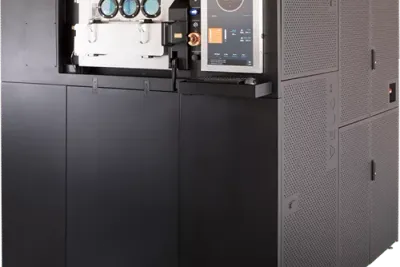
DMG Mori LASERTEC 3000 DED hybrid
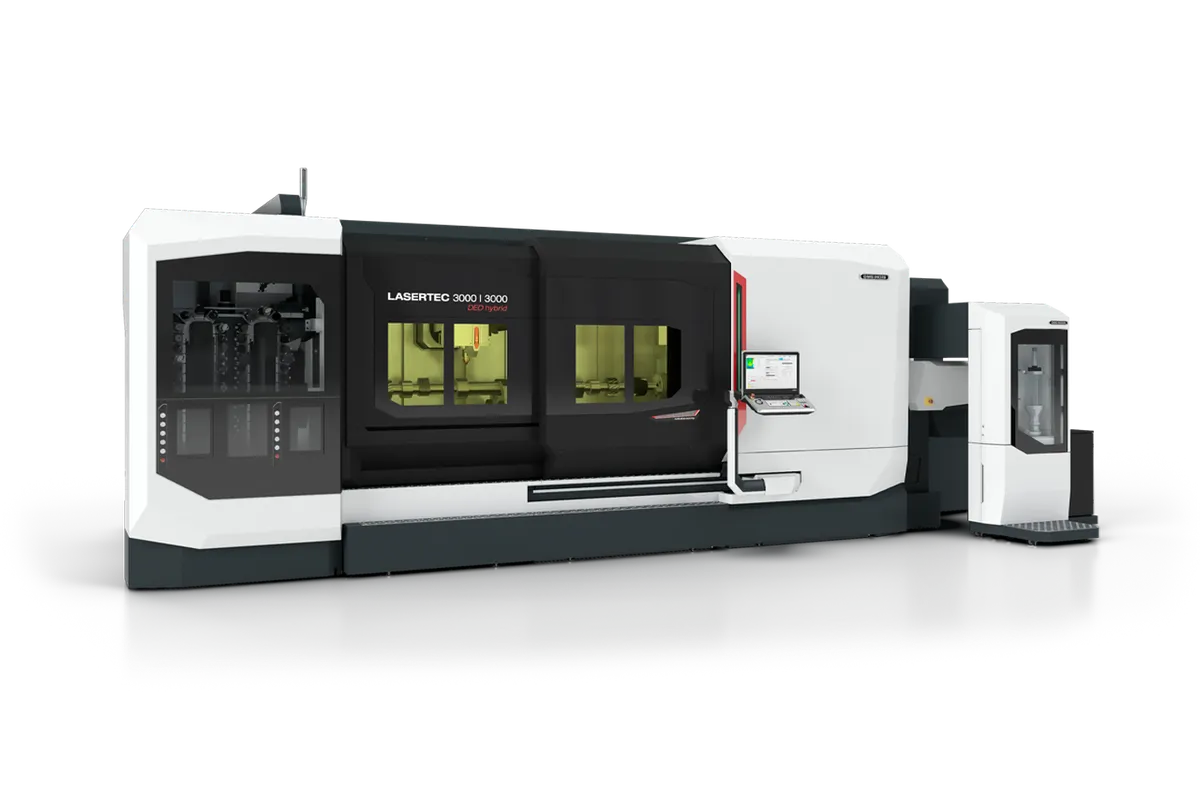
Image: dmgmori.com, DMG Mori
Key Specifications
X Travel
Y Travel
Z Travel
laser power
deposition method
reactive materials
How much does the DMG Mori LASERTEC 3000 DED hybrid cost?
Price estimate
We do not have a price for the DMG Mori LASERTEC 3000 DED hybrid that we can stand behind, so we show no number. Configuration, options and installation move the final price a long way: a quote is the reliable figure.
Overview
The DMG MORI LASERTEC 3000 DED hybrid combines laser deposition welding with turning-machine processes, for 3D parts built and finished in one machine. It has a 3,000 W laser, 675 mm (26.6 in) of X and 300 mm (11.8 in) of Y, and a Z travel that depends on the version: 1,562 mm (61.5 in) on the Type 1500 and 3,062 mm (120.6 in) on the Type 3000.
Workpiece size is stated for two B-axis positions. With the B axis at 180° the part can be up to ø 670 × 932 mm, and at 90° up to ø 400 × 1,321 mm. The orientation of the head therefore trades diameter against length. DMG MORI's Highlights do not say which Z version these sizes refer to, so ask for the values that apply to the bed length you intend to buy.
Material is applied through a coaxial nozzle under 5-axis control. The coaxial arrangement distributes the powder evenly regardless of the direction of the weld path. Because deposition and cutting share one setup they can alternate: build a section, machine the surfaces that need it, then build again. Alternating the two is what DMG MORI credits for new part features, and parts with inner channels for cooling are one of its examples.
The process is also a way to combine materials. DMG MORI gives copper with Inconel as an example of a material combination for better part performance. Processing of reactive materials such as Ti-6Al-4V is optional and has to be ordered.
The travels of the Type 1500 match those listed for the NTX 2000: 675 mm (26.6 in), 300 mm (11.8 in) and 1,562 mm (61.5 in).
Full Specifications
| Parameter | Value |
|---|---|
| Laser Power | 3,000 W |
| X-Axis Travel | 675 mm (26.6 in) |
| Y-Axis Travel | 300 mm (11.8 in) |
| Z-Axis Travel | 1,562 mm (61.5 in) [Type 1500] / 3,062 mm (120.6 in) [Type 3000] |
| Deposition Method | 5-axis material deposition by coaxial nozzle |
| Reactive Materials | Reactive materials such as Ti-6Al-4V (optional) |
Specifications sourced from dmgmori.com — verified 2026-10-02
Strengths & Limitations
Strengths
- 3,000 W laser with 5-axis material deposition through a coaxial nozzle
- Two bed lengths: 1,562 mm (61.5 in) of Z on the Type 1500 and 3,062 mm (120.6 in) on the Type 3000
- Deposition and machining alternate in one setup, so built-up features are finished in the same clamping
- Parts up to ø 670 × 932 mm with the B axis at 180°, or ø 400 × 1,321 mm at 90°
- Material combinations such as copper with Inconel in a single part
Limitations
- Y travel is 300 mm (11.8 in), which limits off-centre work
- Processing reactive materials such as Ti-6Al-4V is an option
- The stated workpiece sizes are not assigned to the Type 1500 or the Type 3000
- No spindle, deposition rate or powder feeder figures appear in the listed data
Best For
Frequently Asked Questions
01
Z travel. The Type 1500 has 1,562 mm (61.5 in) and the Type 3000 has 3,062 mm (120.6 in). X travel is 675 mm (26.6 in) and Y travel is 300 mm (11.8 in) on both, and both are listed with a 3,000 W laser.
02
DMG MORI states up to ø 670 × 932 mm with the B axis at 180°, or up to ø 400 × 1,321 mm with the B axis at 90°. It does not say which Z version those sizes belong to, so have them confirmed for the Type 1500 or the Type 3000 as applicable.
03
By laser deposition welding with powder fed through a coaxial nozzle, under 5-axis control. DMG MORI states that the coaxial nozzle gives a homogeneous powder distribution that is independent of the direction of welding, so the bead does not change with the direction of travel.
04
Additive manufacturing of reactive materials such as Ti-6Al-4V is listed as an option, so it is not part of the base machine and must be specified on the order. The base machine is listed for metals, and DMG MORI gives copper combined with Inconel as an example of a material combination.
05
Because the two can alternate within one setup. A section is deposited, the surfaces that need it are machined, and deposition continues. DMG MORI credits this with new part features and names parts with inner channels for cooling and parts in new material combinations as examples.
Videos

DMG MORI Japan
Comparisons
More from DMG Mori
Other Metal Additive Manufacturing
SLM Solutions SLM 500 HL
EOS M 400-4
Hermle MPA 42
HP Metal Jet S100 Metal 3D Printer
Farsoon FS350M