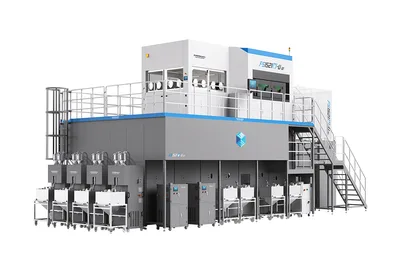
DMG Mori LASERTEC 125 DED hybrid
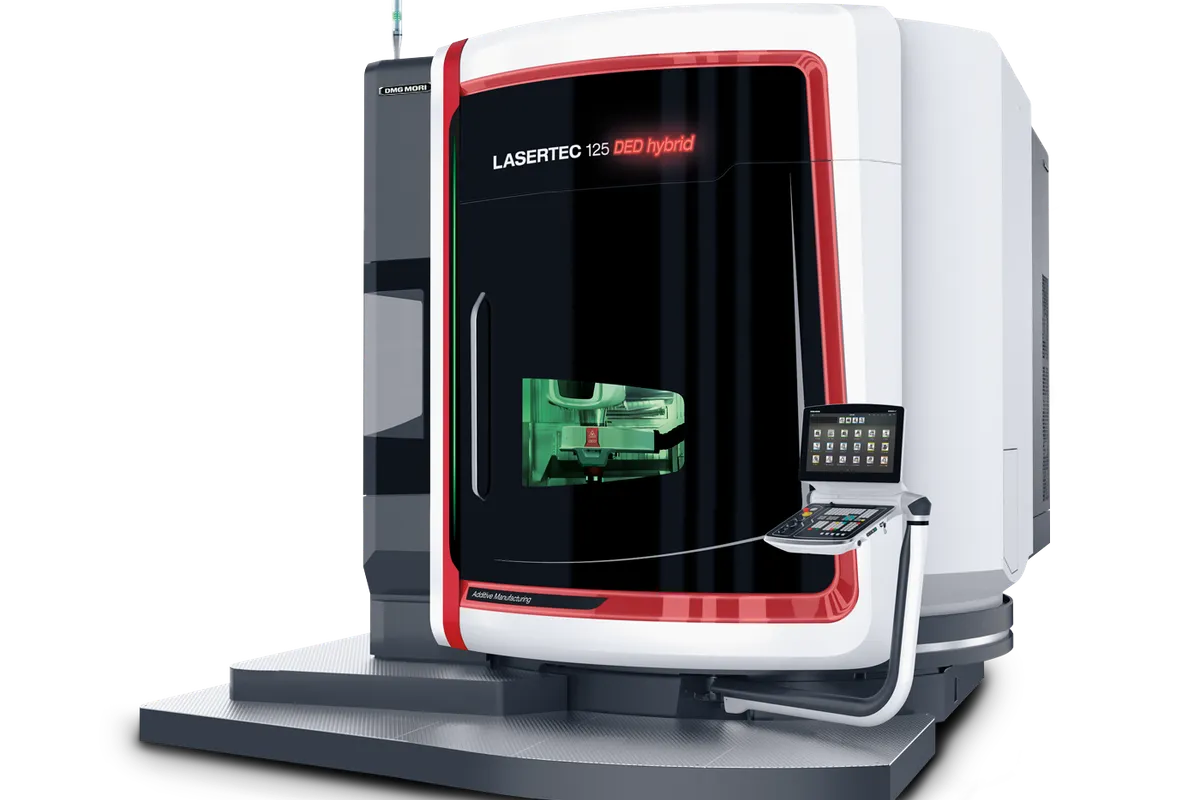
Image: dmgmori.com, DMG Mori
Key Specifications
X Travel
Y Travel
Z Travel
laser power
max workpiece weight
deposition method
How much does the DMG Mori LASERTEC 125 DED hybrid cost?
Price estimate
We do not have a price for the DMG Mori LASERTEC 125 DED hybrid that we can stand behind, so we show no number. Configuration, options and installation move the final price a long way: a quote is the reliable figure.
Overview
The DMG MORI LASERTEC 125 DED hybrid is a large machine for laser deposition welding combined with 5-axis milling: 1,335 mm (52.6 in) of X, 1,250 mm (49.2 in) of Y and 900 mm (35.4 in) of Z, a 3,000 W laser and a workpiece limit of 2,000 kg (4,409.2 lb). DMG MORI positions it for additive manufacture and for repair.
The milling side is, by DMG MORI's description, the full 5-axis capability of the monoBLOCK machine. The travels are the same as those listed for the DMU 125 FD monoBLOCK: 1,335 mm (52.6 in), 1,250 mm (49.2 in) and 900 mm (35.4 in).
The laser deposition head is handled by a fully automatic shuttle, with no manual intervention. A program can therefore move between welding and cutting without an operator fitting or removing the head. Powder reaches the weld through a coaxial nozzle under 5-axis control, which keeps the powder distribution even regardless of the direction of the bead.
A 2,000 kg (4,409.2 lb) capacity is what makes the repair role practical for large dies and molds. The applications DMG MORI lists fit that: repairing parts with better materials, adding a wear-resistant coating to existing tool designs, placing bronze in a mould core to improve cooling, and adding material above 60 Rockwell only where it is needed so that heat treatment can be avoided.
Process control comes from a thermal imaging camera that observes the whole working area, with adaptive process control and constant monitoring of the working distance, plus a powder feed rate sensor and automatic powder calibration. Programming is done in a Siemens NX hybrid CAD/CAM module that covers both additive and subtractive strategies and simulates machine movements in 3D for collision prevention.
Full Specifications
| Parameter | Value |
|---|---|
| Laser Power | 3,000 W |
| Max Workpiece Weight | 2,000 kg (4,409.2 lb) |
| X-Axis Travel | 1,335 mm (52.6 in) |
| Y-Axis Travel | 1,250 mm (49.2 in) |
| Z-Axis Travel | 900 mm (35.4 in) |
| Deposition Method | 5 axis material deposition by coaxial nozzle |
| Deposition Head Handling | Fully automatic shuttle without manual intervention |
| Milling Capability | Full 5-axis milling capability based on the monoBLOCK machine |
| Process Monitoring | Integrated thermal imaging camera; powder feed rate sensor; automatic powder calibration |
| CAD CAM | Siemens NX hybrid CAD / CAM module |
Specifications sourced from dmgmori.com — verified 2026-10-02
Strengths & Limitations
Strengths
- Travels of 1,335 × 1,250 × 900 mm (52.6 × 49.2 × 35.4 in) with a 2,000 kg (4,409.2 lb) workpiece limit
- Deposition head changed by a fully automatic shuttle without manual intervention
- Full 5-axis milling capability based on the monoBLOCK machine
- 3,000 W laser with 5-axis deposition through a coaxial nozzle
- Siemens NX hybrid CAD/CAM module with 3D simulation of machine movements for collision prevention
- Thermal imaging camera, powder feed rate sensor and automatic powder calibration
Limitations
- No maximum workpiece diameter or height is listed, only the 2,000 kg (4,409.2 lb) weight limit and the travels
- No deposition rate is stated for the 3,000 W laser
- Z travel is 900 mm (35.4 in), the shortest of the three axes
- Spindle and tool magazine data for the milling side are not in the listed figures
Best For
Frequently Asked Questions
01
Travels are 1,335 mm (52.6 in) in X, 1,250 mm (49.2 in) in Y and 900 mm (35.4 in) in Z, and the maximum workpiece weight is 2,000 kg (4,409.2 lb). These travels match the DMU 125 FD monoBLOCK. No maximum workpiece diameter or height is given in the listed data.
02
The laser deposition head is handled by a fully automatic shuttle without manual intervention. That allows a single program to deposit material, mill it and deposit again, and the Siemens NX module lets the programmer change between additive and machining strategies within one programming environment.
03
A Siemens NX hybrid CAD/CAM module for additive and subtractive programming. DMG MORI describes it as one software package for the whole chain of design, additive process, subtractive machining and finishing, with LASERTEC build-up strategies integrated and a 3D simulation of machine movements for collision prevention.
04
Additive manufacture and repair of large parts. DMG MORI's examples are repairs with better materials for longer service life, wear-resistant coatings on existing tool designs, bronze in a mould core for better cooling, material above 60 Rockwell added selectively to avoid heat treatment, and gradients between hard and soft or magnetic and non-magnetic material.
05
An integrated thermal imaging camera observes the whole working area and supports adaptive process control and constant monitoring of the working distance. A sensor measures the powder feed rate and the powder is calibrated automatically. The AM Evaluator shows process data such as meltpool size and powder mass flow as a digital 3D model and in chronological sequence.
Videos

DMG MORI Japan
Community Discussions
Links to community discussions. Summaries are editorial — visit the original thread for full context.
Comparisons
More from DMG Mori
Other Metal Additive Manufacturing
Markforged Metal X Gen 2
EOS M 100
Desktop Metal Shop System
Farsoon FS1521M