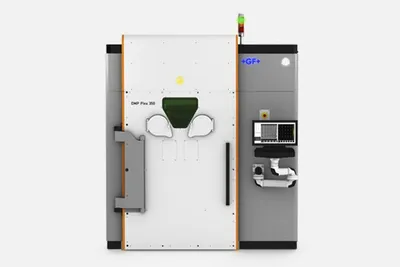
Velo3D Sapphire
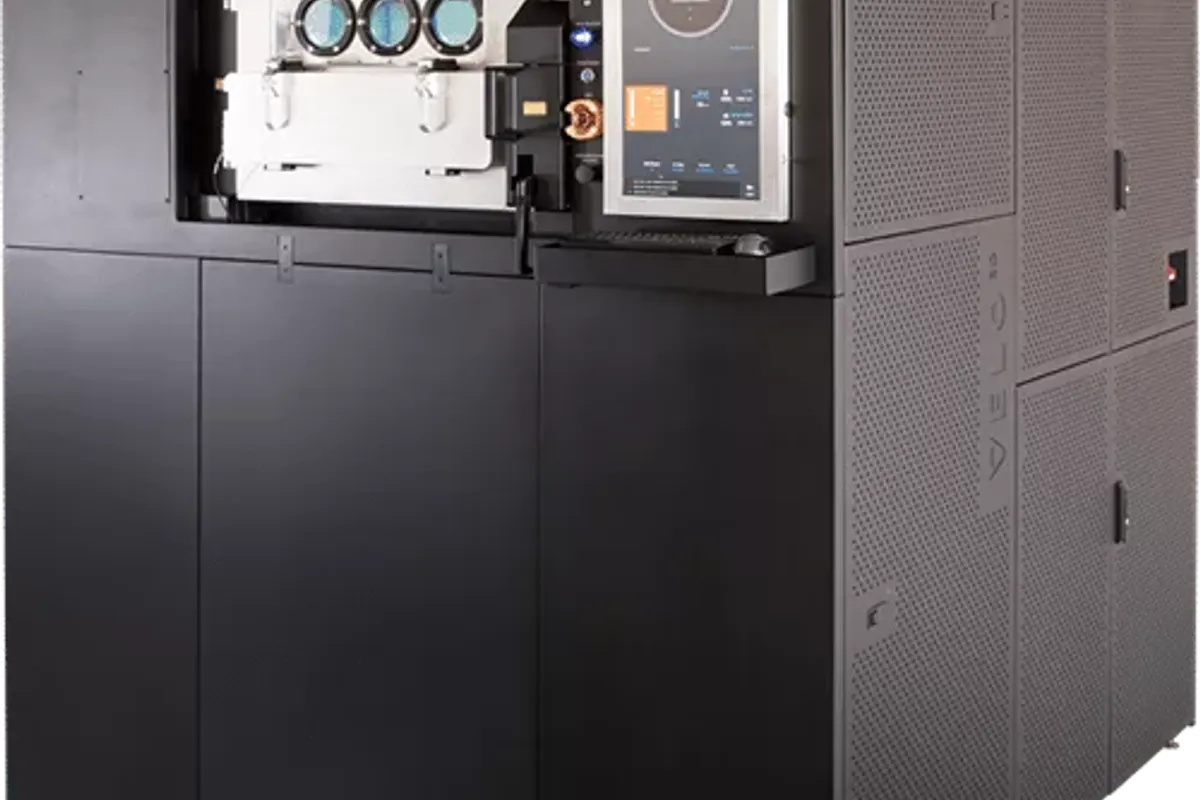
Key Specifications
build volume
laser count
laser power
layer thickness
supported materials
recoater type
How much does the Velo3D Sapphire cost?
Estimated price range
Our best estimate for a metal additive manufacturing in this class — not a quote from Velo3D. Configuration moves it a long way.
Overview
The Velo3D Sapphire is a metal additive manufacturing system with a cylindrical build volume of Ø315 mm x 400 mm Z, worked by two 1 kW fiber lasers. Velo3D rates its throughput at up to 100 cc/hr and gives the minimum overhang angle as Sub-5 degrees with SupportFree technology. That last row is the reason to look at this machine: shallow overhangs normally have to be propped on supports that are cut away afterwards, and a lower angle limit means fewer of them.
The 400 mm of Z is the figure to weigh first. The Sapphire 1MZ keeps the same Ø315 mm diameter and extends the build to 1000 mm Z, and both are listed at 3,150 kg (6,930 lbs), so the choice between them is about part height, not floor loading. Parts too wide for either belong on the Sapphire XC, at Ø600 mm x 1000 mm Z with 8 × 1,000 W fiber lasers (8 kW total) and a weight of ~8,500 kg (18,740 lbs).
Layer thickness is 50 - 100 µm depending on material, and the typical surface finish is 5–15 μm Sa. Supported materials are Inconel 718, Inconel 625, Ti-6Al-4V, Hastelloy X, Al F357, copper and stainless steels. The recoater is a non-contact type, so thin walls and leaning features are not pushed by a blade as each layer goes down, and the laser windows are self-cleaning.
For installation the size row reads 2.1 x 2.1 x 2.5 m + 1.37 m pit. A pit is building work, so ask Velo3D whether it is required for the 400 mm build before committing a site.
Full Specifications
| Parameter | Value |
|---|---|
| Build Volume | Ø315 mm x 400 mm Z |
| Laser Count | 2 |
| Laser Power | 2 x 1 kW fiber lasers |
| Layer Thickness | 50 - 100 µm (material dependent) |
| Supported Materials | Inconel 718, Inconel 625, Ti-6Al-4V, Hastelloy X, Al F357, Copper, Stainless Steels |
| Recoater Type | Non-contact recoater |
| Min Overhang Angle | Sub-5 degrees (SupportFree technology) |
| Machine Weight | 3,150 kg (6,930 lbs) |
| Size | 2.1 x 2.1 x 2.5 m + 1.37 m pit |
| Lasers | Dual 1 kW |
| Throughput | Up to 100 cc/hr |
| Surface Finish | 5–15 μm Sa (typical) |
| Automated Optics Calibration | Self-cleaning laser windows |
Specifications sourced from velo3d.com — verified 2026-10-03
Strengths & Limitations
Strengths
- Minimum overhang angle of Sub-5 degrees with SupportFree technology, so shallow surfaces need fewer supports to cut away
- Two 1 kW fiber lasers over a Ø315 mm x 400 mm Z build, with throughput of up to 100 cc/hr
- Non-contact recoater: thin and leaning features are not touched as a new layer is laid
- Typical surface finish of 5–15 μm Sa at layer thicknesses of 50 - 100 µm
- Supported materials run from Inconel 718, Inconel 625 and Hastelloy X to Ti-6Al-4V, Al F357, copper and stainless steels
- Self-cleaning laser windows are listed under automated optics calibration
Limitations
- Z stops at 400 mm; the Sapphire 1MZ builds to 1000 mm Z on the same Ø315 mm diameter
- Part diameter is capped at Ø315 mm, where the Sapphire XC is listed at Ø600 mm
- The size row includes a 1.37 m pit, which is building work to settle before the machine arrives
- Layer thickness of 50 - 100 µm is material dependent, so the thinnest layer is not a given for every alloy
Best For
Frequently Asked Questions
01
Ø315 mm x 400 mm Z, a cylinder 315 mm across and 400 mm tall. For taller parts the Sapphire 1MZ keeps the Ø315 mm diameter and extends Z to 1000 mm, and for wider parts the Sapphire XC is listed at Ø600 mm x 1000 mm Z.
02
Two 1 kW fiber lasers, which Velo3D also describes as dual 1 kW. Throughput is stated as up to 100 cc/hr. Read that as a ceiling: the rate on a real job depends on the alloy, on the layer thickness chosen within the 50 - 100 µm range and on how much of each layer is solid metal.
03
The supported materials row lists Inconel 718, Inconel 625, Ti-6Al-4V, Hastelloy X, Al F357, copper and stainless steels. Layer thickness is 50 - 100 µm and is material dependent, so confirm the parameters for the specific alloy you intend to run.
04
The minimum overhang angle is listed as Sub-5 degrees with SupportFree technology. In practice that means near-horizontal surfaces, domes and internal passages can be built with far fewer supports, which cuts the work of removing them. The non-contact recoater is part of the same picture, because it does not touch unsupported features.
05
The machine weighs 3,150 kg (6,930 lbs) and its size is given as 2.1 x 2.1 x 2.5 m + 1.37 m pit. Check floor loading against the weight, ceiling height against the 2.5 m figure, and ask Velo3D whether the pit applies to the 400 mm build.
Videos

Velo3D

Green Stock News
Community Discussions
Comparisons
More from Velo3D
Other Metal Additive Manufacturing
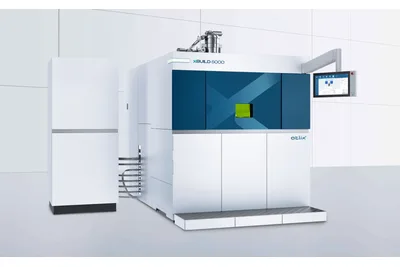
ATLIX xBUILD 5000
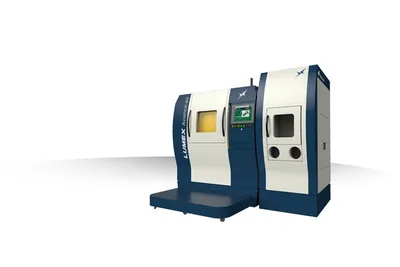
Matsuura LUMEX Avance-60
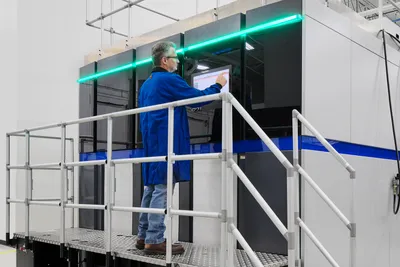
Colibrium M Line
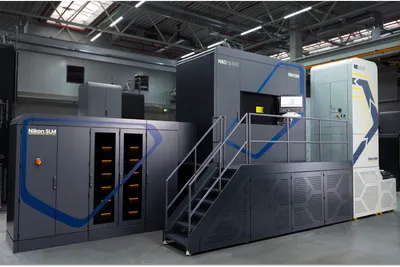
SLM Solutions NXG XII 600 Metal Additive System
Trumpf TruPrint 1000