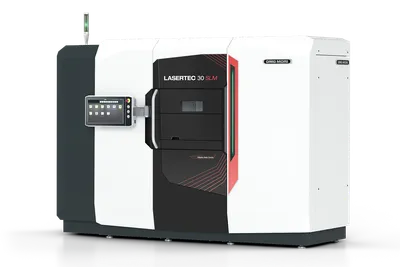
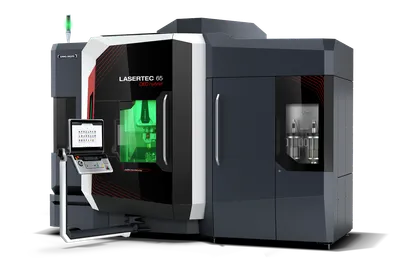
DMG Mori LASERTEC 30 SLM
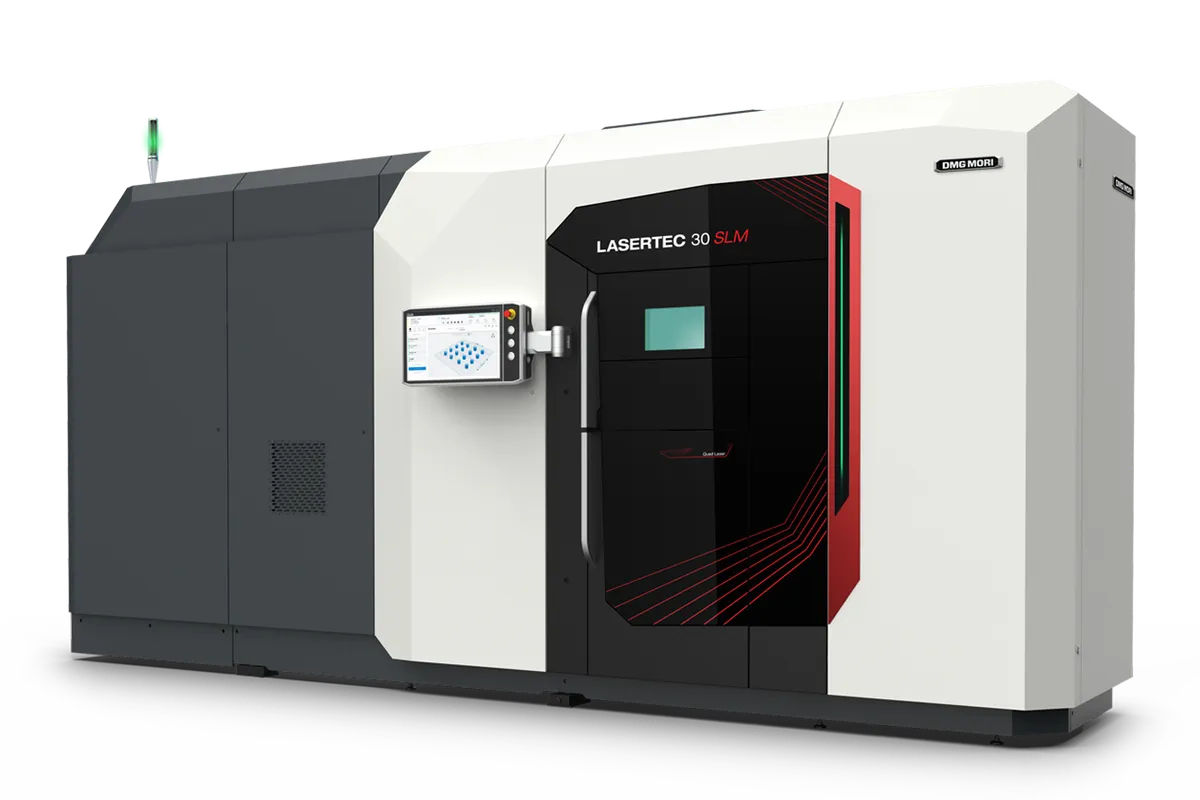
Image: dmgmori.com, DMG Mori
Key Specifications
X Travel
Y Travel
Z Travel
focus diameter
min layer thickness
laser power
How much does the DMG Mori LASERTEC 30 SLM cost?
Estimated price range
Our best estimate for a metal additive manufacturing in this class — not a quote from DMG Mori. Configuration moves it a long way.
Overview
DMG MORI's LASERTEC 30 SLM 3rd Generation is a 325 × 325 × 400 mm (12.8 × 12.8 × 15.7 in) powder bed machine, and most of what the Highlights say about this generation concerns repeatability: how the frame, the process chamber and the monitoring keep one build like the next.
Three of the listed features deal with heat. The frame is a thermosymmetric casting. The process chamber is floating, which keeps its thermal movement from shifting the rest of the machine. The z-axis positioning has active temperature compensation. In a process that puts 1,000 W of listed laser power into the chamber, layer after layer at a minimum thickness of 30 µm (0.0012 in) over a build up to 400 mm (15.7 in) tall, drift in Z during a long job is a real source of error, and these three items are aimed at it.
Two monitoring functions watch the process itself. Protective glass monitoring detects smoke residues and weld penetrations on the glass. Powder bed monitoring looks for anomalies in the layer. The recoater works in both directions and has a collision protection system.
Operation runs through CELOS X with easyAM, which provides guided workflows for running and maintaining the machine. The laser system is available as Single-, Dual- or Quad-Laser with full overlap, and the build container is exchangeable.
The remaining limits are a focus diameter of 80 µm (0.0031 in) and a workpiece weight of 400 kg (881.8 lb). Powder is managed in the rePLUG module, one material per module, with sieving and drying under inert gas; the rePLUG FLEX module for parameter development is an option.
Full Specifications
| Parameter | Value |
|---|---|
| Focus Diameter | 80 µm (0.0031 in) |
| Min Layer Thickness | 30 µm (0.0012 in) |
| Laser Power | 1,000 W |
| Max Workpiece Weight | 400 kg (881.8 lb) |
| X-Axis Travel | 325 mm (12.8 in) |
| Y-Axis Travel | 325 mm (12.8 in) |
| Z-Axis Travel | 400 mm (15.7 in) |
| CNC Control | CELOS X with easyAM |
| Build Volume | 325 x 325 x 400 mm |
| Laser Configuration | Single-, Dual- or Quad-Laser, full overlap |
| Z Axis Compensation | Active temperature compensation for z-axis positioning |
| Process Monitoring | Protective glass monitoring; powder bed monitoring |
| Recoating | Bi-directional recoating, collision protection system |
| Powder Module Option | rePLUG FLEX additional powder module (optional) |
Specifications sourced from dmgmori.com — verified 2026-10-02
Strengths & Limitations
Strengths
- Thermosymmetric casting frame and a floating process chamber to limit thermal shifts
- Active temperature compensation for z-axis positioning
- Protective glass monitoring and powder bed monitoring for anomaly detection
- CELOS X with easyAM guided workflows for operation and maintenance
- Quad-Laser version with full overlap across the 325 × 325 mm (12.8 × 12.8 in) build area
Limitations
- No accuracy or repeatability figure is published alongside the thermal features
- Minimum layer thickness is 30 µm (0.0012 in); thinner layers are not offered in the listed data
- A dedicated rePLUG module is needed for every material
- The development module rePLUG FLEX has to be ordered as an option
Best For
Frequently Asked Questions
01
DMG MORI lists three measures: a thermosymmetric casting frame, a floating process chamber to minimise thermal shifts, and active temperature compensation for the z-axis positioning. No drift or accuracy value is published with them, so ask for measured results on a full-height build.
02
Protective glass monitoring, which detects smoke residues and weld penetrations, and powder bed monitoring for anomaly detection. The recoater also has a collision protection system. DMG MORI's Highlights do not mark these items as options.
03
CELOS X with easyAM. DMG MORI describes easyAM as guided workflows that simplify machine operation and maintenance. No further control details are given in the listed data.
04
The build volume is 325 × 325 × 400 mm (12.8 × 12.8 × 15.7 in) and the maximum workpiece weight is 400 kg (881.8 lb). The focus diameter is 80 µm (0.0031 in), and the thinnest layer is 30 µm (0.0012 in).
05
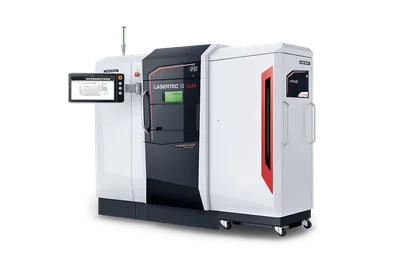
Yes, considerably. The LASERTEC 12 SLM has a 125 × 125 × 200 mm (4.9 × 4.9 × 7.9 in) build volume and 200 W of laser power. The LASERTEC 30 SLM 3rd Generation builds 325 × 325 × 400 mm (12.8 × 12.8 × 15.7 in) with 1,000 W listed.
Videos

DMG MORI
DMG MORI

DMG MORI

DMG MORI
Comparisons
More from DMG Mori
Other Metal Additive Manufacturing
SLM Solutions SLM 125