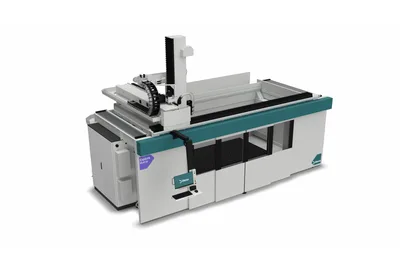
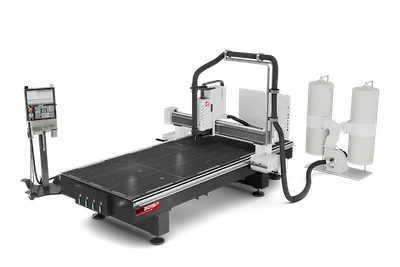
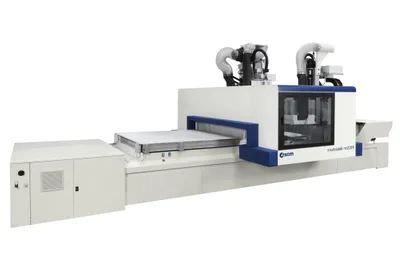
Biesse Rover Multi Up N G
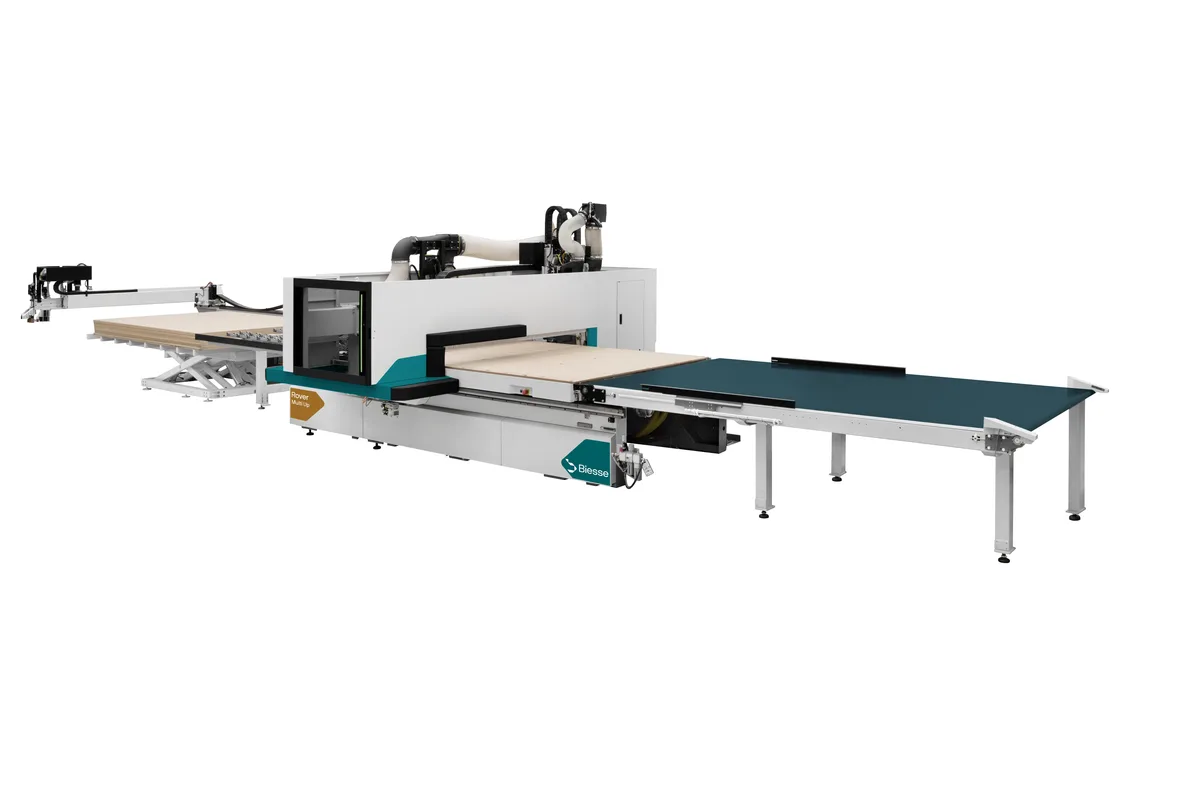
Image: biesse.com, Biesse
Key Specifications
sizes
working fields xy 1224
working fields xy 1531
working fields xy 1536
working fields xy 1836
working fields xy 2231
How much does the Biesse Rover Multi Up N G cost?
Price estimate
We do not have a price for the Biesse Rover Multi Up N G that we can stand behind, so we show no number. Configuration, options and installation move the final price a long way: a quote is the reliable figure.
Overview
Six table sizes, a configurable head and a 105 m/min vector speed define the Biesse Rover Multi Up N G, a nesting machining centre that Biesse positions for flexible, modular production. Working fields start at 2,465 x 1,260 mm (97.0 x 49.6 in) and end at 4,300 x 2,205 mm (169.3 x 86.8 in). Maximum workpiece clearance is 250 mm (9.8 in), or 170 mm (6.7 in) when the sweeping arm is fitted.
What separates it from a basic nesting router is the operating group. Biesse lists 3, 4 or 5-axis heads, chosen to suit the work, so the same frame can be a flat-panel nesting machine or one that also cuts angled and shaped parts. The clearance supports that. It leaves room for thicker blanks and for the swing of a tilting head, which a machine with 200 mm (7.9 in) such as the Rover Multi Go N G has less of.
Two machine configurations set the speeds. Full bumper is the compact one, sold stand alone or with automatic off-loading of parts, and runs 25 m/min in X, 60 m/min in Y and 65 m/min vector. The high speed version lifts X to 85 m/min and the vector figure to 105 m/min. Z is 20 m/min in both. A shop choosing between them is trading floor space against cycle time on long X moves.
Several listed systems deal with the practical side of nesting. T-Jet, patented by Biesse, clears woodchips and dust during milling to protect the finish and tool life. The Dynamic Vacuum System concentrates vacuum under the workpieces across the multizone table so that small parts in porous or laminated material stay put, with lower energy use. In the nesting cell configuration, loading and unloading devices take over panel handling, and the machine can be tied into automatic panel handling systems.
Full Specifications
| Parameter | Value |
|---|---|
| Sizes | 1224, 1531, 1536, 1836, 2231, 2243 |
| Working Fields Xy 1224 | 2,465 x 1,260 mm (97.0 x 49.6 in) |
| Working Fields Xy 1531 | 3,100 x 1,560 mm (122.0 x 61.4 in) |
| Working Fields Xy 1536 | 3,765 x 1,560 mm (148.2 x 61.4 in) |
| Working Fields Xy 1836 | 3,765 x 1,875 mm (148.2 x 73.8 in) |
| Working Fields Xy 2231 | 3,100 x 2,205 mm (122.0 x 86.8 in) |
| Working Fields Xy 2243 | 4,300 x 2,205 mm (169.3 x 86.8 in) |
| Max Workpiece Clearance | 250 mm (9.8 in) |
| Max Workpiece Clearance with Sweeping Arm | 170 mm (6.7 in) |
| Linear Speed Full Bumper | X 25 m/min, Y 60 m/min, Z 20 m/min; vector 65 m/min |
| Linear Speed High Speed | X 85 m/min, Y 60 m/min, Z 20 m/min; vector 105 m/min |
Specifications sourced from biesse.com — verified 2026-10-05
Strengths & Limitations
Strengths
- 250 mm (9.8 in) maximum workpiece clearance across all six sizes
- Operating group configurable with 3, 4 or 5-axis heads
- High speed version: 85 m/min in X and 105 m/min vector speed
- T-Jet chip and dust removal during milling, patented by Biesse
- Dynamic Vacuum System holds small parts in porous and laminated materials
Limitations
- Full bumper configuration caps X at 25 m/min and vector speed at 65 m/min
- Sweeping arm reduces clearance from 250 mm (9.8 in) to 170 mm (6.7 in)
- Z speed is 20 m/min in both configurations
- Largest working field is 4,300 x 2,205 mm (169.3 x 86.8 in); longer sheets do not fit
Best For
Frequently Asked Questions
01
It can be. Biesse lists a configurable operating group with 3, 4 or 5-axis heads depending on customer needs. A 3-axis machine nests flat panels; a 5-axis head adds angled cuts and shaped parts on the same table. The head type is part of the order, so check the configuration of any specific machine instead of assuming five axes from the model name.
02
Speed and layout. Full bumper is the compact configuration with minimal working dimensions, available stand alone or with automatic off-loading, and its X axis runs at 25 m/min with a 65 m/min vector speed. The high speed version reaches 85 m/min in X and 105 m/min vector. Y is 60 m/min and Z is 20 m/min either way.
03
Six: 2,465 x 1,260 mm (97.0 x 49.6 in), 3,100 x 1,560 mm (122.0 x 61.4 in), 3,765 x 1,560 mm (148.2 x 61.4 in), 3,765 x 1,875 mm (148.2 x 73.8 in), 3,100 x 2,205 mm (122.0 x 86.8 in) and 4,300 x 2,205 mm (169.3 x 86.8 in). The two tables with a Y of 2,205 mm suit wide sheet stock, and the 1,875 mm table sits between the standard and wide formats.
04
The Rover Multi Go N G has 200 mm (7.9 in) of clearance and an 85 m/min vector speed in its high speed version, where this machine has 250 mm (9.8 in) and 105 m/min. The Rover Multi Go N G is offered in seven sizes, including a 3,765 x 1,260 mm (148.2 x 49.6 in) table that this range does not list. Head options differ too: 3, 4 or 5-axis heads are listed here.