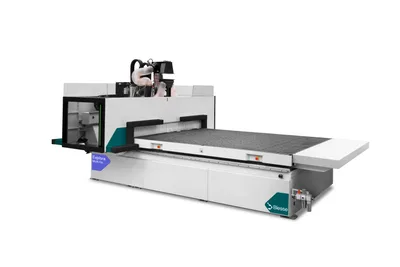
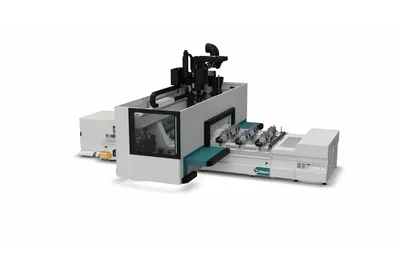
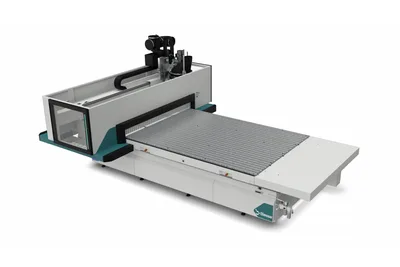
Biesse Rover Multi Go N G
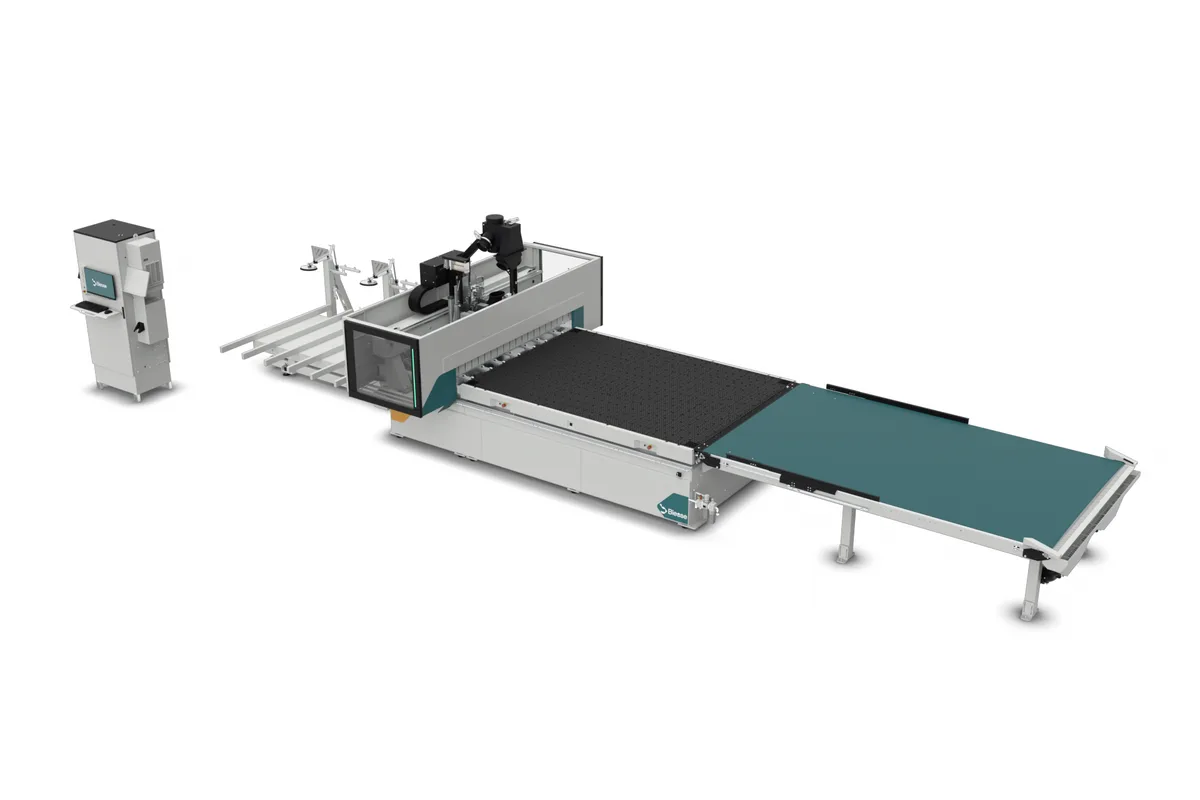
Image: biesse.com, Biesse
Key Specifications
sizes
working fields xy 1224
working fields xy 1236
working fields xy 1531
working fields xy 1536
working fields xy 1836
How much does the Biesse Rover Multi Go N G cost?
Price estimate
We do not have a price for the Biesse Rover Multi Go N G that we can stand behind, so we show no number. Configuration, options and installation move the final price a long way: a quote is the reliable figure.
Overview
The Biesse Rover Multi Go N G is a flat-table nesting machining centre for panel work, offered in seven sizes. Working fields run from 2,465 x 1,260 mm (97.0 x 49.6 in) to 4,300 x 2,205 mm (169.3 x 86.8 in), and the maximum workpiece clearance is 200 mm (7.9 in) on every size. Biesse describes it as its compact nesting machine, aimed at artisan producers and small to medium-sized businesses.
Clearance is the figure to read carefully. The 200 mm (7.9 in) applies to the bare machine. With the sweeping arm it drops to 170 mm (6.7 in), and with the rollers hold-down unit to 90 mm (3.5 in). The hold-down unit is what Biesse lists for slightly warped material, stacked panels and small components, so a shop that needs it for thin or bowed sheet should plan stack height and tool length around the 90 mm figure, not the headline one.
Axis speed depends on the safety configuration. In the Full Bumper version, which gives 360° protection with front and rear bumpers, X runs at 25 m/min and Y at 60 m/min, for a vector speed of 65 m/min. The high speed version raises X to 60 m/min and the vector speed to 85 m/min, while Z falls from 25 m/min to 20 m/min. Acceleration is listed at 4 m/s2 in X and 3 m/s2 in Y and Z. On a nest with many short moves the acceleration figures matter as much as the top speed.
Tooling sits in a rack magazine on the left side, fixed or movable, with up to 14 positions in either case. That count is worth checking against a furniture program that mixes compression cutters, drills and profile tools. Vacuum pods that fix directly to the spoilboard and draw from the multizone vacuum system allow horizontal side machining, such as profiling and horizontal boring, without an auxiliary vacuum system. For unloading there is an automatic conveyor belt, or a loading table plus unloading conveyor for a fully automated cycle. The Rover Multi Up N G offers 250 mm (9.8 in) of clearance and a 105 m/min vector speed in its high speed version.
Full Specifications
| Parameter | Value |
|---|---|
| Sizes | 1224, 1236, 1531, 1536, 1836, 2231, 2243 |
| Working Fields Xy 1224 | 2,465 x 1,260 mm (97.0 x 49.6 in) |
| Working Fields Xy 1236 | 3,765 x 1,260 mm (148.2 x 49.6 in) |
| Working Fields Xy 1531 | 3,100 x 1,560 mm (122.0 x 61.4 in) |
| Working Fields Xy 1536 | 3,765 x 1,560 mm (148.2 x 61.4 in) |
| Working Fields Xy 1836 | 3,765 x 1,875 mm (148.2 x 73.8 in) |
| Working Fields Xy 2231 | 3,100 x 2,205 mm (122.0 x 86.8 in) |
| Working Fields Xy 2243 | 4,300 x 2,205 mm (169.3 x 86.8 in) |
| Max Workpiece Clearance | 200 mm (7.9 in) |
| Max Workpiece Clearance with Sweeping Arm | 170 mm (6.7 in) |
| Max Workpiece Clearance with Rollers Hold Down Unit | 90 mm (3.5 in) |
| Linear Speed Full Bumper | X 25 m/min, Y 60 m/min, Z 25 m/min; vector 65 m/min |
| Linear Speed High Speed | X 60 m/min, Y 60 m/min, Z 20 m/min; vector 85 m/min |
| Acceleration | X 4 m/s2, Y 3 m/s2, Z 3 m/s2 |
Specifications sourced from biesse.com — verified 2026-10-05
Strengths & Limitations
Strengths
- Seven table sizes, from 2,465 x 1,260 mm (97.0 x 49.6 in) up to 4,300 x 2,205 mm (169.3 x 86.8 in)
- 200 mm (7.9 in) maximum workpiece clearance on every size
- High speed version reaches 60 m/min in both X and Y, with an 85 m/min vector speed
- Rollers hold-down unit handles slightly warped material, stacked panels and small components, and supports boring heads
- Vacuum pods fix to the spoilboard through the multizone vacuum system, with no auxiliary vacuum system needed
- Electrical cabinet built into the frame, so panels can be loaded from all sides
Limitations
- Clearance falls to 90 mm (3.5 in) once the rollers hold-down unit is fitted, and to 170 mm (6.7 in) with the sweeping arm
- Full Bumper version limits X to 25 m/min, against 60 m/min in the high speed version
- Tool magazine tops out at 14 positions, whether fixed or movable rack
- The page publishes no spindle power or speed, so the spindle has to be confirmed with Biesse
Best For
Frequently Asked Questions
01
Biesse lists seven sizes: 1224, 1236, 1531, 1536, 1836, 2231 and 2243. The smallest has a working field of 2,465 x 1,260 mm (97.0 x 49.6 in) and the largest 4,300 x 2,205 mm (169.3 x 86.8 in). Three of the sizes share an X of 3,765 mm (148.2 in) with a Y of 1,260 mm, 1,560 mm or 1,875 mm, which lets a shop pick table width to suit its sheet stock without changing length.
02
Maximum workpiece clearance is 200 mm (7.9 in). Two options reduce it: 170 mm (6.7 in) with the sweeping arm and 90 mm (3.5 in) with the rollers hold-down unit. Usable part thickness also depends on tool length and on the spoilboard. If stacked panels are part of the plan, work from the 90 mm figure.
03
It depends on the version. Full Bumper: 25 m/min in X, 60 m/min in Y, 25 m/min in Z, 65 m/min vector. High speed: 60 m/min in X and Y, 20 m/min in Z, 85 m/min vector. Acceleration is 4 m/s2 in X and 3 m/s2 in Y and Z. The Full Bumper version trades X speed for 360° protection with no obstacle on the ground around the machine.
04
Up to 14 positions. Biesse offers two magazines, both mounted on the left side: a fixed rack and a movable rack, each with up to 14 positions. Anything beyond that count means swapping tools between jobs, so group programs by tool set where possible.
05
Yes, with the vacuum pods. They are fixed directly on the spoilboard and held by the machine's multizone vacuum system, and a laser referencing system shows the operator where to place them. Biesse states the pods support horizontal side machining operations such as profiling and horizontal boring. Treat this as an addition to a nesting table for occasional edge work.