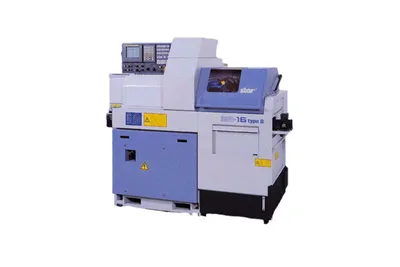
Tornos DECO 20a
This model was not found in Tornos's current lineup when we checked on 2026-10-03 . It may be a superseded or older model; the specifications below are as we last recorded them.
Key Specifications
Rapid Traverse
max bar capacity
max machining diameter
max machining length
main spindle speed
main spindle power
How much does the Tornos DECO 20a cost?
Estimated price range
Our best estimate for a swiss-type lathe in this class — not a quote from Tornos. Configuration moves it a long way.
Overview
The Tornos DECO 20a is a Swiss-type bar lathe: a horizontal sliding-headstock machine with a standard guide bushing, one main spindle and a counter spindle, built around bar up to 20.5 mm (0.807 in) and parts up to 200 mm (7.87 in) long. Tornos's current lineup does not include it, so anyone reading this is most likely assessing a used machine and should confirm the listed figures against that machine's own documentation.
Both spindles are listed at 10,000 RPM and both have a C-axis. Power is split unevenly: 5.5 kW (7.4 hp) on the main spindle and 3.7 kW (5 hp) on the counter spindle, roughly two thirds as much. That matches the usual division of labour on a bar machine, with the heavy turning done through the guide bushing and the counter spindle left for back-drilling, cross-work and finishing the cut-off face.
Tooling is arranged as 5 independent tool systems, with a front slide as the primary tool carrier and a back slide as the second, and the table lists 4 tools cutting simultaneously. Overlapping operations are the reason to choose a machine like this; a part that only ever has one tool in the cut will not run faster for it. No tailstock is listed, and the bar feed range is given as 1 - 20.5 mm. A separate row lists 1.000 in as an optional main-spindle bar diameter, worth asking a seller about if 20.5 mm (0.807 in) is marginal for the work.
Rapid traverse is 30 m/min (1,181 ipm) and the machine weighs approximately 3,200 kg (7,055 lb). The control is listed as Tornos TB-DECO / TISIS with a Fanuc PNC-DECO CNC, so find out which software version a used machine carries and whether your programmers know it. For bigger bar, the DECO 26a takes 26 mm (1.024 in) with the same 200 mm (7.87 in) machining length.
Full Specifications
| Parameter | Value |
|---|---|
| Max Bar Capacity | 20.5 mm (0.807 in) |
| Max Machining Diameter | 20.5 mm (0.807 in) |
| Max Machining Length | 200 mm (7.87 in) |
| Main Spindle Speed | 10,000 RPM |
| Main Spindle Power | 5.5 kW (7.4 hp) |
| Counter Spindle Speed | 10,000 RPM |
| Counter Spindle Power | 3.7 kW (5 hp) |
| Number of Axes | Up to 10 |
| Number of Tool Systems | 5 independent tool systems |
| Guide Bushing | Yes (standard) |
| C Axis | Main and counter spindle |
| Rapid Traverse Rate | 30 m/min (1,181 ipm) |
| Bar Feed Range | 1 - 20.5 mm |
| CNC Control | Tornos TB-DECO / TISIS |
| Machine Weight | 3,200 kg (7,055 lb) approx. |
| Machine Style | Bar, Swiss |
| Spindle Direction | Horizontal |
| Operation Type | CNC |
| CNC Type | Fanuc PNC-DECO |
| Main Spindle Turning Diameter Max | 1.000" |
| Main Spindle Turning Length Max | 7.870" |
| Main Spindle Bar Diameter Max | 0.790" |
| Main Spindle Bar Diameter Opt | 1.000" |
| Sub Spindle Turning Diameter Max | 0.790" |
| Sub Spindle Turning Length Max | 7.870" |
| Tail Stock Quill and Body | None |
| Num Main Spindles | 1 |
| Primary Tool Carrier | Front Slide |
| Second Tool Carrier | Back Slide |
| Num Simultaneous Cutting Tools | 4 |
| Num Axes | 8 |
| Number of Axes Opt | 9 |
| Number of Axes Opt 2 | 9 |
| X Axis | 0.790" |
| Z Axis | 7.870" |
Specifications compiled from manufacturer literature and industry references. Not independently verified against a published spec sheet — confirm with the manufacturer or an authorised dealer before making a purchasing decision.
Strengths & Limitations
Strengths
- Main and counter spindle are both listed at 10,000 RPM, each with a C-axis for angular positioning and milled features
- 5 independent tool systems on a front slide and a back slide, with 4 tools able to cut simultaneously
- 200 mm (7.87 in) maximum machining length through a standard guide bushing, for long slender parts from 20.5 mm (0.807 in) bar
- Bar feed range of 1 - 20.5 mm, with 1.000 in listed as an optional main-spindle bar diameter
- 30 m/min (1,181 ipm) rapid traverse keeps non-cutting moves short on parts with many tool engagements
Limitations
- Not in Tornos's current lineup: the listed figures are unverified and need confirming on the machine being offered
- The counter spindle has 3.7 kW (5 hp) against 5.5 kW (7.4 hp) on the main spindle, which limits heavy back-working cuts
- The listed figures do not agree on the number of axes, so the exact axis configuration has to be confirmed with the seller
- No tailstock is listed, and standard bar capacity stops at 20.5 mm (0.807 in)
Best For
Frequently Asked Questions
01
The listed figures give a maximum bar capacity of 20.5 mm (0.807 in) and a bar feed range of 1 - 20.5 mm. A separate row lists 1.000 in as an optional main-spindle bar diameter. Maximum machining length is 200 mm (7.87 in).
02
The main spindle is listed at 5.5 kW (7.4 hp) and the counter spindle at 3.7 kW (5 hp). Both run to 10,000 RPM and both have a C-axis, so the counter spindle matches the main spindle for speed but has about two thirds of its power.
03
It is not in Tornos's current lineup, so machines on offer are used ones. Confirm the axis configuration, the bar capacity and the control software on the specific machine instead of relying on the listed figures alone.
04
The control is listed as Tornos TB-DECO / TISIS, and the CNC type as Fanuc PNC-DECO. On a used machine, ask which software version is installed and make sure your programmers can work with it before committing.
05
The DECO 26a takes larger bar, 26 mm (1.024 in) against 20.5 mm (0.807 in), with the same 200 mm (7.87 in) maximum machining length. Main spindle speed is listed at 10,000 RPM on both.
Videos

decolletageTV

RDMO Second-Hand Machine Tools
decolletageTV

Exapro Santi Catinella
Community Discussions
Links to community discussions. Summaries are editorial — visit the original thread for full context.
Comparisons
More from Tornos
Other Swiss-Type Lathes
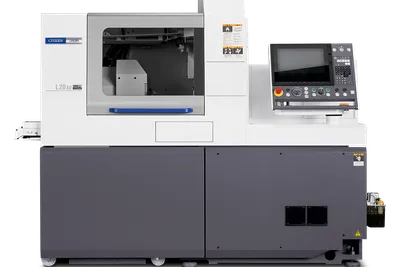
Citizen Cincom L20-XII ATC
Tsugami B0316-II
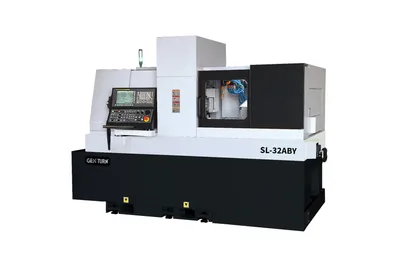
Ganesh GEN TURN SL-32ABY
Citizen Cincom E32-VIII
INDEX-Traub ABC 20