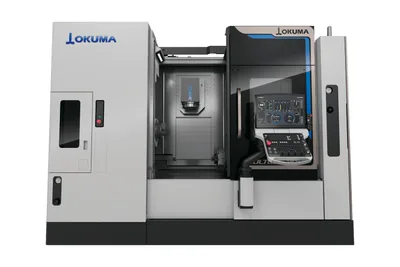
Mazak INTEGREX i-200H ST
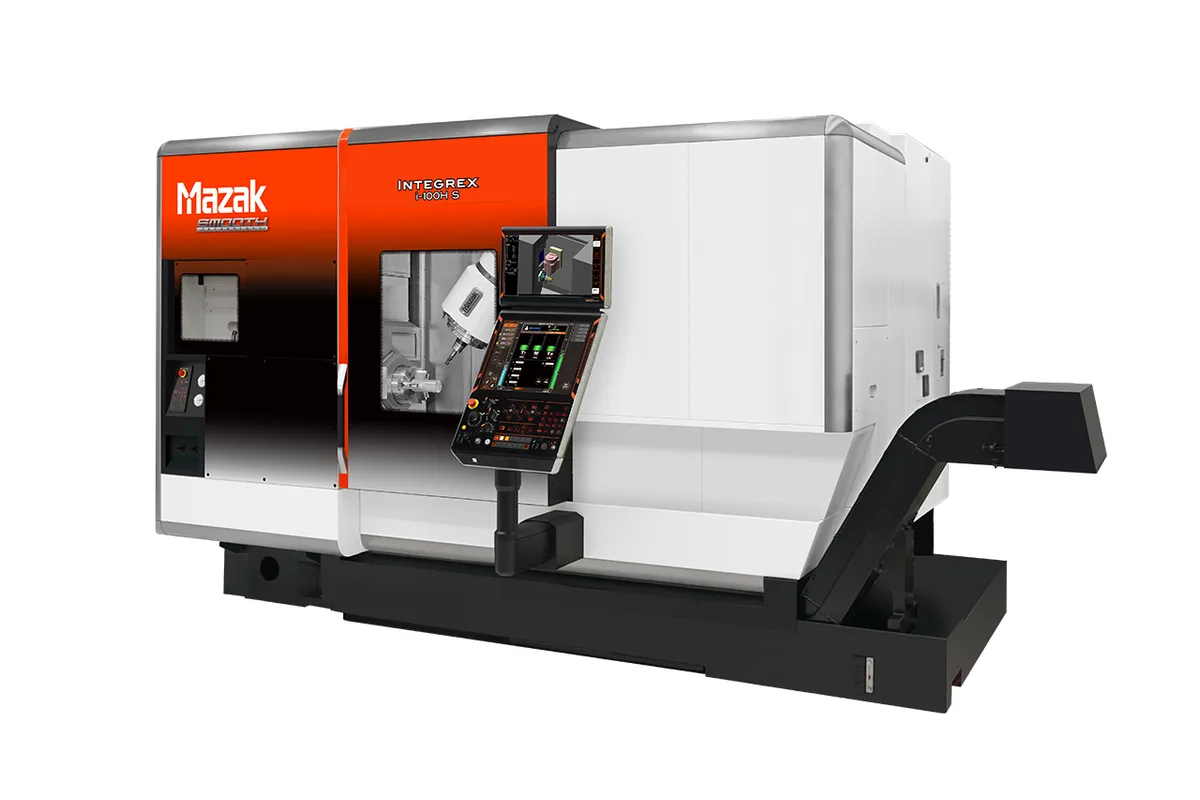
Image: mazak.com, Yamazaki Mazak
Key Specifications
X Travel
Y Travel
Z Travel
Max Spindle
Spindle Taper
Tool Capacity
How much does the Mazak INTEGREX i-200H ST cost?
Estimated price range
Our best estimate for a mill-turn / multi-tasking machine in this class — not a quote from Yamazaki Mazak. Configuration moves it a long way.
Overview
The Mazak INTEGREX i-200H ST is the model in the 8-inch chuck group of the INTEGREX i-H series that Mazak's model list configures as Second Spindle, Lower Turret. Two 8 in chuck spindles at 15 kW (20 HP) continuous each, a B-axis milling spindle above and a turret below make it a machine for production runs in which idle spindle time is the cost to remove.
Start with what can cut at once. The upper milling spindle moves 21 in (533 mm) in X, 8 in (203 mm) in Y and 35 in (889 mm) in Z. The lower turret has 8 in (203 mm) of X2 and 35 in (889 mm) of Z2, traversing at 1,575 ipm (40 m/min) on both. With full-length Z travel on each carrier, the upper tool can work at one chuck while the lower turret turns at the other, and a 15 kW (20 HP) continuous motor at each spindle means neither side has to be held back. The main spindle goes to 22 kW (30 HP) (40% ED), the second to 18.5 kW (25 HP) (40% ED); both run to 5,000 rpm.
The lower turret has limits of its own. It machines up to Ø16 in (406 mm), where the machine's maximum turning diameter is Ø24 in (610 mm), and it holds tools on a 1 in (25 mm) shank height with Ø1 in (25 mm) boring bar shanks. The table gives a tool count of 12 tools next to those turret rows and no magazine capacity for the HSK-A63 milling spindle, so have Mazak confirm both numbers. The milling spindle is rated 11 kW (15 HP) continuous and 12 kW (16 HP) (40% ED) at up to 12,000 rpm.
All of that hardware comes to 26,080 lb (11,830 kg), with a footprint of 138 in (3,505 mm) × 85 in (2,159 mm) and a height of 98 in (2,489 mm). The H-series flat front and the automation Mazak lists for the series, including a bar feeder and an Auto Jaw Changer handling 10 sets of jaws per spindle, fit the same production purpose.
Full Specifications
| Parameter | Value |
|---|---|
| Bed Length Type | 850U |
| Max Turning Diameter | Ø24 in (610 mm) |
| Max Machining Diameter Lower Turret | Ø16 in (406 mm) |
| Max Turning Length | 33 in (838 mm) |
| Chuck Size | 8 in |
| Max Spindle Speed | 5,000 rpm |
| Spindle Power Intermittent | 22 kW (30 HP) (40% ED) |
| Spindle Motor Power | 15 kW (20 HP) continuous |
| Sub Spindle Chuck Size | 8 in |
| Sub Spindle Speed | 5,000 rpm |
| Sub Spindle Power Intermittent | 18.5 kW (25 HP) (40% ED) |
| Sub Spindle Power | 15 kW (20 HP) continuous |
| Milling Spindle Speed | 12,000 rpm |
| Milling Spindle Torque Intermittent | 57.3 Nm (42 ft-lb) (40% ED) |
| Milling Spindle Torque | 46.1 Nm (34 ft-lb) continuous |
| Milling Spindle Power Intermittent | 12 kW (16 HP) (40% ED) |
| Milling Spindle Power | 11 kW (15 HP) continuous |
| B Axis Indexing Increment | 0.0001° |
| Tool Capacity | 12 tools |
| Lower Turret Tool Shank Height | 1 in (25 mm) |
| Lower Turret Boring Bar Shank Diameter | Ø1 in (25 mm) |
| Spindle Taper | HSK-A63 |
| Max Tool Diameter (full magazine) | Ø4 in (102 mm) |
| Max Tool Diameter (adjacent pockets empty) | Ø5 in (127 mm) |
| Max Tool Length | 12 in (305 mm) |
| Max Tool Weight | 11 lb (5 kg) |
| X-Axis Travel | 21 in (533 mm) |
| Y-Axis Travel | 8 in (203 mm) |
| Z-Axis Travel | 35 in (889 mm) |
| Travel X2 Axis Lower Turret | 8 in (203 mm) |
| Travel Z2 Axis Lower Turret | 35 in (889 mm) |
| B Axis Range | -30° - +210° |
| Rapid Traverse X | 1,890 ipm (48 m/min) |
| Rapid Traverse Y | 1,575 ipm (40 m/min) |
| Rapid Traverse Z | 1,575 ipm (40 m/min) |
| Rapid Traverse X2 Axis Lower Turret | 1,575 ipm (40 m/min) |
| Rapid Traverse Z2 Axis Lower Turret | 1,575 ipm (40 m/min) |
| Floor Space Required | 138 in (3,505 mm) × 85 in (2,159 mm) (W × L) |
| Machine Height | 98 in (2,489 mm) |
| Machine Weight | 26,080 lb (11,830 kg) |
Specifications sourced from mazak.com — verified 2026-10-02
Strengths & Limitations
Strengths
- Second Spindle, Lower Turret configuration: two 8 in chuck spindles, a B-axis milling spindle and a lower turret in one machine
- 15 kW (20 HP) continuous at both the main and second spindles, so simultaneous cuts at each chuck are not power-starved
- Lower turret with 35 in (889 mm) of Z2 travel, equal to the upper Z travel, and 1,575 ipm (40 m/min) rapids
- Main spindle reaches 22 kW (30 HP) (40% ED) and the second spindle 18.5 kW (25 HP) (40% ED)
- 33 in (838 mm) of turning length within a Ø24 in (610 mm) maximum turning diameter
Limitations
- Lower turret reaches only Ø16 in (406 mm) and its X2 travel is 8 in (203 mm)
- Lower turret tooling is restricted to 1 in (25 mm) shank height and Ø1 in (25 mm) boring bar shanks
- The table's 12 tools figure sits with the lower-turret rows and no milling-spindle magazine capacity is stated
- Milling spindle power of 11 kW (15 HP) continuous is below the 15 kW (20 HP) continuous of each turning spindle
- Weighs 26,080 lb (11,830 kg) and stands 98 in (2,489 mm) high, which affects foundation and headroom planning
Best For
Frequently Asked Questions
01
Mazak's model list gives it as Second Spindle, Lower Turret, in the 8-inch chuck group of the INTEGREX i-H series. The table shows main and second spindles with 8 in chucks, a 12,000 rpm B-axis milling spindle with a range of -30° to +210°, and a lower turret with its own X2 and Z2 axes.
02
Its maximum machining diameter is Ø16 in (406 mm). X2 travel is 8 in (203 mm) and Z2 travel is 35 in (889 mm), both at 1,575 ipm (40 m/min). Tools mount on a 1 in (25 mm) shank height, and boring bars on a Ø1 in (25 mm) shank. The table shows 12 tools alongside these rows.
03
Main spindle: 15 kW (20 HP) continuous and 22 kW (30 HP) (40% ED). Second spindle: 15 kW (20 HP) continuous and 18.5 kW (25 HP) (40% ED). Both run to 5,000 rpm. The milling spindle is rated 11 kW (15 HP) continuous and 12 kW (16 HP) (40% ED), with 46.1 Nm (34 ft-lb) of continuous torque.
04
Both combine a second spindle with a lower turret on 33 in (838 mm) of turning length. The INTEGREX i-100ST NEO lists 6 in chucks, 6,000 rpm and 7.5 kW (10 HP) continuous at 25,419 lb (11,530 kg). The i-200H ST has 8 in chucks, 5,000 rpm and 15 kW (20 HP) continuous at 26,080 lb (11,830 kg), and lists HSK-A63 where that model lists HSK-T63 and HSK-A63.
05
Weight and height first: 26,080 lb (11,830 kg) and 98 in (2,489 mm), on a footprint of 138 in (3,505 mm) × 85 in (2,159 mm). Then confirm the milling-spindle magazine capacity, which the table does not state, and which of the series automation items, such as the bar feeder or Auto Jaw Changer, the order includes.
Videos

Mazak North America

Mazak North America

MazakEurope

Yamazaki Mazak Corporation [English]
Community Discussions
Comparison and buying advice
Links to community discussions. Summaries are editorial — visit the original thread for full context.
More from Yamazaki Mazak
Other Mill-Turn / Multi-Tasking Machines
Okuma MULTUS B400
Hurco TMX8MYi
Victor Taichung VMT-X400
Willemin-Macodel 408MT
DN Solutions SMX 3100 ST