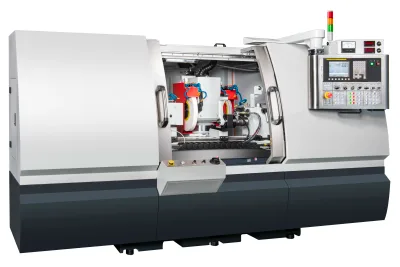
Junker JUMAT 6000
Key Specifications
distance between centers
center height
max workpiece weight
max grinding wheel diameter
grinding spindle type
wheel speed
How much does the Junker JUMAT 6000 cost?
Estimated price range
Our best estimate for a cnc grinding machine in this class — not a quote from Junker Group. Configuration moves it a long way.
Overview
The Junker JUMAT 6000 is listed as a long-bed CNC cylindrical grinder with 6,000 mm (236 in) between centers, a 300 mm (11.8 in) center height and a maximum workpiece weight of 1,500 kg (3,307 lb). The model does not appear on Junker Group's current product pages, and the listed figures could not be checked against a maker document. Treat them as a guide to be confirmed on the machine itself.
On a part that long, support and taper control decide the result more than the wheel does, and the table addresses both. Steady rests are listed as CNC-positioned, self-centering and programmable. In-process gauging is described as multi-point, for taper detection and correction, which is the error a slender shaft tends to show along its length. The workhead range is 1 - 300 RPM, a low band that suits heavy, large-diameter work.
The wheelhead takes a grinding wheel up to 600 mm (23.6 in) in diameter on a high-frequency motorized spindle, with wheel speed up to 120 m/s with CBN wheels and a CNC-controlled swivel of ±45°. Hydrostatic guideways on X and Z and a reinforced mineral cast polymer concrete bed are listed, as is compatibility with a robot or gantry loader. Machine weight, footprint and spindle power are not given.
Full Specifications
| Parameter | Value |
|---|---|
| Distance Between Centers | 6,000 mm (236 in) |
| Center Height | 300 mm (11.8 in) |
| Max Workpiece Weight | 1,500 kg (3,307 lb) |
| Max Grinding Wheel Diameter | 600 mm (23.6 in) |
| Grinding Spindle Type | High-frequency motorized spindle |
| Wheel Speed | Up to 120 m/s with CBN wheels |
| Wheelhead Swivel | CNC-controlled ±45° |
| Guideways | Hydrostatic on X and Z axes |
| Machine Bed | Mineral cast polymer concrete, reinforced |
| Steady Rests | CNC-positioned, self-centering, programmable |
| CNC Control | Siemens 840D sl with Junker software interface |
| In Process Gauging | Multi-point gauging for taper detection and correction |
| Workhead Speed Range | 1 - 300 RPM |
| Automation Interface | Robot / gantry loader compatible |
Specifications compiled from manufacturer literature and industry references. Not independently verified against a published spec sheet — confirm with the manufacturer or an authorised dealer before making a purchasing decision.
Strengths & Limitations
Strengths
- 6,000 mm (236 in) between centers with a 1,500 kg (3,307 lb) workpiece limit, as listed
- CNC-positioned, self-centering, programmable steady rests
- Multi-point in-process gauging for taper detection and correction
- Wheelhead swivel of ±45° under CNC control, and wheel speed up to 120 m/s with CBN wheels
- Hydrostatic guideways on the X and Z axes
Limitations
- The listed figures are unverified, and the model is not on Junker Group's current product pages
- Workhead speed is limited to 1 - 300 RPM
- No machine weight, footprint or connected load is listed for a machine with 6,000 mm (236 in) between centers
- The 120 m/s wheel speed is stated for CBN wheels only
Best For
Frequently Asked Questions
01
The listed figures are 6,000 mm (236 in) between centers, a 300 mm (11.8 in) center height and a maximum workpiece weight of 1,500 kg (3,307 lb). The maximum grinding wheel diameter is 600 mm (23.6 in).
02
No. The model is not on Junker Group's current product pages and the table could not be checked against a maker document. Confirm every figure that matters to the job, starting with length between centers, workpiece weight and wheel speed, against the machine's own documentation.
03
Two listed features address it. The steady rests are CNC-positioned, self-centering and programmable, so support can follow the part program. In-process gauging is multi-point, for taper detection and correction.
04
Wheel speed is up to 120 m/s with CBN wheels, on a high-frequency motorized spindle. The workhead speed range is 1 - 300 RPM. The table gives no speed for conventional wheels and no spindle power.
More from Junker Group
Other CNC Grinding Machines
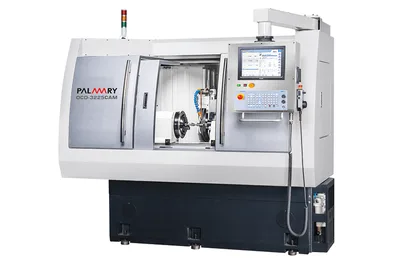
Palmary OCD-32100CAM
Blohm Profimat 412
EMAG SN 320