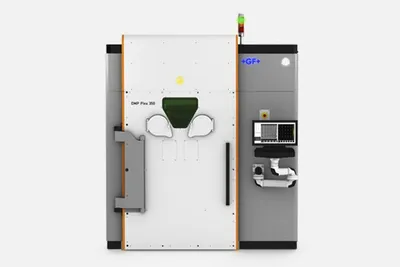
GF Machining DMP Factory 500
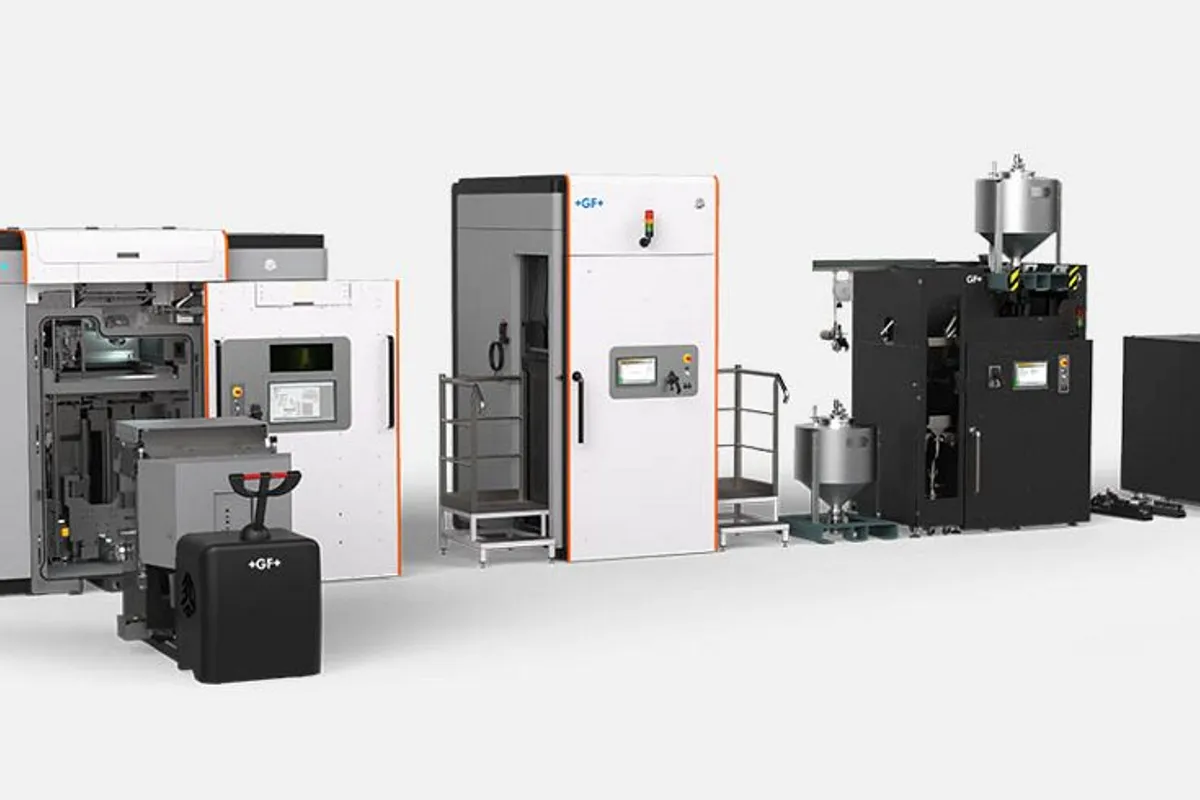
Image: assets.georgfischer.com, GF Machining Solutions
Key Specifications
Repeatability
build volume
layer thickness
recoater type
dimensional accuracy
positional repeatability
How much does the GF Machining DMP Factory 500 cost?
Estimated price range
Our best estimate for a metal additive manufacturing in this class — not a quote from GF Machining Solutions. Configuration moves it a long way.
Overview
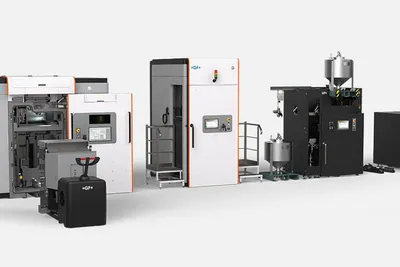
GF Machining Solutions' DMP Factory 500 is the large-format machine of its metal powder-bed range: a cubic build space of 500 x 500 x 500 mm (includes build plate) melted by 3 x 500 W fiber lasers at 1070 nm. It is laid out as a production line of separate units rather than one printer, and the table sizes each of them.
The build process itself is defined by a few rows. The chamber holds a vacuum-based atmosphere at < 25 ppm O₂, a level chosen for titanium and nickel alloys that degrade when they take up oxygen. Layers are adjustable from a minimum of 2 µm to a maximum of 200 µm, with 60 µm as the typical value, which leaves room to trade surface quality against build time on the same job. Powder is spread by a soft blade recoater, which tolerates parts that warp slightly above the powder line better than a rigid blade would.
Listed materials are LaserForm Ni718, Ti Gr23 and AlSi10Mg, with additional alloys on request. Dimensional accuracy is ±0.1–0.2% with ±100 µm minimum, and positional repeatability is 75 µm (3σ) in X, Y and Z; the smallest feature the table allows is 300 μm. On a part that fills the plate, the percentage term will dominate the tolerance band, so datum faces should be left with stock for machining.
The printer module measures 3,010 x 2,350 x 3,160 mm and weighs 8232 kg (excluding RPM). Around it sit a depowdering module of 3,000 x 2,530 x 3,300 mm, a powder recycling module of 1,935 x 2,262 x 2,521 mm, a parking module of 1450 x 1780 x 1850 mm and the 1120 x 850 x 1400 mm removable print module that travels between them. All of this comes from the listed table, which has not been checked against a current product page.
Full Specifications
| Parameter | Value |
|---|---|
| Build Volume | 500 x 500 x 500 mm (includes build plate) |
| Layer Thickness | Adjustable, min 2 µm, max 200 µm; typical 60 µm |
| Recoater Type | Soft blade recoater |
| Dimensional Accuracy | ±0.1–0.2% with ±100 µm minimum |
| Positional Repeatability | Δx, Δy, Δz = 75 µm (3σ) |
| Atmosphere | < 25 ppm O₂ vacuum-based |
| Compatible Materials | LaserForm Ni718, Ti Gr23, AlSi10Mg, and additional alloys on request |
| Printer Module Dimensions | 3,010 x 2,350 x 3,160 mm |
| Depowdering Module Dimensions | 3,000 x 2,530 x 3,300 mm |
| Powder Recycling Module Dimensions | 1,935 x 2,262 x 2,521 mm |
| Printer Module Uncrated | 3010 x 2350 x 3160 mm |
| Printer Module Weight | 8232 kg (excluding RPM) |
| Depowdering Module Uncrated | 3000 x 2530 x 3300 mm |
| Powder Recycling Module Uncrated | 1935 x 2262 x 2521 mm |
| Removable Print Module | 1120 x 850 x 1400 mm |
| Parking Module | 1450 x 1780 x 1850 mm |
| Laser Type | 3 x 500 W / Fiber laser |
| Laser Wavelength | 1070 nm |
| Layer Thickness Range Preset | Adjustable, min. 2 μm, max.200 μm, typ. 60 μm |
| Build Envelope | 500 x 500 x 500 mm (height inclusive of build plate) |
| Material Deposition | Soft blade recoater |
| Repeatability | Δx (3σ) = 75um, Δy (3σ) = 75um, Δz (3σ) = 75um |
| Minimum Feature Size | 300 μm |
| Accuracy | ± 0.1-0.2% with ± 100 μm minimum |
Specifications compiled from manufacturer literature and industry references. Not independently verified against a published spec sheet — confirm with the manufacturer or an authorised dealer before making a purchasing decision.
Strengths & Limitations
Strengths
- Cubic 500 x 500 x 500 mm build space including the build plate
- 3 x 500 W fiber lasers at 1070 nm for the large plate
- Vacuum-based chamber atmosphere below 25 ppm O₂ for oxygen-sensitive alloys
- Layer thickness from 2 µm to 200 µm (typical 60 µm) lets one machine run fine and coarse parameter sets
- Removable 1120 x 850 x 1400 mm print module shared with separate depowdering and recycling units
Limitations
- Accuracy of ±0.1–0.2% with ±100 µm minimum means large parts carry a wide tolerance band before machining
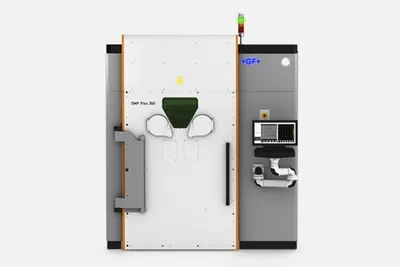
- Positional repeatability is 75 µm (3σ), coarser than the 60 µm listed for the DMP Flex 350
- The printer module weighs 8232 kg (excluding RPM) and the depowdering module is 3,300 mm tall
- Three materials are listed (LaserForm Ni718, Ti Gr23, AlSi10Mg); anything else is on request
Best For
Frequently Asked Questions
01
The table lists a vacuum-based chamber at < 25 ppm O₂. Keeping oxygen that low protects reactive powders such as Ti Gr23 and nickel alloys like LaserForm Ni718 from pick-up during melting, which affects the mechanical properties of the finished part.
02
Layers are adjustable from a minimum of 2 µm to a maximum of 200 µm, with 60 µm as the typical setting. Thin layers give finer surfaces and detail; thick layers shorten build time on bulky parts. The parameter set has to exist for the chosen material.
03
The DMP Flex 350 builds 275 x 275 x 420 mm and lists 60 µm repeatability and a 200 μm minimum feature. The DMP Factory 500 builds 500 x 500 x 500 mm with 3 x 500 W lasers, a 75 µm repeatability and a 300 μm minimum feature.
04
A printer module (3,010 x 2,350 x 3,160 mm, 8232 kg excluding RPM), a depowdering module (3,000 x 2,530 x 3,300 mm), a powder recycling module (1,935 x 2,262 x 2,521 mm), a parking module (1450 x 1780 x 1850 mm) and the removable print module (1120 x 850 x 1400 mm).
Videos
UNITED MACHINING

Practical Machinist

Peak Machine Sales (Peak EDM)

Agence Vidéo Bluevista
More from GF Machining Solutions
Other Metal Additive Manufacturing