GF Machining DMP Flex 350 Dual
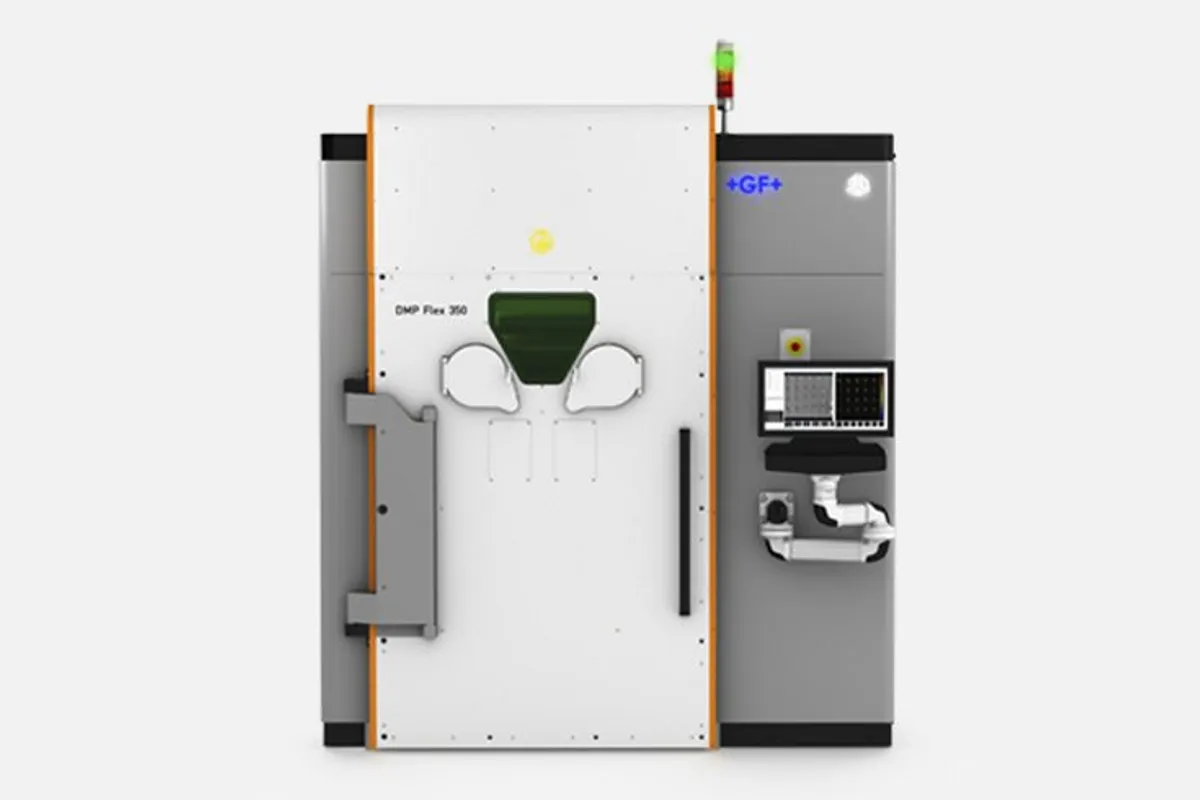
Image: assets.georgfischer.com, GF Machining Solutions
Key Specifications
Repeatability
build volume
layer thickness
dimensional accuracy
positional repeatability
atmosphere
How much does the GF Machining DMP Flex 350 Dual cost?
Estimated price range
Our best estimate for a metal additive manufacturing in this class — not a quote from GF Machining Solutions. Configuration moves it a long way.
Overview
The DMP Flex 350 Dual is a laser powder-bed metal printer with a build volume of 275 x 275 x 420 mm, the height measured including the build plate. The laser row of the listed table reads 1 or 2 or 3 x 500 W fiber lasers at 1070 nm, and the Dual is the two-laser build of that platform. A soft blade recoater lays down each layer, and layer thickness is adjustable from a minimum of 5 µm, with 30, 60 and 90 µm given as the typical settings.
These are the listed figures for this page; they have not been matched to a current product page, so confirm the configuration before ordering. One row mixes two machines: the dimensions line gives 2370 x 2400 x 2869 mm for the DMP Flex 350 in printing condition and 2370 x 2400 x 3470 mm for the DMP Factory 350. The build envelope row likewise adds a 350 x 350 x 350 mm envelope that belongs to the triple-laser machine only.
For part design the limits to respect are a minimum feature size of 200 μm and a minimum wall thickness of 150 μm. Accuracy is listed as ±0.1–0.2% with a ±100 µm minimum, so on small features the fixed floor governs rather than the percentage. Repeatability is 60 µm (3σ) in each of X, Y and Z. The build chamber runs a vacuum-based atmosphere at < 25 ppm O₂, which is what reactive alloys such as titanium need, and the material list covers titanium, aluminum, steel, cobalt-chrome, nickel, copper and refractory alloys.
The machine weighs 4200 kg and stands 2,869 mm high in printing condition, so check floor loading and ceiling height early. Against the DMP Factory 500, which prints 500 x 500 x 500 mm with 3 x 500 W lasers, the Flex 350 is the smaller cell for parts that fit a 275 mm square footprint.
Full Specifications
| Parameter | Value |
|---|---|
| Build Volume | 275 x 275 x 420 mm (includes build plate) |
| Layer Thickness | Adjustable, min 5 µm; typical 30, 60, 90 µm |
| Dimensional Accuracy | ±0.1–0.2% with ±100 µm minimum |
| Positional Repeatability | Δx, Δy, Δz = 60 µm (3σ) |
| Atmosphere | < 25 ppm O₂ vacuum-based |
| Compatible Materials | Titanium, aluminum, steel, cobalt-chrome, nickel, copper, refractory alloys |
| Machine Dimensions W X D X H | 2,370 x 2,400 x 2,869 mm |
| Machine Dimensions | 2370 x 2400 x 2869 mm (DMP Flex 350 in printing condition)2370 x 2400 x 3470 mm (DMP Factory 350 in printing condition) |
| Machine Weight | 4200 kg |
| Laser Type | 1 or 2 or 3 x 500 W / Fiber laser |
| Laser Wavelength | 1070 nm |
| Layer Thickness Range Preset | Adjustable, min. 5 μm, typical: 30, 60, 90 μm |
| Build Envelope | 275 x 275 x 420 mm (height inclusive of build plate) – DMP 350 Single / Dual / Triple laser350 x 350 x 350 mm - DMP 350 Triple laser |
| Material Deposition | Soft blade recoater |
| Minimum Feature Size | 200 μm |
| Minimum Wall Thickness | 150 μm |
| Accuracy | ± 0.1-0.2% with ± 100 μm minimum |
| Repeatability | Δx (3σ) = 60 μm, Δy (3σ) = 60 μm, Δz (3σ) = 60 μm |
Specifications compiled from manufacturer literature and industry references. Not independently verified against a published spec sheet — confirm with the manufacturer or an authorised dealer before making a purchasing decision.
Strengths & Limitations
Strengths
- Build volume of 275 x 275 x 420 mm including the build plate, tall enough for long parts standing upright
- Two 500 W fiber lasers at 1070 nm on the Dual, from a platform listed with 1, 2 or 3 lasers
- Layer thickness adjustable from 5 µm, with 30, 60 and 90 µm as typical settings for fine or faster builds
- Vacuum-based atmosphere at < 25 ppm O₂ suits titanium and other reactive alloys
- Repeatability of 60 µm (3σ) on X, Y and Z, with a 200 μm minimum feature and 150 μm minimum wall
Limitations
- The footprint of 275 x 275 mm limits wide parts; the 350 x 350 x 350 mm envelope in the table applies only to the triple-laser machine
- Accuracy is ±0.1–0.2% with a ±100 µm minimum, so critical fits still need post-machining
- 4200 kg and 2,869 mm tall in printing condition: floor loading and room height must be checked
- The listed table has not been matched to a current product page and mixes rows of the DMP Factory 350
Best For
Frequently Asked Questions
01
275 x 275 x 420 mm, with the height measured including the build plate. The table also mentions a 350 x 350 x 350 mm envelope, but that row is tied to the triple-laser machine, not to the Dual.
02
The laser row lists 1 or 2 or 3 x 500 W fiber lasers at 1070 nm for the platform. The Dual is the two-laser version, so it carries two 500 W sources. Confirm the laser count on the quotation, since the table covers all three builds.
03
The listed materials are titanium, aluminum, steel, cobalt-chrome, nickel, copper and refractory alloys. The chamber atmosphere is vacuum-based at < 25 ppm O₂, which matters most for titanium and other alloys that pick up oxygen during the build.
04
Accuracy is listed as ±0.1–0.2% with a ±100 µm minimum, and repeatability as 60 µm (3σ) in X, Y and Z. The smallest feature is 200 μm and the thinnest wall 150 μm. Bearing seats and sealing faces will still need finish machining.
05
The table gives 2370 x 2400 x 2869 mm for the DMP Flex 350 in printing condition and a machine weight of 4200 kg. Allow extra room for powder handling around the cell; the table does not list those units for this machine.
Videos

United Machining (USA)
More from GF Machining Solutions
Other Metal Additive Manufacturing
DN Solutions DLX 325 D
DMG Mori LASERTEC 125 DED hybrid
Markforged Metal X Gen 2
EOS M 100
Desktop Metal Shop System