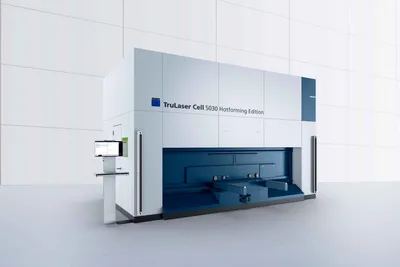
GF Machining CHARMILLES LASER P 1000 U
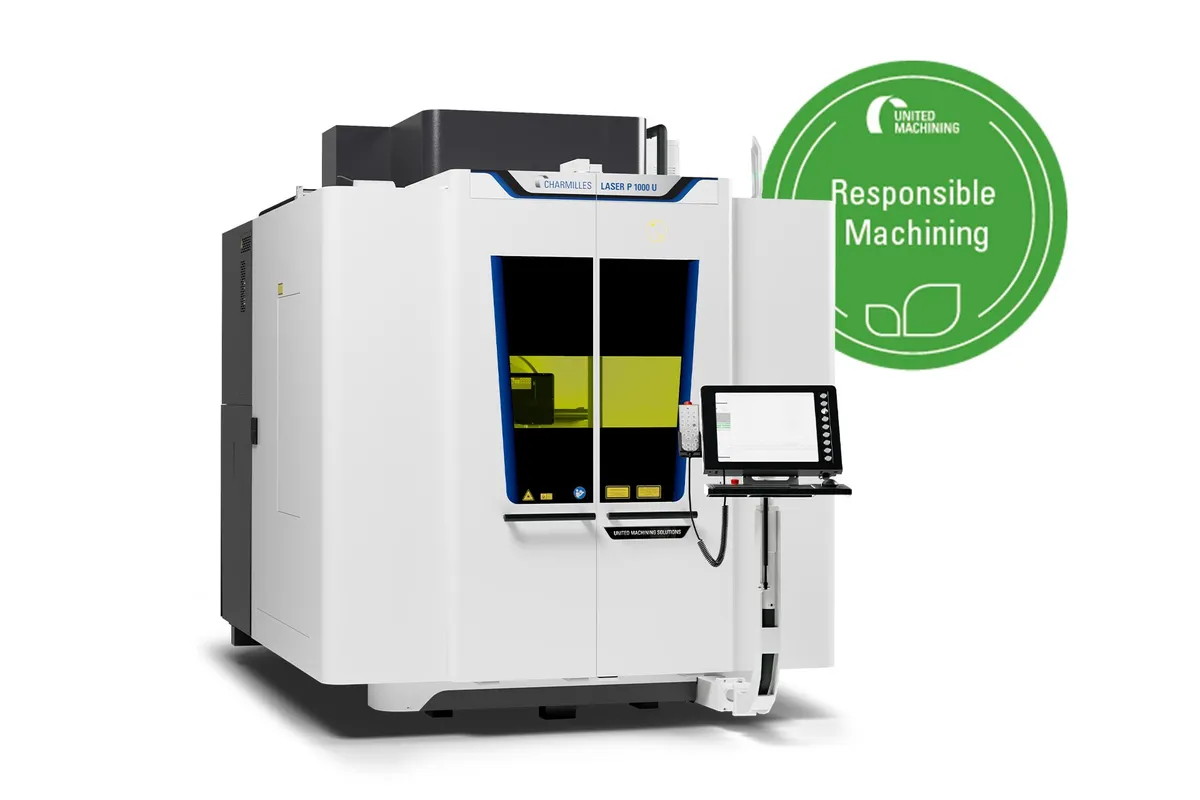
Image: assets.georgfischer.com, GF Machining Solutions
Key Specifications
x y z travel
laser tilt a axis
rotary b axis
max 5 axis envelope
laser source
focal lengths
How much does the GF Machining CHARMILLES LASER P 1000 U cost?
Estimated price range
Our best estimate for a cnc laser cutting machine in this class — not a quote from GF Machining Solutions. Configuration moves it a long way.
Overview
The CHARMILLES LASER P 1000 U is a 5-axis laser texturing machine with 1,000 x 560 x 550 mm of X, Y and Z travel and a 5-axis working envelope of 460 mm dia. x 570 mm. Its source is a ytterbium pulsed fiber laser of 50W or 100W, and the figures on this page are the listed ones.
Five axes here means a laser head that tilts from -50° to +135° on A, above a rotary B axis that turns 360° at up to 160°/s. Tilting the head keeps the beam close to perpendicular on curved mould surfaces, and that angle is what keeps texture depth even across a 3D cavity. The tilt is asymmetric, so a part with deep side walls should be set up with those walls on the +135° side.
Focal lengths of 100, 160 and 254 mm are listed. A short focal length gives a smaller spot for fine detail; a long one gives more stand-off and depth of focus where the head has to work down into a cavity. The machine weighs approx. 6,500 kg.
The CHARMILLES LASER P 600 U lists 600 x 460 x 830 mm of travel and a 370 mm dia. x 530 mm envelope. Against it, the P 1000 U gives up Z stroke for more X and Y and a larger 5-axis envelope, which suits wider, flatter moulds.
Full Specifications
| Parameter | Value |
|---|---|
| X Y Z Travel | 1,000 x 560 x 550 mm (39.4 x 22.0 x 21.7 in) |
| Laser Tilt A Axis | -50° / +135° |
| Rotary B Axis | 360°, max. 160°/s |
| Max 5 Axis Envelope | 460 mm dia. x 570 mm |
| Laser Source | Ytterbium pulsed fiber laser, 50W / 100W |
| Focal Lengths | 100 / 160 / 254 mm |
| Machine Weight | approx. 6,500 kg (14,330 lb) |
| Machine Dimensions | 2695 x 3727 x 2933 mm106.1 x 146.7 x 115.4 in |
| Approx Machine Weight | 6,500 kg (14,330 lbs) |
| Focal Length | 100/160/254 mm³.93/6.3/10 in |
| Ytterbium Pulsed Fibre Laser | 50 / 100 W |
| Max Power Consumption | 4 kW |
| X Y Z Travels | 1200 x 900 x 1200 mm47.2 x 35.4 x 47.2 in |
| Laser Titling Axis A | 180, 210 °/s, ° |
| B Axis Max Speed | 180 °/s. ° |
| B Axis Table Diameter | 800 mm (31.6 in) |
| Max Workpiece Weight 5 Axis | 1,200 kg (2,646 lbs) |
Specifications compiled from manufacturer literature and industry references. Not independently verified against a published spec sheet — confirm with the manufacturer or an authorised dealer before making a purchasing decision.
Strengths & Limitations
Strengths
- 1,000 x 560 x 550 mm of travel for wide mould inserts and panels
- 5-axis envelope of 460 mm dia. x 570 mm for textured 3D parts
- Laser head tilts from -50° to +135° over a 360° B axis turning at up to 160°/s
- Choice of 50W or 100W ytterbium pulsed fiber laser
- Three listed focal lengths: 100, 160 and 254 mm
Limitations
- 550 mm of Z travel, against 830 mm on the CHARMILLES LASER P 600 U, limits tall parts
- Parts larger than the 460 mm dia. x 570 mm envelope cannot use the full head tilt
- Approx. 6,500 kg machine weight needs floor loading and delivery access checked
- Listed source power tops out at 100W, which sets the removal rate on deep textures
Best For
Frequently Asked Questions
01
The listed travels are 1,000 x 560 x 550 mm in X, Y and Z. For full 5-axis work the envelope is 460 mm dia. x 570 mm, so a part that needs texture on all sides should fit inside that cylinder.
02
A ytterbium pulsed fiber laser, listed at 50W or 100W. The higher power removes material faster on deep textures; the lower one suits fine, shallow work where control matters more than speed.
03
The CHARMILLES LASER P 600 U lists 600 x 460 x 830 mm of travel, a 370 mm dia. x 530 mm 5-axis envelope and an A axis of -55° / +135°. The P 1000 U has more X and Y, a 460 mm dia. x 570 mm envelope and -50° / +135° of tilt, but less Z travel.
04
100, 160 and 254 mm are listed. A short focal length concentrates the beam into a smaller spot for fine detail; a long one gives more stand-off and depth of focus, which helps when texturing the walls of deep cavities.
More from GF Machining Solutions
Other CNC Laser Cutting Machines
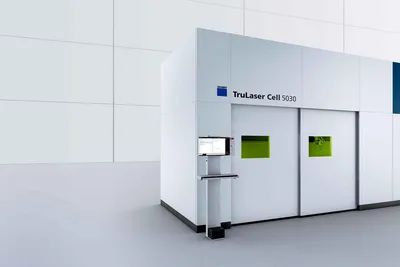
Trumpf TruLaser Cell 5030
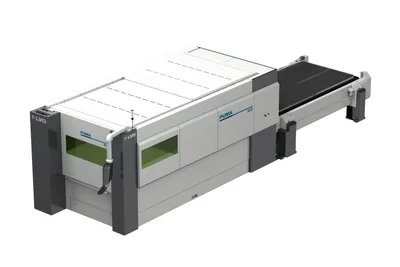
LVD Puma 6020
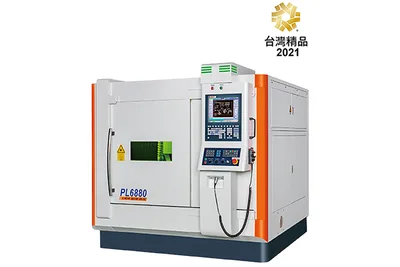
CHMER PL6880
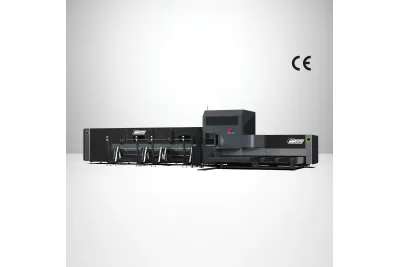
Penta Laser WPB 6025 / 9025
Accurl MasterLINE X 3001.15