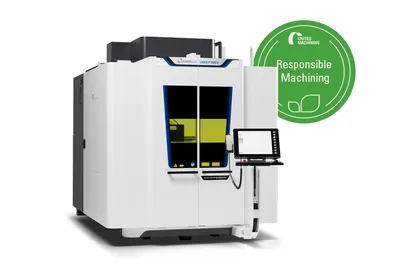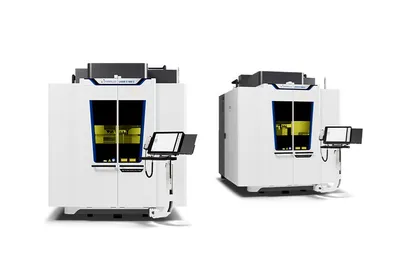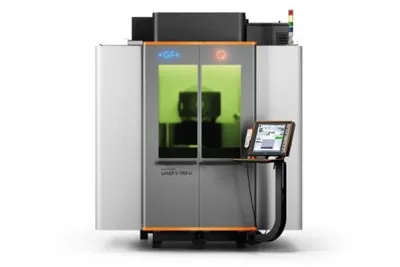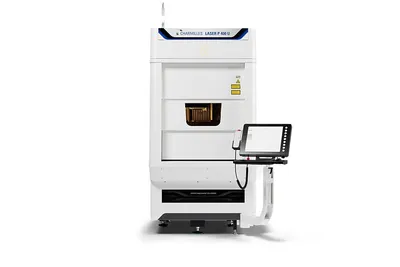
GF LASER P 600 U
Key Specifications
X Travel
Y Travel
Z Travel
a axis tilt
b axis table diameter
b axis speed
Overview
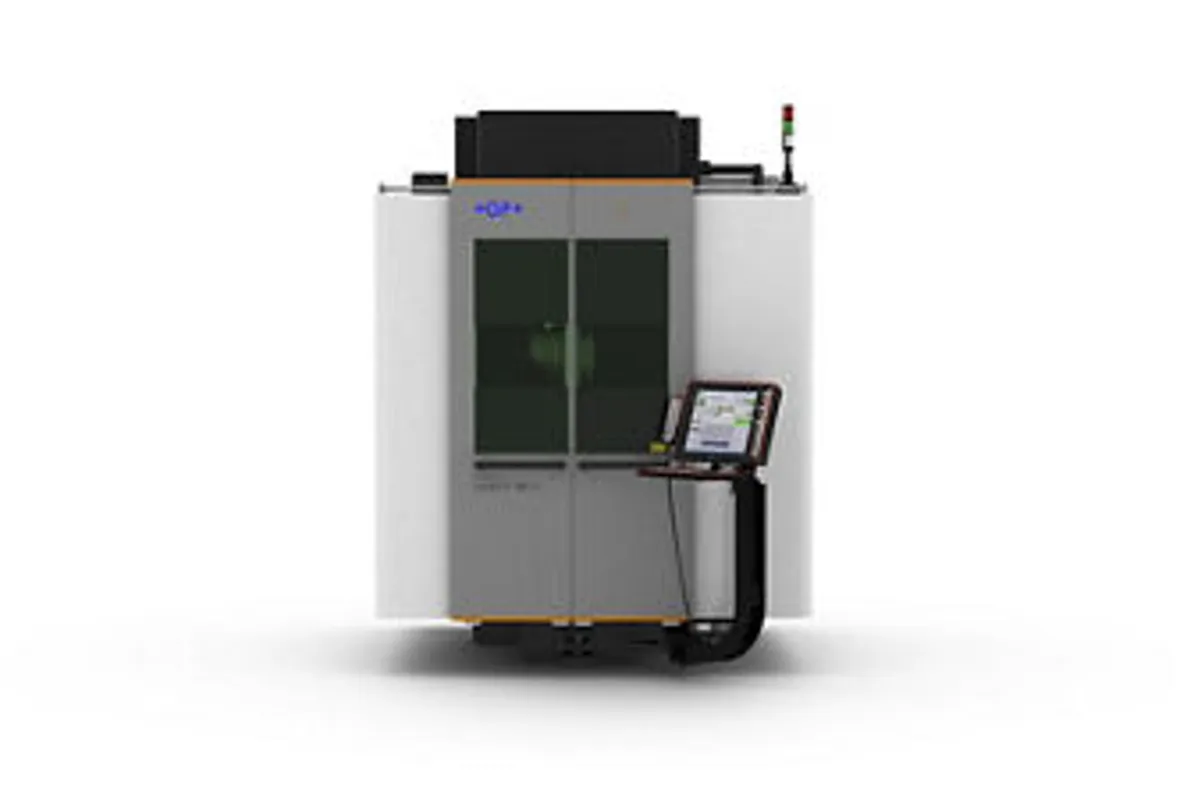
The GF LASER P 600 U is the entry model in GF Machining Solutions' LASER P series of large-format laser texturing machines, designed for shops that need to texture, engrave, and micromachine workpieces too large or heavy for the compact LASER S platform. With 600 x 460 x 830 mm (23.6 x 18.1 x 32.7 in) of X/Y/Z travel and a 75 kg (165 lb) maximum workpiece capacity, it bridges the gap between the small-part LASER S 500 U and the massive LASER P 1200 U.
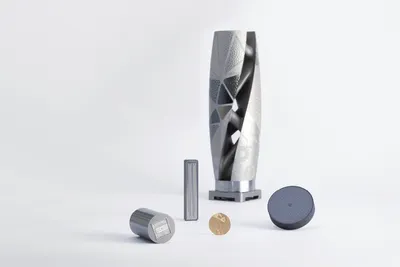
The LASER P series was born out of the mold and die industry's need to texture large injection mold halves, blow mold tooling, and automotive body panel dies without resorting to chemical etching. The 600 U handles medium-sized mold components with its 5-axis configuration -- a tilting laser head (A-axis: -55 to +135 degrees) and a rotary B-axis table (180 mm/7.1 in diameter) that together enable laser access to complex 3D surfaces without repositioning.
The laser system uses Ytterbium pulsed fiber lasers with power options of 20 W, 50 W, or 100 W, selectable based on material and application requirements. Lower power settings work for fine detail texturing on sensitive materials, while the 100 W option speeds up processing on large-area textures where throughput matters. Focal length options of 100, 160, and 254 mm let you optimize spot size and working distance for different surface geometries.
The maximum 5-axis machining volume is a cylinder of 370 mm (14.6 in) diameter by 530 mm (20.9 in) height. That's large enough for most individual mold inserts, medical implant tooling, and consumer electronics mold components. The maximum 3-axis workpiece volume extends to 420 x 540 mm when the rotary axes aren't engaged.
GF's SPOT software platform handles texture design, 3D surface mapping, scan path generation, and machine control through an integrated workflow. The software can import texture designs from GF's extensive digital texture library or from third-party sources, map them onto complex CAD surfaces, and generate optimized laser paths that maintain consistent texture depth and pattern across curved geometry. This design-to-machine integration is where the LASER P platform differentiates itself from adapted laser marking systems.
The machine weighs approximately 5,000 kg (11,023 lb) and measures 2,050 x 2,280 x 2,770 mm (80.7 x 89.8 x 109.0 in). Maximum power consumption is 4 kW -- remarkably efficient for the capability it delivers.
New GF LASER P 600 U systems typically price between $500,000 and $800,000 depending on laser power selection and software packages. Used units are scarce given the specialized application. Specs sourced from GF Machining Solutions published technical data.
Full Specifications
| Parameter | Value |
|---|---|
| X-Axis Travel | 600 mm (23.6 in) |
| Y-Axis Travel | 460 mm (18.1 in) |
| Z-Axis Travel | 830 mm (32.7 in) |
| A Axis Tilt | -55° to +135° |
| B Axis Table Diameter | 180 mm (7.1 in) |
| B Axis Speed | 160°/s |
| Max 5axis Machining Volume | Diameter 370 x 530 mm (14.6 x 20.9 in) |
| Max Workpiece Volume | 420 x 540 mm (16.5 x 21.3 in) |
| Max Workpiece Weight | 75 kg (165 lb) |
| Laser Type | Ytterbium pulsed fiber laser |
| Laser Power Options | 20 / 50 / 100 W |
| Focal Lengths | 100 / 160 / 254 mm |
| Machine Dimensions | 2,050 x 2,280 x 2,770 mm (80.7 x 89.8 x 109.0 in) |
| Machine Weight | ~5,000 kg (11,023 lb) |
| Power Consumption | 4 kW max |
Specifications sourced from gfms.com — verified 2026-03-28
Strengths & Limitations
Strengths
- 75 kg workpiece capacity and 370 mm diameter 5-axis machining volume handle medium-sized mold inserts, dies, and tooling components beyond the LASER S platform's reach
- Tilting laser head (A-axis) with rotary table (B-axis) provides full 5-axis access to complex 3D surfaces without workpiece repositioning
- Three laser power options (20/50/100 W) allow optimization for fine detail texturing at low power or faster large-area processing at high power on the same machine
- GF SPOT software integrates texture design, 3D surface mapping, and machine control in a single workflow that general-purpose laser systems can't match
- 4 kW maximum power consumption makes the machine remarkably energy-efficient compared to conventional machining and chemical etching alternatives
- Digital texturing eliminates chemical etching variability -- every cavity, every tool gets the exact same texture depth and pattern with micron-level consistency
Limitations
- Entry price above $500K for a machine dedicated to surface texturing is a significant capital commitment that requires consistent texturing demand to justify
- 75 kg workpiece limit and 370 mm 5-axis volume still won't accommodate large mold halves and full-size automotive body panel tooling -- those require the P 1000 or P 1200
- Laser texturing throughput on large surface areas remains inherently slower than chemical etching, with complex mold textures potentially requiring days of continuous processing
- Very small global install base means limited secondhand market and fewer peer shops to exchange experience with compared to conventional CNC platforms
- Requires specialized operator and programmer expertise in laser process parameters and texture design that's entirely different from conventional machining knowledge
Best For
Frequently Asked Questions
01
New LASER P 600 U systems typically price between $500,000 and $800,000 depending on laser power configuration and software packages. A single 50 W laser setup falls at the lower end, while 100 W configurations with advanced software and automation features push toward the top. Used machines are very rarely available due to the specialized application and small install base.
02
The three models scale in workpiece capacity. The P 600 U handles parts up to 75 kg with 600 mm X-travel -- good for medium mold inserts. The P 1000 U extends to 150 kg capacity with 1,000 mm X-travel for larger mold components. The P 1200 U handles workpieces up to 1,200 kg with 1,200 mm of X, Y, and Z travel -- it's the machine for full-size mold halves and large automotive tooling. All share the same Ytterbium fiber laser technology and SPOT software platform.
03
The LASER S series (including the S 500 U) is the compact, high-precision platform for smaller workpieces up to 15 kg, offering femtosecond and nanosecond laser source options with tighter accuracy specifications. The LASER P series handles larger, heavier workpieces (75 to 1,200 kg depending on model) with Ytterbium fiber lasers. Choose the S for small precision parts like watch components, medical implants, and small mold inserts. Choose the P for larger mold halves, automotive tooling, and components too heavy for the S platform.
04
The machine can texture virtually any material that absorbs the Ytterbium fiber laser wavelength: tool steels (hardened and soft), stainless steels, aluminum, copper alloys, titanium, carbide, and most engineering plastics. The adjustable laser power (20-100 W) and multiple focal lengths let you optimize the process for different materials. Hardened tool steels above 60 HRC are a primary application since conventional texturing methods struggle with these materials.
05
Processing time varies enormously depending on texture pattern complexity, depth, surface area, and required quality. A simple grain texture on a small mold insert might take 2-4 hours. A complex multi-depth texture covering a large automotive interior panel mold can take 2-5 days of continuous processing. Throughput scales with laser power -- the 100 W option processes significantly faster than 20 W for large-area textures. The trade-off is between speed and fine detail resolution.
06
For many applications, yes. Laser texturing offers superior consistency, repeatability, traceability, and eliminates hazardous chemicals. However, chemical etching can still be faster and more cost-effective for very large surface areas with simple textures. Most mold shops adopting laser texturing start with high-value or complex texture work where consistency and digital control provide the most benefit, then expand laser texturing to more applications as they build experience and justify additional machine capacity.
Videos
Peak Machine Sales (Peak EDM)
United Machining (USA)
Peak Machine Sales (Peak EDM)
United Machining (USA)
Peak Machine Sales (Peak EDM)
Community Discussions
Comparison and buying advice — New sinker edm sodick ag60l vs mitsubishi EA12PS GF form P 600
Community discussion — Laser toolsetter woes - Practical Machinist
Community discussion — Gorge Fischer sells Machinery Division ...
Community discussion — 2013 +Gf+ Mikron HSM 600U LP | Practical ...
Capabilities and material handling — CNCzone.com - CNC Machines, CadCam, Classifieds, Metalworking ...
Community discussion — CNCzone.com- Largest Forums for CNC Professional and Hobbyist ...
Community discussion — Laser Engraving / Cutting Machine General Topics - CNCzone
Troubleshooting and problem-solving — Need Help! GF Machining Agie CUT Error Messages
Community discussion — In need of some advice : r/machining - Reddit
Pricing and buying discussion — I did the thing with the thing. : r/Machinists - RedditWould this CNC lathe program I wrote work/make sense ... - RedditLathe finish : r/Machinists - RedditRecommendations on a good metal lathe? : r/Machinists - RedditLooking to buy my first machine as a hobbyist/appr
Community discussion — Would this CNC lathe program I wrote work/make sense ... - Reddit
Troubleshooting and problem-solving — Lathe finish : r/Machinists - Reddit
Links to community discussions. Summaries are editorial — visit the original thread for full context.