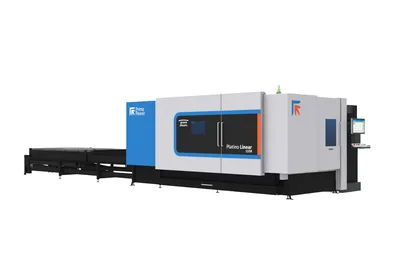
GF Machining MLTC
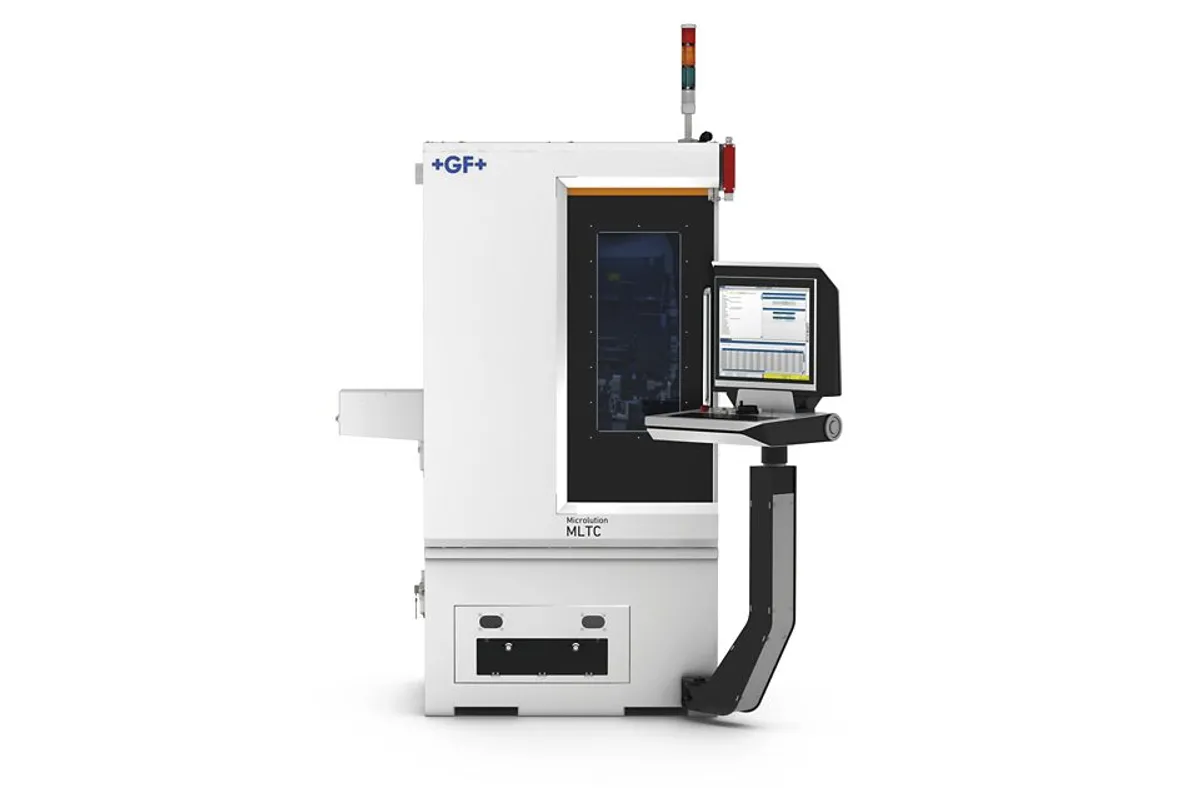
Image: assets.georgfischer.com, GF Machining Solutions
Key Specifications
Max Spindle
x y z travel
spindle speed
laser source
positional repeatability
motion system
How much does the GF Machining MLTC cost?
Estimated price range
Our best estimate for a cnc laser cutting machine in this class — not a quote from GF Machining Solutions. Configuration moves it a long way.
Overview
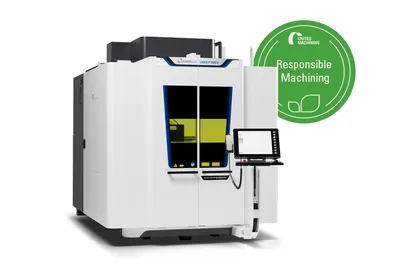
The MLTC is a femtosecond laser machine built around a long, narrow envelope: 280 x 20 x 24 mm of X, Y and Z travel, a 40 W femtosecond laser and a spindle that turns at up to 1,000 RPM. A long X axis, very short Y and Z and a rotating spindle point to small cylindrical parts turned under the beam, such as fine tubes and pins, rather than flat parts.
Precision is the theme of the listed rows. Positional repeatability is given as 1 µm. The axes run on ironless linear motors with high-resolution glass scales, and the machine stands on a granite base chosen for thermal stability. Ironless linear motors have no cogging, which helps smooth motion at the slow feeds of micro-cutting, and granite moves little with temperature over a long job.
The femtosecond source matters as much as the mechanics. Pulses this short remove material with very little heat spreading into the part, which suits thin-walled tubes and parts where a heat-affected zone or burr would need post-processing.
The machine measures 1,600 x 2,000 x 2,000 mm and weighs 2,300 kg. The table gives no workpiece diameter, part length limit or loading system, so those need to come from GF. These are the listed figures; the table has not been matched to a current GF page.
Full Specifications
| Parameter | Value |
|---|---|
| X Y Z Travel | 280 x 20 x 24 mm (11.0 x 0.8 x 0.9 in) |
| Spindle Speed | 1,000 RPM |
| Laser Source | Femtosecond laser, 40 W |
| Positional Repeatability | 1 µm |
| Motion System | Ironless linear motors with high-resolution glass scales |
| Machine Structure | Granite-based for thermal stability |
| Machine Dimensions W X D X H | 1,600 x 2,000 x 2,000 mm (63 x 79 x 79 in) |
| Machine Dimensions | 1600 x 2000 x 2000 mm62.992 x 78.74 x 78.74 in |
| Machine Weight | 2,300 kg (5,070.58 lbs) |
| Travel Paths of Axes X Y Z | 280 x 20 x 24 mm11.024 x 0.787 x 0.945 in in |
| Max Spindle Speed | 1000 rpm |
| Laser Sources | 40 w |
Specifications compiled from manufacturer literature and industry references. Not independently verified against a published spec sheet — confirm with the manufacturer or an authorised dealer before making a purchasing decision.
Strengths & Limitations
Strengths
- Positional repeatability of 1 µm
- Ironless linear motors with high-resolution glass scales on the axes
- Granite-based structure for thermal stability
- 40 W femtosecond laser for cutting with very little heat input
- Spindle up to 1,000 RPM to rotate parts under the beam
Limitations
- Y and Z travel of 20 mm and 24 mm restrict the machine to small, slender parts
- X travel of 280 mm caps part length
- The table gives no workpiece diameter, load or automation data
Best For
Frequently Asked Questions
01
The listed envelope is 280 x 20 x 24 mm with a spindle up to 1,000 RPM and a 40 W femtosecond laser. A long X axis with very short Y and Z and a rotating spindle suits small cylindrical parts rotated under the beam, such as fine tubes. Flat or bulky parts do not fit this envelope.
02
Positional repeatability is listed as 1 µm. The axes use ironless linear motors with high-resolution glass scales, on a granite base for thermal stability. The table gives no accuracy figure for finished parts, so ask for measured sample parts.
03
Femtosecond pulses ablate material faster than heat can spread into it, so cut edges carry little heat damage or recast. For thin walls and fine features that saves deburring or etching after cutting, at a lower removal rate than longer-pulse lasers.
04
It measures 1,600 x 2,000 x 2,000 mm and weighs 2,300 kg. Electrical and air supply are not given in the table, so ask for the installation sheet before planning the site.
More from GF Machining Solutions
Other CNC Laser Cutting Machines
Haco HFL 3015 CEW
IPG Photonics YLR-10000
Amada ENSIS 3015 AJ
Yawei HLE-2560
Accurl SmartLINE X 6001.25