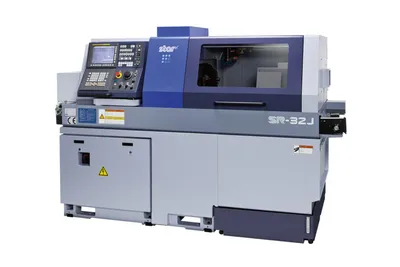
Tsugami BM165-VR
Key Specifications
Max Spindle
Tool Capacity
Rapid Traverse
Spindle Power
max machining diameter
sub spindle speed
How much does the Tsugami BM165-VR cost?
Estimated price range
Our best estimate for a swiss-type lathe in this class — not a quote from Tsugami. Configuration moves it a long way.
Overview
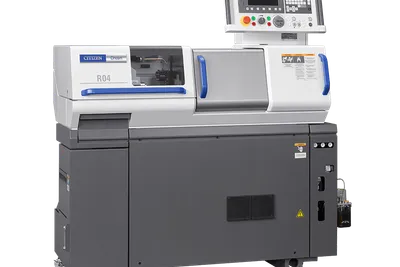
The Tsugami BM165-VR is a 16 mm (0.63 in) Swiss-type automatic lathe with 21 tools as standard and two spindles that reach the same top speed: main and back both run to 12,000 rpm (rated 8,000 rpm), the main on 3.7/5.5 kW and the back on 2.2/3.7 kW. Tsugami gives its footprint as 2,035 × 1,055 × 1,700 mm (80.1 × 41.5 × 66.9 in) and its weight as 1,800 kg (3,968 lb).
The back spindle is the reason to choose it over the BM163-VR, which shares the same main spindle and rapids but carries 13 tools and lists no back spindle. Here a part can be transferred and finished on its cut-off face in the same cycle, and the 2.2/3.7 kW back motor gives that second spindle its own cutting power for back-end turning and drilling.
The B0125C is the nearest alternative at this weight: also 21 tools and 1,800 kg (3,968 lb), but with a 2.2/3.7 kW main spindle at 12,000 rpm (rated 10,000 rpm). The BM165-VR has the stronger main motor, the B0125C the higher rated speed. Rapids on the BM165-VR are 36 m/min on X2 and Z2 (a figure Tsugami marks as 5-axis only), 32 m/min on Y1 and Z1 and 24 m/min on X1.
Full Specifications
| Parameter | Value |
|---|---|
| Max Machining Diameter | 16 mm (0.63 in) |
| Max Spindle Speed | 12,000 rpm (rated 8,000 rpm) |
| Sub Spindle Speed | 12,000 rpm (rated 8,000 rpm) |
| Tool Capacity | 21 (standard) |
| Rapid Traverse Rate | 36 m/min (X2, Z2: 5-axis only), 32 m/min (Y1, Z1), 24 m/min (X1) |
| Spindle Motor Power | 3.7/5.5 kW |
| Sub Spindle Power | 2.2/3.7 kW |
| Floor Space Required | 2,035 × 1,055 × 1,700 mm (80.1 × 41.5 × 66.9 in) |
| Machine Weight | 1,800 kg (3,968 lb) |
Specifications sourced from tsugami.co.jp — verified 2026-10-03
Strengths & Limitations
Strengths
- Back spindle to 12,000 rpm (rated 8,000 rpm) on a 2.2/3.7 kW motor
- 3.7/5.5 kW main spindle, larger than the 2.2/3.7 kW of the B0125C
- 21 tools as standard, against 13 on the BM163-VR
- 36 m/min rapids on X2 and Z2 in the 5-axis configuration
Limitations
- Rated spindle speed is 8,000 rpm, against a rated 10,000 rpm on the B0125C
- At 2,035 mm (80.1 in) long and 1,800 kg (3,968 lb) it is larger and heavier than the 1,350 kg (2,976 lb) BM163-VR
- X1 rapid is 24 m/min, the slowest axis in the table
Best For
Frequently Asked Questions
01
For the back spindle and the extra tools. The BM165-VR carries 21 tools as standard and a back spindle running to 12,000 rpm (rated 8,000 rpm) on 2.2/3.7 kW. The BM163-VR has 13 tools and no back-spindle figures, but is lighter at 1,350 kg (2,976 lb). Both share the 3.7/5.5 kW main spindle.
02
Both carry 21 tools as standard and weigh 1,800 kg (3,968 lb). The B0125C's main spindle is 2.2/3.7 kW with a rated 10,000 rpm. The BM165-VR's is 3.7/5.5 kW with a rated 8,000 rpm, so it suits heavier cuts and the B0125C suits higher sustained speeds.
03
Tsugami lists 2,035 × 1,055 × 1,700 mm (80.1 × 41.5 × 66.9 in) and 1,800 kg (3,968 lb). The bar feeder at the headstock end is extra to that length, so plan the cell around both together.
More from Tsugami

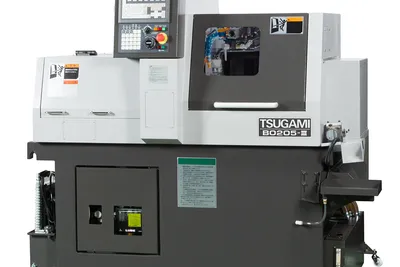

Other Swiss-Type Lathes
Citizen Cincom F20
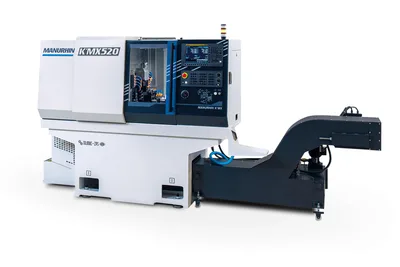
Tajmac-ZPS MANURHIN K'MX 520
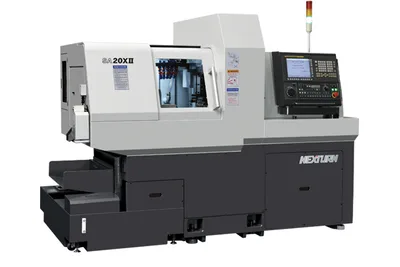
Nexturn SA20XII
Citizen Cincom R01-VI