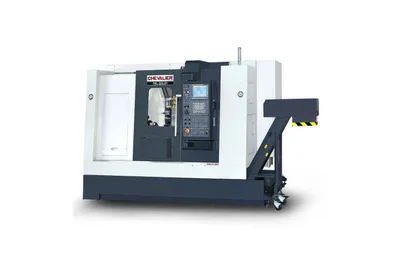
Samsung PT200
This model was not found in Samsung's current lineup when we checked on 2026-10-03 . It may be a superseded or older model; the specifications below are as we last recorded them.
Key Specifications
Max Spindle
Spindle Power
Max Turn Length
chuck size
max turning diameter
spindle bore
How much does the Samsung PT200 cost?
Estimated price range
Our best estimate for a cnc lathes / turning center in this class — not a quote from Samsung. Configuration moves it a long way.
Overview
The Samsung PT200 is a slant-bed CNC lathe with an 8 in (200 mm) chuck, a maximum turning diameter of 350 mm (13.8 in) and a maximum turning length of 500 mm (19.7 in). It is not in Samsung's current lineup, so the listed figures serve as a reference for a used machine and should be confirmed on it.
The spindle is listed at 4,500 RPM with 15/11 kW (20/15 hp). The listed figures do not say which of the two power ratings is continuous. Bar capacity is 62 mm (2.4 in). The spindle bore row reads 104.14 mm, far more than the bar capacity, so the two rows cannot both describe the hole through the spindle. Measure the through-hole or take it from the manual before quoting bar work.
The bed is a 45-degree slant bed with hardened guideways. The turret has 12 positions and rapid traverse is 24/24 m/min on X and Z. Nothing in the listed figures mentions live tooling, a sub-spindle, a Y axis or a tailstock, so plan on plain two-axis turning unless the machine in front of you shows otherwise.
Machine weight is listed as approximately 3,800 kg (8,380 lb). The control row describes one control as typical and a Samsung-proprietary control on early variants. Which one is fitted decides how programs are written and loaded, so it is one of the first things to establish.
Full Specifications
| Parameter | Value |
|---|---|
| Chuck Size | 8 in (200 mm) |
| Max Turning Diameter | 350 mm (13.8 in) |
| Max Turning Length | 500 mm (19.7 in) |
| Max Spindle Speed | 4,500 RPM |
| Spindle Motor Power | 15/11 kW (20/15 hp) |
| Spindle Bore | 104.14 mm |
| Turret Positions | 12 |
| Rapid Traverse X Z | 24/24 m/min |
| Bed Construction | 45-degree slant bed, hardened guideways |
| CNC Control | Fanuc 0iTC (typical) / Samsung-proprietary (early variants) |
| Bar Capacity | 62 mm (2.4 in) |
| Machine Weight | Approx. 3,800 kg (8,380 lb) |
Specifications compiled from manufacturer literature and industry references. Not independently verified against a published spec sheet — confirm with the manufacturer or an authorised dealer before making a purchasing decision.
Strengths & Limitations
Strengths
- 8 in (200 mm) chuck with a maximum turning diameter of 350 mm (13.8 in)
- Maximum turning length of 500 mm (19.7 in)
- Bar capacity of 62 mm (2.4 in) for bar-fed work
- 45-degree slant bed with hardened guideways
- 12-position turret and 24/24 m/min rapid traverse on X and Z
Limitations
- Top speed of 4,500 RPM limits surface speed on small-diameter work
- The listed figures show no live tooling, sub-spindle or Y axis
- Two different controls are listed, depending on the age of the machine
- The spindle bore row (104.14 mm) does not agree with the 62 mm (2.4 in) bar capacity, so the through-hole has to be confirmed on the machine
Best For
Frequently Asked Questions
01
The listed figures give a maximum turning diameter of 350 mm (13.8 in) and a maximum turning length of 500 mm (19.7 in), with an 8 in (200 mm) chuck. Bar capacity is listed as 62 mm (2.4 in).
02
The spindle is listed at 4,500 RPM and 15/11 kW (20/15 hp). The listed figures do not state which rating is continuous, and they give no torque figure. Bar capacity is 62 mm (2.4 in), while the spindle bore row reads 104.14 mm, so confirm the through-hole on the machine.
03
The listed figures show a 12-position turret and rapid traverse on X and Z only. There is no row for live tools, a C axis, a Y axis or a sub-spindle, so nothing in the listed figures supports milling or drilling off-centre on this machine.
04
The control row lists two possibilities: one control described as typical, and a Samsung-proprietary control on early variants. Check which is fitted to the machine you are considering, because the two are programmed and supported differently.
Other CNC Lathes / Turning Centers
Hyundai WIA L300A/MA/MSA
Colchester Multiturn 5000
Sharp 2060TC-F