Gurutzpe GSM 13
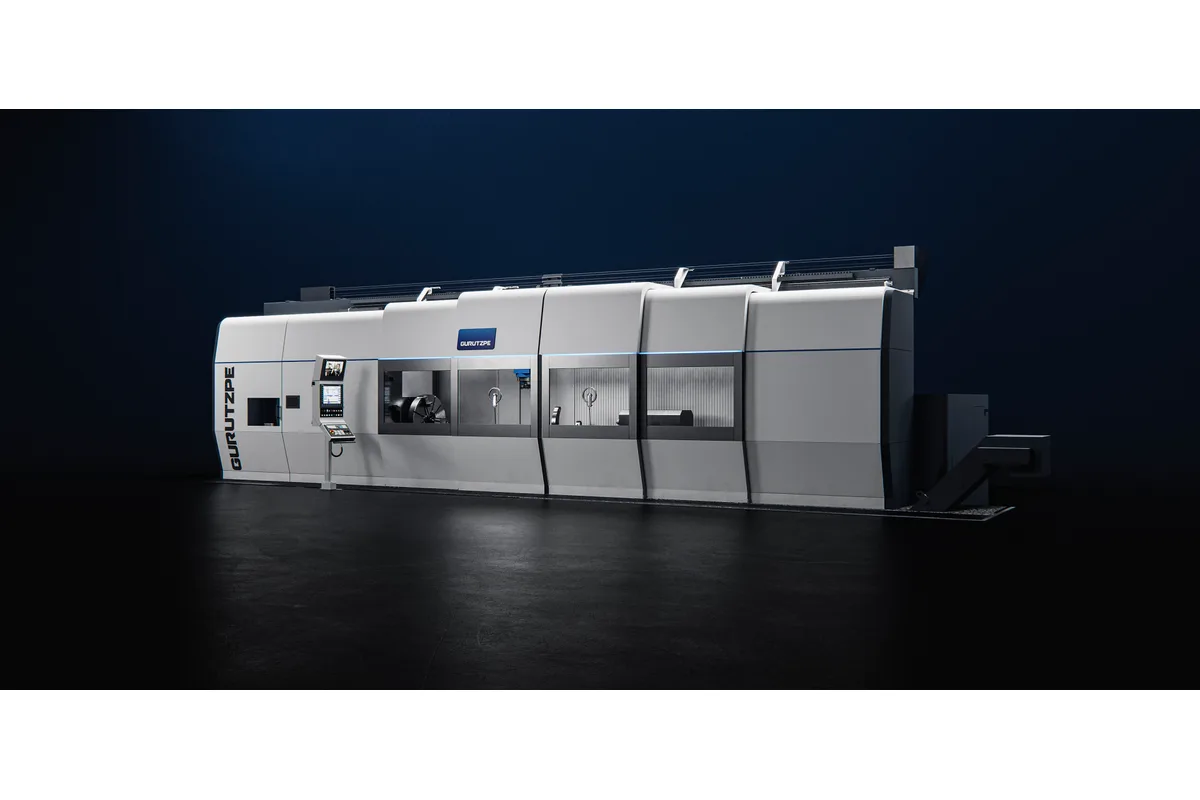
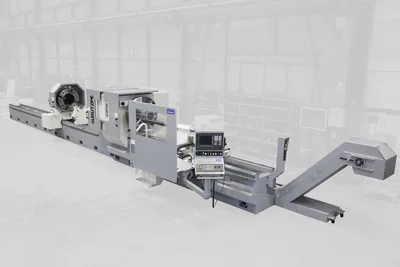
Image: gurutzpe.com, Gurutzpe
Key Specifications
Max Spindle
Tool Capacity
Spindle Power
swing over bed
distance between centers
spindle torque
How much does the Gurutzpe GSM 13 cost?
Price estimate
We do not have a price for the Gurutzpe GSM 13 that we can stand behind, so we show no number. Configuration, options and installation move the final price a long way: a quote is the reliable figure.
Overview
Between the GSM 10 and the GSM 16 sits the Gurutzpe GSM 13, a slant-bed turnmill with Ø 1,300 mm (51.2 in) of swing and up to 12,000 mm (472.4 in) between centers. It takes the larger of the two headstock motors in the range, 102 / 130 kW (136.8 / 174.3 hp) at S1-100% / S6-60%, where the GSM 10 is listed at 74 / 90 kW (99.2 / 120.7 hp).
The speed row needs reading with care. It shows 1,500 / 1,200 rpm, and the workpiece weight row shows 10,000 / 15,000 kg (22,046 / 33,069 lb). Gurutzpe's table does not pair the two. The faster figure may go with the lighter class and the slower one with the heavier, but only the maker can confirm that. Maximum torque is 16,155 / 21,540 Nm (11,916 / 15,888 lb-ft). The spindle bore is Ø 150 mm (5.9 in), with no smaller alternative.
What sets the GSM apart from a turret lathe is the column. Its RAM runs in a hydrostatic Box-in-Box arrangement, the X axis rides on a 4-guide roller system with hydraulic weight compensation, and the Z axis is driven by a double pinion rack with electronic preload. Gurutzpe states that compensation for RAM deflection is not needed. The bed has a 45-degree slant.
The RAM itself comes in three versions: standard, with a bottom docking system for non-rotary accessories, or with a docking system for change of machining heads. Which one is ordered decides how boring bars and special heads are carried. On the B-axis head, the brake holds each 0.001º for light-medium cuts and the lock engages each 2.5º for heavy-duty work.
Full Specifications
| Parameter | Value |
|---|---|
| Swing Over Bed | Ø 1,300 mm (51.2 in) (over bed, carriage and steady-rests) |
| Distance Between Centers | Up to 12,000 mm (472.4 in) |
| Spindle Motor Power | 102 / 130 kW (136.8 / 174.3 hp) (S1-100% / S6-60%) |
| Spindle Torque | 16,155 / 21,540 Nm (11,916 / 15,888 lb-ft) (S1-100% / S6-60%) |
| Max Spindle Speed | 1,500 / 1,200 rpm |
| C Axis Positioning Speed | 15 rpm |
| Spindle Bore | Ø 150 mm (5.9 in) |
| Max Workpiece Weight | 10,000 / 15,000 kg (22,046 / 33,069 lb) between centers |
| Milling Spindle Power | 49 / 56 / 60 / 85 kW (65.7 / 75.1 / 80.5 / 114.0 hp) (S1-100% duty cycle) |
| Milling Spindle Torque | 1,410 / 305 / 165 / 530 Nm (1,040 / 225 / 122 / 391 lb-ft) (S1-100% duty cycle) |
| Milling Spindle Speed | 5,000 / 6,000 / 18,000 / 8,000 rpm |
| Tooling Interface | C8 or HSK-T100 / C6 or HSK-T63 |
| B Axis Range | ±110° |
| B Axis Braking System | each 0.001º (for light-medium turning/milling operations) |
| B Axis Locking System | each 2.5º (for heavy-duty turning/milling operations) |
| Y Axis Guiding | Hydrostatic |
| Tool Capacity | 50 / 80 / 100 posts (tool magazine chain-type or robot-based) |
| Accessories Magazine | Over the headstock: up to 4 automatic sliding posts, accessory max. Ø150 mm and 2300 mm length |
| Heads Pickup Magazine | On the right end of the tailstock: up to 4 heads and a boring bar max. Ø200 mm and 3200 mm length |
Specifications sourced from gurutzpe.com — verified 2026-10-04
Strengths & Limitations
Strengths
- Headstock rated 102 / 130 kW (136.8 / 174.3 hp) with 16,155 / 21,540 Nm (11,916 / 15,888 lb-ft) at S1-100% / S6-60%
- Up to 12,000 mm (472.4 in) between centers, against up to 8,000 mm (315.0 in) on the GSM 10
- Hydrostatic Box-in-Box guiding of the RAM; Gurutzpe states that compensation for RAM deflection is not needed
- Y-axis RAM in three versions, including docking systems for accessories and for change of machining heads
- Swing of Ø 1,300 mm (51.2 in) applies over bed, carriage and steady-rests alike
Limitations
- Spindle speed is listed as 1,500 / 1,200 rpm without saying which weight class each figure belongs to
- Spindle bore is Ø 150 mm (5.9 in) only; this is a shaft machine, not a large-pipe lathe
- No Y-axis stroke, machine weight or footprint can be read from Gurutzpe's page
- Headstock torque is well below the GSM 16, which is listed at 27,525 / 36,700 Nm (20,302 / 27,070 lb-ft) from the same motor power
Best For
Frequently Asked Questions
01
Swing is Ø 1,300 mm (51.2 in), and Gurutzpe gives that one figure for the bed, the carriage and the steady-rests. Distance between centers is up to 12,000 mm (472.4 in). The Y-axis stroke row of the table holds no usable figure, and X-stroke is described only as defined for 200 mm long tools.
02
Size and headstock. The GSM 10 swings Ø 1,000 mm (39.4 in), takes up to 8,000 mm (315.0 in) between centers and has a 74 / 90 kW (99.2 / 120.7 hp) headstock. The GSM 13 swings Ø 1,300 mm (51.2 in), takes up to 12,000 mm (472.4 in) and is rated 102 / 130 kW (136.8 / 174.3 hp). The milling head, RAM and magazine rows are identical.
03
Gurutzpe describes a symmetric column with a hydrostatic Box-in-Box configuration for the RAM, a combined frontal and lateral 4 guides roller system and hydraulic weight compensation for the X axis, and electronic preload with a double pinion rack for the Z axis. The Y axis has an external brake for heavy turning and drilling operations.
04
The B-axis head swivels ±110°. For light-medium turning and milling a braking system holds it each 0.001º, so it can be set at practically any angle. For heavy-duty turning and milling a locking system engages each 2.5º, which gives a rigid clamp at fixed steps. Heavy cuts therefore have to be planned at those angles.
05
The tool magazine is chain-type or robot-based with 50 / 80 / 100 posts. Gurutzpe notes that the chain type changes tools horizontally with limits on length and weight, while the robot type changes horizontally and vertically. Longer accessories go in a separate magazine over the headstock.
More from Gurutzpe
Other Mill-Turn / Multi-Tasking Machines
Willemin-Macodel 301S
DN Solutions SMX 2100 ST
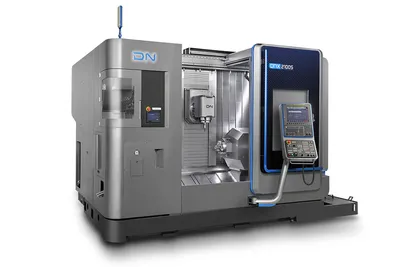
DN Solutions DNX 2100 B
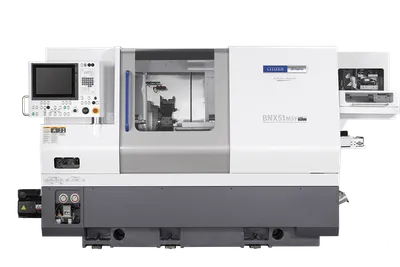
Citizen Miyano BNX-51MSY
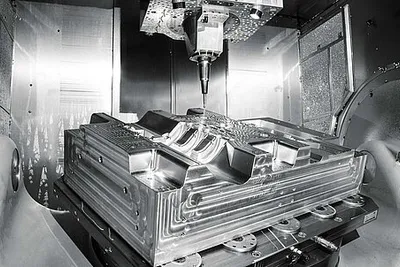
Hermle C 62 U MT