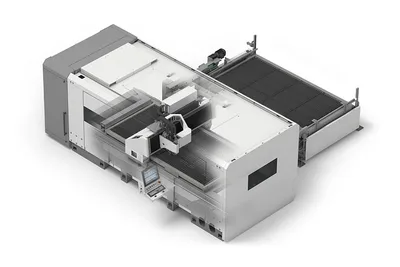
Trumpf TruLaser Cell 3000
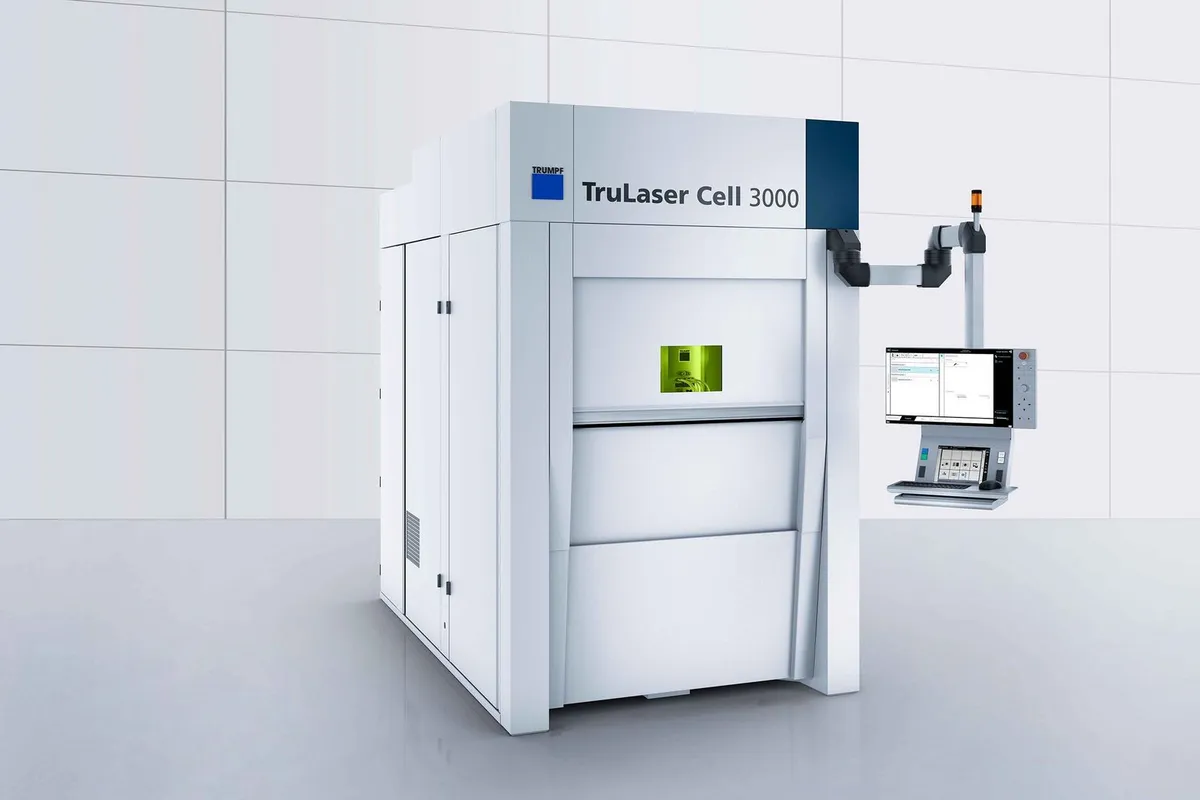
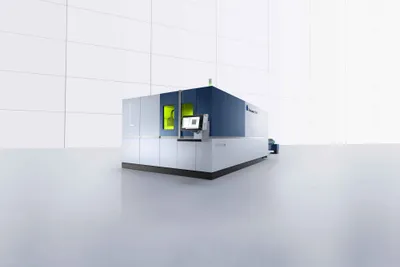
Image: trumpf.com, Trumpf
Key Specifications
axis travel x
axis travel y
axis travel z
b axis
max axis speed individual
max axis speed simultaneous
How much does the Trumpf TruLaser Cell 3000 cost?
Estimated price range
Our best estimate for a cnc laser cutting machine in this class — not a quote from Trumpf. Configuration moves it a long way.
Overview
The Trumpf TruLaser Cell 3000 is a compact laser cell with 800 x 600 x 400 mm (31.5 x 23.6 x 15.7 in) of linear travel and a rotating B axis, built to switch between 2D cutting, 3D cutting, laser welding and laser metal deposition. Laser power is listed at up to 9,000 W.
The envelope is small and the motion figures are high for it. Each linear axis moves at 50 m/min, or 85 m/min simultaneous, with 10 m/s² of acceleration per axis and 17 m/s² simultaneous. Over a stroke of 800 mm, acceleration counts for more than top speed: on small parts with many features the head spends most of its time speeding up and slowing down. The B axis turns at 120 rpm and accelerates at 130 rad/s².
Positioning accuracy is +/- 0.015 mm on the linear axes and +/- 0.02 degrees on the rotary axes, figures that suit fine weld seams and small cut features. Trumpf also claims maximum repeatability across the entire 3D working area, but the table gives no repeatability figure to go with the claim.
Changing process is described as a simple and fast process adapter change between welding, cutting and LMD. The optics rows show what can be fitted: BEO D70 optics for large working distances with small focal diameters, and programmable focusing optics, listed as PFO 14, PFO 20 and PFO 33, for welding and drilling. An optional W1 axis is listed with a 12-inch stroke and a 600 x 520 mm diameter 3D capacity. The table does not explain how that capacity is measured, so confirm the usable part size with the axis fitted.
Full Specifications
| Parameter | Value |
|---|---|
| Axis Travel X | 800 mm (31.5 in) |
| Axis Travel Y | 600 mm (23.6 in) |
| Axis Travel Z | 400 mm (15.7 in) |
| B Axis | +/- rotation (120 rpm) |
| Max Axis Speed Individual | 50 m/min |
| Max Axis Speed Simultaneous | 85 m/min |
| Max Acceleration Individual | 10 m/s² |
| Max Acceleration Simultaneous | 17 m/s² |
| B Axis Acceleration | 130 rad/s² |
| Positioning Accuracy Linear | +/- 0.015 mm |
| Positioning Accuracy Rotary | +/- 0.02 degrees |
| Laser Power | Up to 9,000 W |
| CNC Control | Siemens 840D solutionline (Trumpf-customized) |
| Optional W1 Axis | 12-inch stroke; 600 x 520 mm diameter 3D capacity |
| Processes | 2D cutting, 3D cutting, laser welding, laser metal deposition |
| X Axis Travel Range | 800 mm |
| Y Axis Travel Range | 600 mm |
| Z Axis Travel Range | 400 mm |
| Maximum Axis Speed Axially Parallel in X | 50 m/min |
| Maximum Axis Speed Axially Parallel in Y | 50 m/min |
| Maximum Axis Speed Axially Parallel in Z | 50 m/min |
| Maximum Axis Speed Simultaneous | 85 m/min |
| Maximum Axis Speed of B Axis | 120 1/min |
| Maximum Axis Acceleration Simultaneous | 17 m/s2 |
| Maximum Axis Acceleration of B Axis | 130 rad/s2 |
| Positioning Accuracy of Linear Axes | 0.015 mm |
| Positioning Accuracy of Rotary Axes | 0.02 ° |
| Maximum Laser Power | 9000 W |
| High Precision | Maximum repeatability across the entire 3D working area |
| Beo D70 2 | Large working distances with small focal diameters |
Specifications sourced from trumpf.com — verified 2026-10-03
Strengths & Limitations
Strengths
- One cell covers 2D cutting, 3D cutting, laser welding and laser metal deposition, with process adapter changes between them
- Positioning accuracy of +/- 0.015 mm on linear axes and +/- 0.02 degrees on rotary axes
- 85 m/min simultaneous axis speed with 17 m/s² simultaneous acceleration
- Laser power up to 9,000 W
- Programmable focusing optics PFO 14, PFO 20 and PFO 33 are listed for welding and drilling
Limitations
- Linear travel is 800 x 600 x 400 mm (31.5 x 23.6 x 15.7 in), so parts and fixtures must fit a small envelope
- The W1 axis, with its 12-inch stroke, is optional
- No workpiece weight or table load is listed
- Repeatability is claimed across the working area but no figure is given
Best For
Frequently Asked Questions
01
2D cutting, 3D cutting, laser welding and laser metal deposition. Trumpf describes switching between welding, cutting and LMD as a simple and fast process adapter change, so one cell can be moved between jobs of different kinds.
02
X travel is 800 mm (31.5 in), Y is 600 mm (23.6 in) and Z is 400 mm (15.7 in). An optional W1 axis is listed with a 12-inch stroke and a 600 x 520 mm diameter 3D capacity. No workpiece weight limit appears in the table.
03
The linear axes run at 50 m/min each and 85 m/min simultaneous, with accelerations of 10 m/s² and 17 m/s². The B axis reaches 120 rpm. Positioning accuracy is +/- 0.015 mm for the linear axes and +/- 0.02 degrees for the rotary axes.
04
Maximum laser power is 9000 W. The table lists BEO D70 optics for large working distances with small focal diameters, and the programmable focusing optics PFO 14, PFO 20 and PFO 33 for welding and drilling.
Videos

TRUMPFtube

TRUMPF Inc.

TRUMPFtube

TRUMPFtube
More from Trumpf
Other CNC Laser Cutting Machines
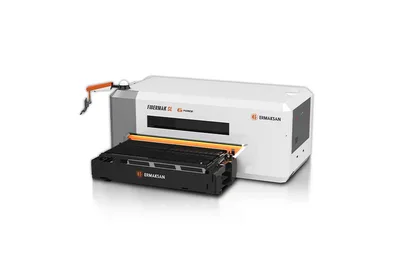
Ermak Fibermak SL 4x2
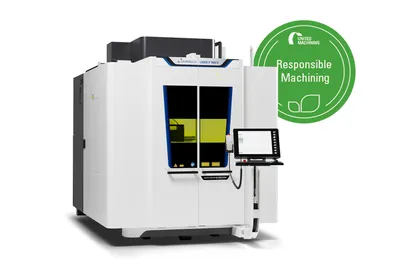
GF Machining CHARMILLES LASER P 600 U
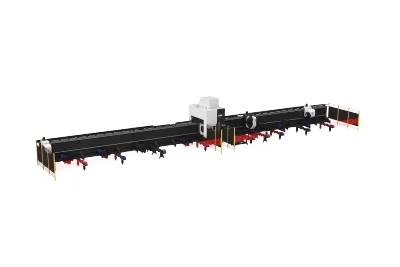
HSG TL3 PRO
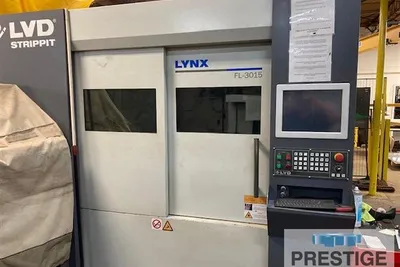
LVD Lynx FL-3015