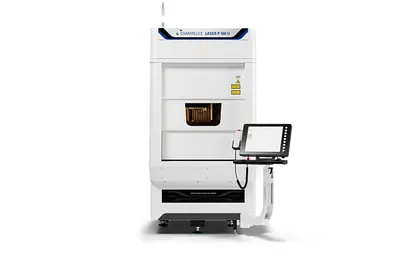
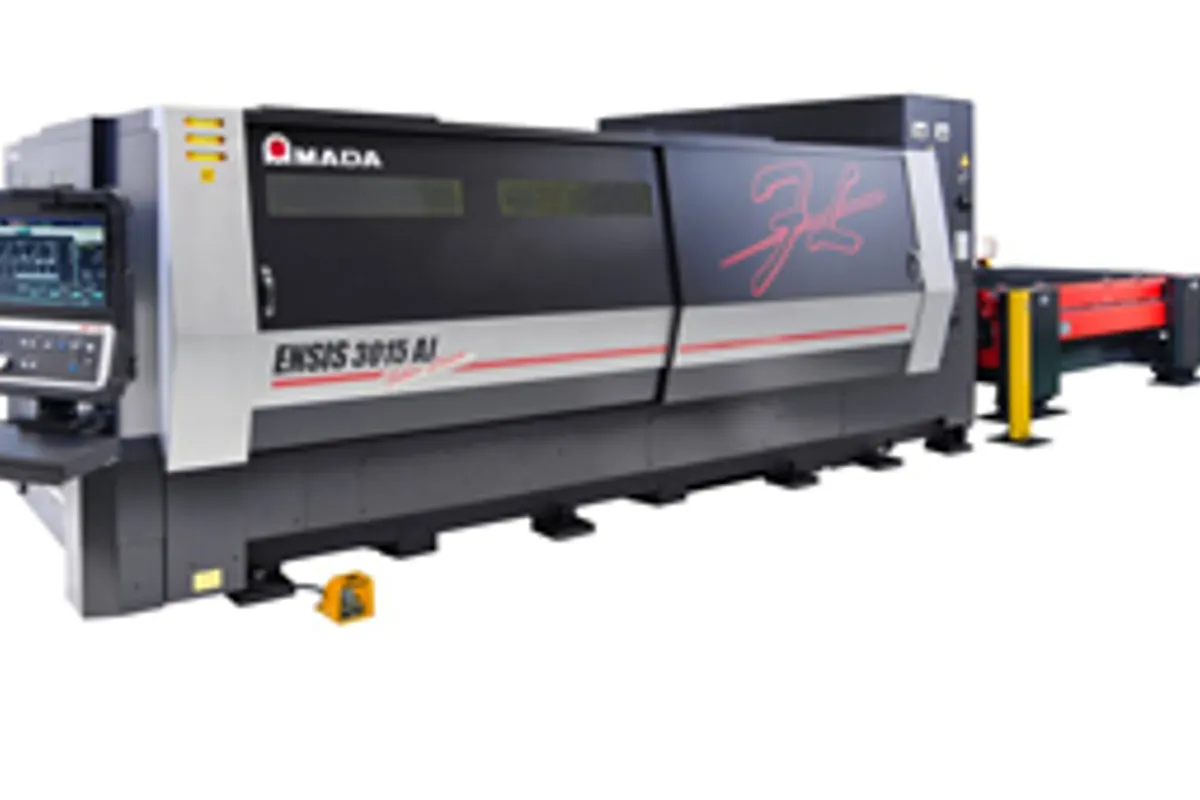
Amada ENSIS-3015AJ
This model was not found in Amada's current lineup when we checked on 2026-10-03 . It may be a superseded or older model; the specifications below are as we last recorded them.
Key Specifications
Accuracy
Repeatability
working area
z axis travel
laser type
laser power options
How much does the Amada ENSIS-3015AJ cost?
Estimated price range
Our best estimate for a cnc laser cutting machine in this class — not a quote from Amada. Configuration moves it a long way.
Overview
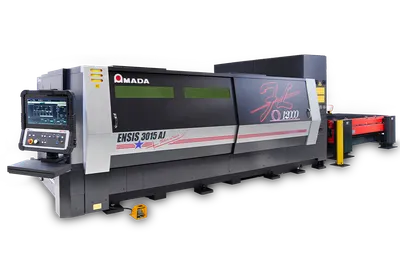
The Amada ENSIS-3015AJ is a fiber laser cutting machine for 3,050 x 1,525 mm (120 x 60 in) sheet, with a working area of 3,070 x 1,550 mm (121 x 61 in) and 100 mm (3.93 in) of Z travel. This model is not in Amada's current lineup, so the page is mainly a reference for someone weighing up a used machine. Everything quoted here is from the listed figures and should be confirmed on the machine itself.
The listed source is an LD-excited Yb fiber laser at 1.08 micron wavelength, offered as 2 kW / 3 kW / 6 kW / 9 kW, with ENSIS variable beam control that adjusts beam diameter and mode automatically. Which oscillator a particular machine carries matters more than any other row. For the 3 kW version the listed maximums are 25 mm (1.0 in) in mild steel and 12 mm (0.50 in) in both stainless steel and aluminum. Two further rows give 20 mm (0.79 in) for stainless and 15 mm (0.59 in) for aluminum without naming a power level, so ask which oscillator they describe before relying on them.
Motion is listed at 120 m/min (4,724 ipm) rapid traverse in X and Y, 80 m/min (3,150 ipm) in Z and 170 m/min (6,693 ipm) simultaneous positioning, with 1.5 G acceleration. A 4-station automatic nozzle changer and 4 assist gas ports with NC pressure control are listed, and the control is the AMNC 3i with a touchscreen LCD. The table carries 920 kg (2,028 lb), the same table load as the ENSIS 3015 AJe, which is offered with 3000 W / 6000 W / 9000 W / 12000 W / 15000 W oscillators.
Full Specifications
| Parameter | Value |
|---|---|
| Working Area | 3,070 x 1,550 mm (121 x 61 in) |
| Z Axis Travel | 100 mm (3.93 in) |
| Laser Type | ENSIS fiber (LD-excited Yb fiber, 1.08 micron wavelength) |
| Laser Power Options | 2 kW / 3 kW / 6 kW / 9 kW |
| Beam Control | ENSIS variable beam control (automatic diameter/mode adjustment) |
| Max Thickness Mild Steel 3kw | 25 mm (1.0 in) |
| Max Thickness Stainless Steel 3kw | 12 mm (0.50 in) |
| Max Thickness Aluminum 3kw | 12 mm (0.50 in) |
| Rapid Traverse Xy | 120 m/min (4,724 ipm) |
| Rapid Traverse Z | 80 m/min (3,150 ipm) |
| Simultaneous Positioning Speed | 170 m/min (6,693 ipm) |
| Repeatability | +/- 0.005 mm (0.0002 in) |
| Max Sheet Size | 3,050 x 1,525 mm (120 x 60 in) |
| Table Load Capacity | 920 kg (2,028 lb) |
| Nozzle Changer | 4-station automatic nozzle changer |
| Machine Weight | 12,100 kg (26,675 lb) |
| Machine Dimensions | 10,136 x 2,840 x 2,240 mm (399 x 112 x 88 in) |
| CNC Control | AMNC 3i (touchscreen LCD) |
| Assist Gas Ports | 4 ports with NC pressure control |
| Power Supply | 200V / 60Hz, 3-phase |
| Power Consumption | 9 kW (3 kW laser model) |
| Work Area | 3,048 x 1,524 mm (120 x 60 in) |
| Laser Power | 9,000 W |
| Max Cutting Thickness Mild Steel | 25 mm (0.98 in) |
| Max Cutting Thickness Stainless | 20 mm (0.79 in) |
| Max Cutting Thickness Aluminum | 15 mm (0.59 in) |
| Positioning Accuracy | ±0.03 mm (±0.0012 in) |
| Max Axis Speed | 170 m/min |
| Acceleration | 1.5 G |
| Automatic Job Change | Yes (AJ — nozzle, focus, parameter auto-change) |
Specifications compiled from manufacturer literature and industry references. Not independently verified against a published spec sheet — confirm with the manufacturer or an authorised dealer before making a purchasing decision.
Strengths & Limitations
Strengths
- ENSIS variable beam control adjusts beam diameter and mode automatically across the listed 2 kW / 3 kW / 6 kW / 9 kW options
- Listed X and Y rapids of 120 m/min (4,724 ipm) and 170 m/min (6,693 ipm) simultaneous positioning with 1.5 G acceleration
- A 4-station automatic nozzle changer is listed, with automatic job change covering nozzle, focus and parameters
- Listed repeatability of +/- 0.005 mm (0.0002 in) and positioning accuracy of ±0.03 mm (±0.0012 in)
Limitations
- At 3 kW, stainless steel and aluminum are both listed at 12 mm (0.50 in), about half the 25 mm (1.0 in) given for mild steel
- The 20 mm (0.79 in) stainless and 15 mm (0.59 in) aluminum rows name no power level, so they cannot be tied to a specific oscillator
- Needs a 200V / 60Hz, 3-phase supply and room for 10,136 x 2,840 x 2,240 mm (399 x 112 x 88 in) and 12,100 kg (26,675 lb)
Best For
Frequently Asked Questions
01
The listed options are 2 kW / 3 kW / 6 kW / 9 kW from an LD-excited Yb fiber source at 1.08 micron wavelength. A separate laser power row reads 9,000 W, which matches the top option. On a used machine, read the oscillator rating from the nameplate, because the thickness figures depend on it.
02
For the 3 kW version the listed maximums are 25 mm (1.0 in) in mild steel, 12 mm (0.50 in) in stainless steel and 12 mm (0.50 in) in aluminum. Other rows give 20 mm (0.79 in) for stainless and 15 mm (0.59 in) for aluminum without stating a power level, so confirm which oscillator those apply to.
03
The listed rapid traverse is 120 m/min (4,724 ipm) in X and Y and 80 m/min (3,150 ipm) in Z. Simultaneous positioning speed is 170 m/min (6,693 ipm) and acceleration is 1.5 G. Z travel is 100 mm (3.93 in).
04
The listed machine dimensions are 10,136 x 2,840 x 2,240 mm (399 x 112 x 88 in) and the weight is 12,100 kg (26,675 lb). The power supply is 200V / 60Hz, 3-phase, with a listed consumption of 9 kW for the 3 kW laser model. Assist gas connects through 4 ports with NC pressure control.
Videos

Amada UK LTD

AMADA GmbH
![🇩🇪 ENSIS-3015AJ (3kW) - Produktivität statt Leistung [2023 / 39]](https://i.ytimg.com/vi/l5lx8xN8OHA/hqdefault.jpg)
AMADA GmbH
Community Discussions
Troubleshooting and problem-solving
Capabilities and material handling
Links to community discussions. Summaries are editorial — visit the original thread for full context.
Comparisons
More from Amada
Other CNC Laser Cutting Machines
BLM Group LT12
Yawei HLA-2560
Accurl Smart ECO SE-15030
Mazak OptiPlex 3015 Ez