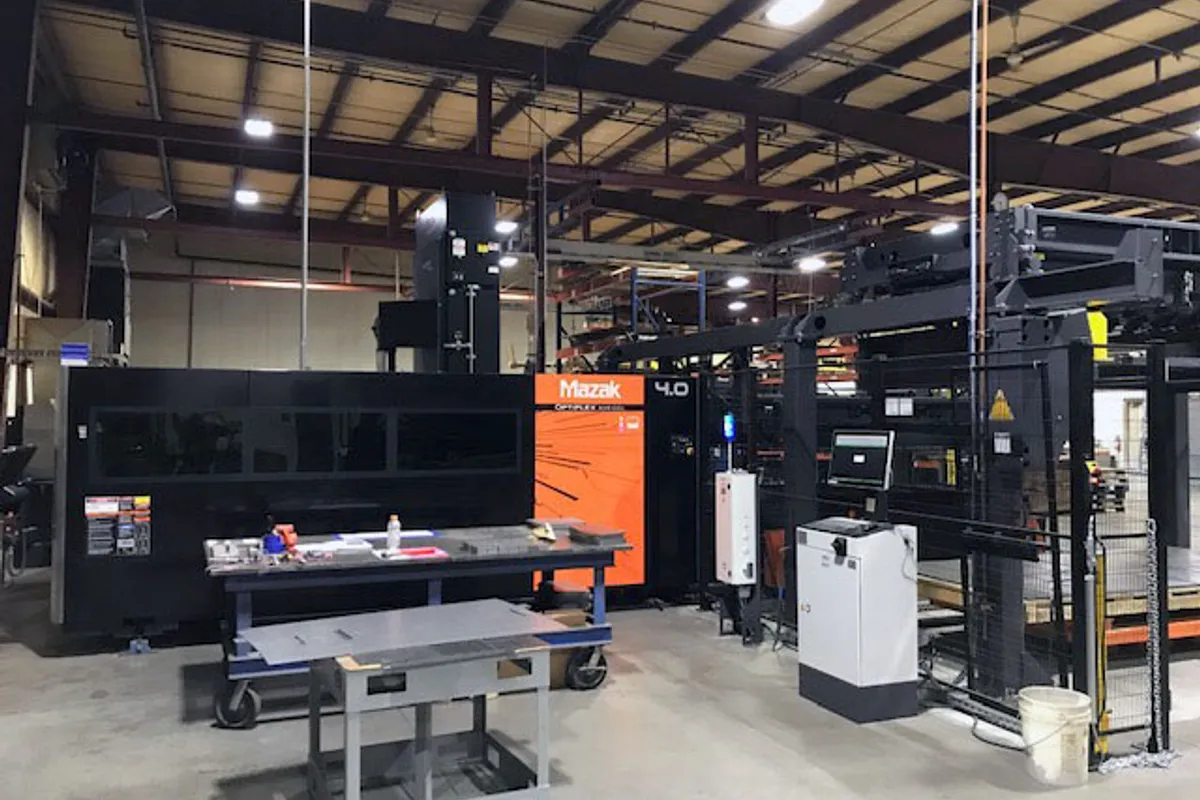
Mazak OPTIPLEX 3015 DDL
This model was not found in Yamazaki Mazak's current lineup when we checked on 2026-10-02 (lineup page). It may be a superseded or older model; the specifications below are as we last recorded them.
Key Specifications
Repeatability
working area
x axis travel
y axis travel
z axis travel
laser type
How much does the Mazak OPTIPLEX 3015 DDL cost?
Estimated price range
Our best estimate for a cnc laser cutting machine in this class — not a quote from Yamazaki Mazak. Configuration moves it a long way.
Overview
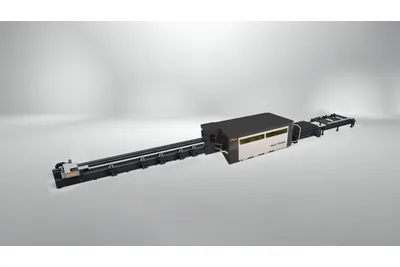
The Mazak OPTIPLEX 3015 DDL is a flat-sheet laser cutting machine built around a 4 kW direct diode laser instead of a fiber or CO2 source, with a listed working area of 1,524 x 3,048 mm (60 x 120 in). It is not in Mazak's current lineup and may be an older model, so the figures on this page are the listed ones and could not be matched to a current Mazak page. Treat them as a starting point when looking at a used machine and confirm them against the machine's own documentation.
The listed source is a Panasonic YL-F40 direct diode laser with a 0.97 micron wavelength, running CW and pulsed with +/- 2% power stability. Listed maximum thicknesses are 25 mm (1.0 in) in mild steel, 19 mm (0.75 in) in stainless steel and 16 mm (0.63 in) in aluminum. The reflective metals have rows of their own: 10 mm (0.38 in) for both brass and copper, and 5 mm (0.188 in) for galvanized sheet. These are capacity limits, not the thicknesses a shop would cut all day, so ask for sample cuts in the material that matters to you.
Motion is by helical rack-and-pinion on X and Y and a ball screw on Z. Rapid traverse is listed at 120 m/min (4,724 ipm) in X and Y and 60 m/min (2,362 ipm) in Z, with 1.8G acceleration. Z travel is only 110 mm (4.33 in), which is normal for flat sheet and rules out formed parts and tube. Positioning accuracy is listed as +/- 0.05 mm per 500 mm in X and Y, with repeatability of +/- 0.03 mm (0.0012 in).
The table describes a pallet machine. Each pallet is listed at 930 kg (2,050 lb), with a pallet change of about 25 seconds. Plan the installation around a listed machine weight of 16,500 kg (36,376 lb), a floor space of 10,000 x 6,100 mm (394 x 240 in) and a 57 kVA power requirement. The control is listed as MAZATROL PreviewG.
Full Specifications
| Parameter | Value |
|---|---|
| Working Area | 1,524 x 3,048 mm (60 x 120 in) |
| X Axis Travel | 1,595 mm (62.8 in) |
| Y Axis Travel | 3,110 mm (122.4 in) |
| Z Axis Travel | 110 mm (4.33 in) |
| Laser Type | Direct Diode Laser (Panasonic YL-F40, 0.97 micron wavelength) |
| Laser Power | 4 kW |
| Laser Modes | CW and pulsed, +/- 2% power stability |
| Max Thickness Mild Steel | 25 mm (1.0 in) |
| Max Thickness Stainless Steel | 19 mm (0.75 in) |
| Max Thickness Aluminum | 16 mm (0.63 in) |
| Max Thickness Brass | 10 mm (0.38 in) |
| Max Thickness Copper | 10 mm (0.38 in) |
| Max Thickness Galvanized | 5 mm (0.188 in) |
| Rapid Traverse Xy | 120 m/min (4,724 ipm) |
| Rapid Traverse Z | 60 m/min (2,362 ipm) |
| Acceleration | 1.8G |
| Positioning Accuracy Xy | +/- 0.05 mm per 500 mm (+/- 0.002 in per 19.68 in) |
| Positioning Accuracy Z | +/- 0.01 mm per 100 mm (+/- 0.0004 in per 3.94 in) |
| Repeatability | +/- 0.03 mm (0.0012 in) |
| Drive System Xy | Helical rack-and-pinion |
| Drive System Z | Ball screw |
| Pallet Load Capacity | 930 kg (2,050 lb) per pallet |
| Pallet Change Time | ~25 seconds |
| Machine Weight | 16,500 kg (36,376 lb) |
| Machine Dimensions | 8,490 x 3,486 x 2,010 mm (334 x 137 x 79 in) |
| Floor Space | 10,000 x 6,100 mm (394 x 240 in) |
| Work Table Height | 900 mm (35.4 in) |
| CNC Control | MAZATROL PreviewG (19-inch SXGA touchscreen, 16 GB storage) |
| Wall Plug Efficiency | ~45% |
| Power Requirement | 57 kVA |
Specifications compiled from manufacturer literature and industry references. Not independently verified against a published spec sheet — confirm with the manufacturer or an authorised dealer before making a purchasing decision.
Strengths & Limitations
Strengths
- Listed 4 kW direct diode source with a 0.97 micron wavelength, running CW and pulsed with +/- 2% power stability
- Brass and copper are both listed to 10 mm (0.38 in), alongside 25 mm (1.0 in) in mild steel
- Rapid traverse listed at 120 m/min (4,724 ipm) in X and Y with 1.8G acceleration
- Pallet change listed at about 25 seconds, with 930 kg (2,050 lb) per pallet
- Listed wall-plug efficiency of about 45% on a 57 kVA power requirement
Limitations
- Not in Mazak's current lineup, and the listed figures could not be matched to a Mazak page for this model
- Z travel is listed at 110 mm (4.33 in), so the machine is for flat sheet only
- Galvanized sheet is listed to only 5 mm (0.188 in), far below the 25 mm (1.0 in) given for mild steel
- Needs a listed 10,000 x 6,100 mm (394 x 240 in) of floor space for a machine of 16,500 kg (36,376 lb)
Best For
Frequently Asked Questions
01
No. The OPTIPLEX 3015 DDL is not in Mazak's current lineup and may be an older model. The figures on this page are the listed ones and could not be matched to a current Mazak page, so confirm them against the nameplate and the documentation of any machine you are offered.
02
The listed source is a 4 kW direct diode laser, a Panasonic YL-F40 with a 0.97 micron wavelength. It is listed as running in CW and pulsed modes with +/- 2% power stability, and the listed wall-plug efficiency is about 45%.
03
The listed maximums are 25 mm (1.0 in) in mild steel, 19 mm (0.75 in) in stainless steel, 16 mm (0.63 in) in aluminum, 10 mm (0.38 in) in brass, 10 mm (0.38 in) in copper and 5 mm (0.188 in) in galvanized sheet. Those are limits at 4 kW, and production thicknesses are normally lower.
04
The listed working area is 1,524 x 3,048 mm (60 x 120 in). X travel is listed at 1,595 mm (62.8 in), Y travel at 3,110 mm (122.4 in) and Z travel at 110 mm (4.33 in). Each pallet is listed at 930 kg (2,050 lb), and a pallet change takes about 25 seconds.
05
The listed machine is 8,490 x 3,486 x 2,010 mm (334 x 137 x 79 in) and weighs 16,500 kg (36,376 lb). Listed floor space is 10,000 x 6,100 mm (394 x 240 in), the work table height is 900 mm (35.4 in) and the power requirement is 57 kVA. Check these against the installation drawing of the actual machine.
Videos

GladwinMachinery CS

MTDCNC

cnc World

ActionMachineryTV
Community Discussions
Comparisons
More from Yamazaki Mazak
Mazak Super Turbo-X510
Mazak Optiplex Nexus 510 II Fiber Laser
Mazak OptiPlex 3015 Ez
Mazak OptiPlex Nexus 3015
Mazak Optiplex 3015 Fiber II Laser
Mazak FabriGear 300
Other CNC Laser Cutting Machines
Dener FTL 12035
Cincinnati CI Fiber 3015
Durma HD-TC 60250 COMPACT
EMAG ELC 6i
Baykal BLC