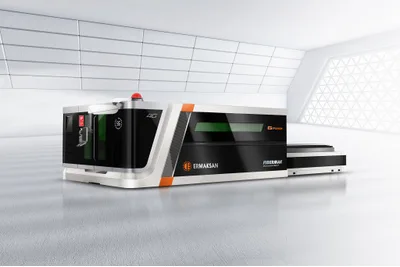
TRUMPF TruLaser 3030
Key Specifications
Accuracy
Repeatability
working area
laser type
laser power
max sheet thickness mild steel
How much does the TRUMPF TruLaser 3030 cost?
Estimated price range
Our best estimate for a cnc laser cutting machine in this class — not a quote from TRUMPF. Configuration moves it a long way.
Overview
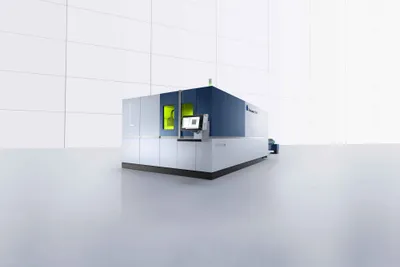
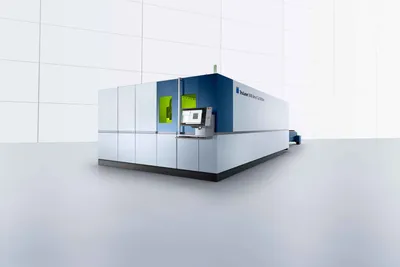
The TRUMPF TruLaser 3030 listed here is the CO2 version of the 3000 x 1500 mm flatbed laser cutting machine, with a laser power of 2.5 kW – 6 kW depending on configuration and a maximum axis speed of 140 m/min. The TruLaser 3030 Fiber has the same bed, with 3,000 mm (118 in) by 1,500 mm (59.1 in) of travel, so the laser source is what separates the two.
All three thickness figures in the table belong to the 6 kW configuration: 20 mm in mild steel, 15 mm in stainless steel and 10 mm in aluminum. Nothing is listed for lower powers, so a 2.5 kW machine cannot be judged by them. Aluminum comes in at half the mild steel figure, so shops cutting mostly aluminum plate get the least from this source.
The bed takes a sheet of up to 900 kg. Listed positioning accuracy is ±0.05 mm with ±0.03 mm repeatability, and machine weight is approx. 9,500 kg. The control is TRUMPF TruControl, nesting is done in TRUMPF TruTops Boost, and BrightLine appears as an option.
Because the power range is wide, the first thing to establish for any individual machine is which laser is fitted. Compare the installed power with the 6 kW that the thickness figures assume, and check whether BrightLine was ordered, before relying on the numbers above.
Full Specifications
| Parameter | Value |
|---|---|
| Working Area | 3000 x 1500 mm |
| Laser Type | CO2 |
| Laser Power | 2.5 kW – 6 kW (configuration dependent) |
| Max Sheet Thickness Mild Steel | 20 mm (6 kW) |
| Max Sheet Thickness Stainless | 15 mm (6 kW) |
| Max Sheet Thickness Aluminum | 10 mm (6 kW) |
| Positioning Accuracy | ±0.05 mm |
| Repeatability | ±0.03 mm |
| Axis Speed Max | 140 m/min |
| Max Sheet Weight | 900 kg |
| CNC Control | TRUMPF TruControl |
| Machine Weight | approx. 9,500 kg |
| Cutting Head | TRUMPF BrightLine (optional) |
| Nesting Software | TRUMPF TruTops Boost |
Specifications compiled from manufacturer literature and industry references. Not independently verified against a published spec sheet — confirm with the manufacturer or an authorised dealer before making a purchasing decision.
Strengths & Limitations
Strengths
- 3000 x 1500 mm working area with a maximum axis speed of 140 m/min
- Cuts 20 mm mild steel and 15 mm stainless steel in the 6 kW configuration
- Listed positioning accuracy of ±0.05 mm and repeatability of ±0.03 mm
- Takes sheets up to 900 kg, with TRUMPF TruControl and TruTops Boost nesting software
Limitations
- Aluminum is limited to 10 mm even at 6 kW
- Thickness figures are given for 6 kW only; nothing is listed for the 2.5 kW end of the range
- BrightLine is listed as optional
- No copper or brass thickness is listed
Best For
Frequently Asked Questions
01
A CO2 laser. Power is listed as 2.5 kW – 6 kW, depending on configuration, so two machines with this model name can differ widely in what they cut. Establish the installed power of the machine in question first.
02
The listed figures are for the 6 kW configuration: 20 mm mild steel, 15 mm stainless steel and 10 mm aluminum. No figures are given for lower laser powers, and none for copper or brass.
03
The working area is 3000 x 1500 mm and the maximum sheet weight is 900 kg. The machine itself is listed at approx. 9,500 kg, which is the figure to use for transport and floor planning.
04
Positioning accuracy is listed at ±0.05 mm and repeatability at ±0.03 mm. Maximum axis speed is 140 m/min. The control is TRUMPF TruControl and the nesting software is TRUMPF TruTops Boost.
Videos

TRUMPFtube

TRUMPF Inc.

TRUMPF Inc.

Sterling Fab Tech
Community Discussions
More from TRUMPF
Other CNC Laser Cutting Machines
Bodor i5
Flow LZR 4020
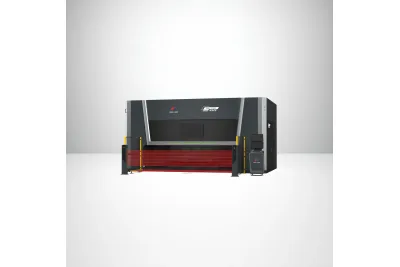
Penta Laser BOLT CUBE 4525
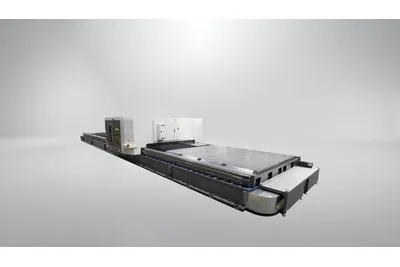
Baykal BLM
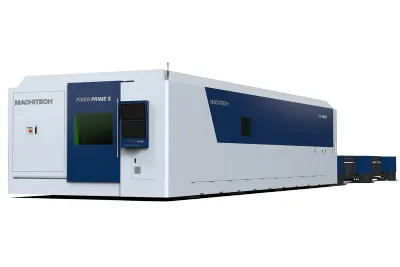
Machitech Fiber Prime S 8x24