Industrial CNC Machine Directory

Trumpf TruBend 7036

$120,000 - $180,000 (new, with tooling) Updated 2026-03-10
01

Key Specifications

press force

360 kN / 36 metric tons (40 US tons)

bending length

1,020 mm (40 in)

distance between uprights

932 mm (36.7 in)

usable mounting height

295 mm (11.6 in)

throat depth

150 mm (5.9 in)

y axis stroke

120 mm (4.7 in)

02

Overview

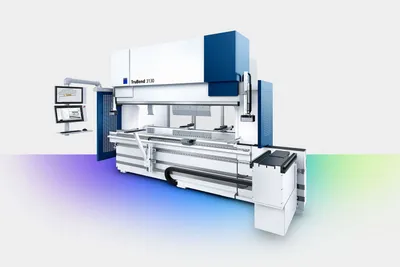
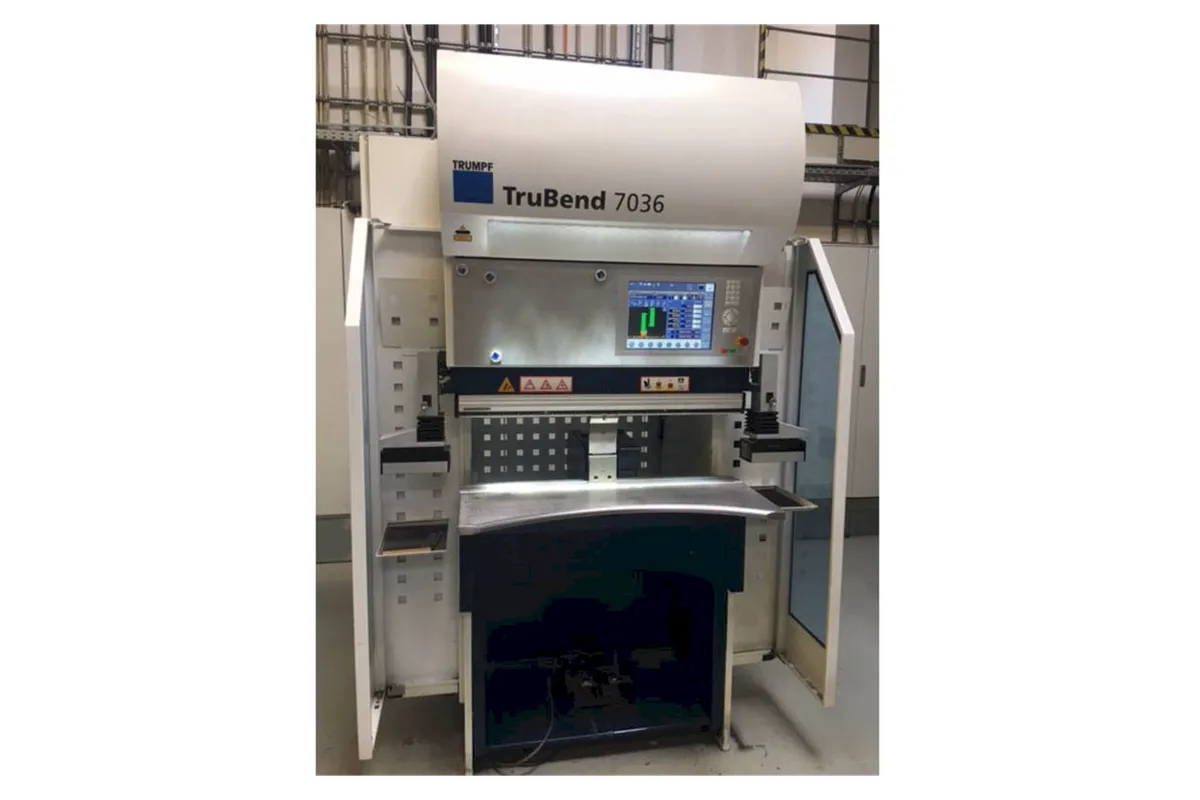
The Trumpf TruBend 7036 is a compact, fully electric CNC press brake built for high-speed bending of small and medium-sized parts. With 360 kN (36 metric tons / 40 US tons) of press force and a 1,020 mm (40 in) bending length, it's purpose-built for tight spaces and fast cycle times -- not big plate work. Trumpf markets the TruBend 7000 series as the "fastest bending machine in the world," and the numbers back that up: the gearless direct drive pushes up to 104 strokes per minute with a Y-axis rapid speed of 220 mm/s (520 ipm).

The 7036 runs on an electromechanical direct drive instead of hydraulics, which means no oil changes, no hydraulic filters, and no warm-up drift. You get consistent accuracy from the first bend of the day. Y-axis positional accuracy sits at +/- 0.002 mm (0.00008 in), and the X/R backgauge axes hold +/- 0.02 mm (0.0008 in). For small precision parts -- brackets, clips, enclosures, electronic housings -- that level of repeatability matters.

The machine ships with a 6-axis CNC backgauge made from lightweight carbon fiber, keeping things fast without sacrificing rigidity. The backgauge fingers reposition at 1,000 mm/s (2,362 ipm), so repositioning time between bends is nearly zero on short-run jobs. The TASC 6000 control (or Touchpoint TruBend on newer models) handles programming with a touchscreen interface, and offline programming runs through TecZone Bend or TruTops Boost.

Ergonomics is a headline feature. The TruBend 7036 was the first press brake to earn an ergonomics certification. The operator station includes an adjustable sit/stand support, individually adjustable support table, adjustable armrests and footrests, and front/rear lighting. For shops running an operator on a 7036 for a full 8-hour shift bending hundreds of small parts, those details add up. The BendGuard automatic safety system uses light-field monitoring instead of a physical light curtain, keeping the working area open while maintaining safety compliance.

ACB Wireless (Automatically Controlled Bending) is Trumpf's angle measurement system that uses tracer discs to measure the actual bend angle and correct in real-time. It eliminates trial bends on new setups and compensates for material variation across a batch. Combined with automatic tool clamping via button press, setup times drop significantly compared to manual brake setups.

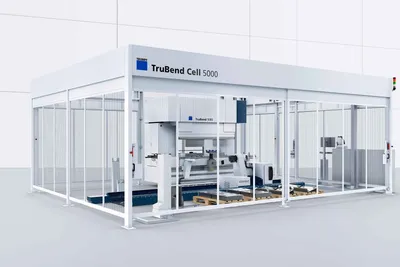
The footprint is remarkably small: 1,900 x 1,340 mm (74.8 x 52.8 in) with a height of 2,380 mm (93.7 in). At 2,600 kg (5,732 lb), it's light enough to move with a forklift. Trumpf also offers the TruBend Cell 7000, which pairs the 7036 with a BendMaster robotic arm for fully automated small-part bending -- a popular option for lights-out production of repetitive parts.

New TruBend 7036 machines typically run $120,000-$180,000 depending on options and tooling packages. Used machines from 2010-2018 trade between $40,000-$80,000 depending on hours and condition. That's a premium over comparably sized hydraulic brakes, but the electric drive's lower maintenance costs, energy savings, and speed advantage justify the delta for shops with enough small-part volume. Engine power consumption is just 7 kW -- a fraction of what a hydraulic press brake draws.

Direct competitors include the Amada HG 5020 and Bystronic Xpert 40. The 7036's advantages are speed, ergonomics, and Trumpf's service network. It doesn't compete on tonnage or bed length -- that's not its job. If you're bending parts longer than a meter or thicker than 6 mm, look at the TruBend 7050 (50 tons, 1,530 mm) or step up to the TruBend 5000 series. Specs sourced from Trumpf published data, dealer listings, and equipment resellers.

03

Full Specifications

Parameter Value
Press Force 360 kN / 36 metric tons (40 US tons)
Bending Length 1,020 mm (40 in)
Distance Between Uprights 932 mm (36.7 in)
Usable Mounting Height 295 mm (11.6 in)
Throat Depth 150 mm (5.9 in)
Y Axis Stroke 120 mm (4.7 in)
Y Axis Working Speed 25 mm/s (59 ipm)
Y Axis Rapid Speed 220 mm/s (520 ipm)
X Z Backgauge Speed 1,000 mm/s (2,362 ipm)
R Axis Speed 330 mm/s (780 ipm)
Y Axis Accuracy +/- 0.002 mm (0.00008 in)
X R Axis Accuracy +/- 0.02 mm (0.0008 in)
Max Strokes Per Minute ~104
Cnc Axes 6
CNC Control TASC 6000 / Touchpoint TruBend
Angle Measurement ACB Wireless (tracer discs)
Drive Type Fully electric (gearless direct drive)
Engine Power 7 kW
Machine Length 1,900 mm (74.8 in)
Machine Width 1,340 mm (52.8 in)
Machine Height 2,380 mm (93.7 in)
Machine Weight 2,600 kg (5,732 lb)
Arno Bayer Head Of Industrial Engineering Joining At Ekpo We particularly appreciate the TruFiber's combination of outstanding beam quality and process reliability.
Gerhard Steinhuber Samps Steinhuber Gmbh For us, the Flex Cell is an ideal solution in terms of cost-benefit ratio.
Bjrn Mller Head Of Production Factory 2 Gedia Gmbh It was a really good collaborative project. Together, we searched for solutions that perfectly met our individual requirements.
Joseph Gampp Division Manager Of Product Management Feinwerktechnik Hago The technology fits perfectly into our strategic alignment.

Specifications sourced from trumpf.com — verified 2026-03-28

04

Strengths & Limitations

Strengths

  • Fully electric direct drive eliminates hydraulic oil, filters, and warm-up drift -- consistent accuracy from the first bend with minimal maintenance
  • Up to 104 strokes per minute makes it one of the fastest small-format press brakes on the market, ideal for high-volume small parts
  • Y-axis positional accuracy of +/- 0.002 mm (0.00008 in) delivers repeatable precision bending for tight-tolerance work
  • First press brake to earn an ergonomics certificate -- adjustable sit/stand support, armrests, footrests, and lighting reduce operator fatigue on long shifts
  • ACB Wireless angle measurement eliminates trial bends and compensates for material variation in real-time, cutting setup time significantly
  • Compact 1,900 x 1,340 mm footprint fits into tight production cells and can be moved with a standard forklift
  • 7 kW power consumption is a fraction of what hydraulic press brakes draw, reducing operating costs over the machine's life

Limitations

  • 36 metric tons and 1,020 mm bending length limit the machine to small and medium parts -- anything longer than a meter or thicker than 6 mm needs a bigger brake
  • New pricing of $120K-$180K is a significant premium over comparable hydraulic press brakes in the 40-ton class
  • Trumpf's proprietary TASC 6000 control and software ecosystem lock you in -- no third-party CNC controllers or generic post processors
  • Parts and service from Trumpf come at premium rates compared to domestic press brake brands like Accurpress or Cincinnati
  • The TruBend Cell 7000 robotic automation option adds substantial cost and requires dedicated floor space for the BendMaster unit
05

Best For

Job shops and contract manufacturers with high volumes of small precision parts like brackets, clips, and electronic enclosures Medical device and aerospace fabricators that need +/- 0.002 mm repeatability on thin-gauge bending Production cells where a compact footprint matters -- the 7036 fits where larger hydraulic brakes can't Shops running operators on press brakes for full shifts who need ergonomic support to reduce fatigue and injury risk Automated bending cells using the TruBend Cell 7000 with BendMaster robot for lights-out small-part production Facilities looking to eliminate hydraulic maintenance and oil disposal while cutting energy costs
06

Frequently Asked Questions

01 What does a new Trumpf TruBend 7036 cost?

New TruBend 7036 machines typically run $120,000-$180,000 depending on tooling packages, ACB angle measurement options, and regional pricing. The TruBend Cell 7000 automated version with BendMaster robot costs significantly more. Used machines from 2010-2018 trade between $40,000-$80,000 depending on hours and condition -- a 2014 model with reasonable hours might list around $65,000.

02 How does the TruBend 7036 compare to the TruBend 7050?

The 7050 steps up to 500 kN (50 metric tons) press force and 1,530 mm (60 in) bending length, handling larger and thicker parts. The 7036 maxes out at 360 kN and 1,020 mm. Both share the same electric direct drive, control platform, and ergonomic design. Choose the 7036 for parts under a meter; go 7050 if you regularly bend longer or thicker stock.

03 Is the TruBend 7036 hydraulic or electric?

Fully electric. The 7036 uses a gearless direct drive motor instead of hydraulic cylinders. That means no hydraulic oil, no filters, no oil cooler, and no warm-up period. The electric drive also delivers more consistent accuracy because there's no thermal drift from hydraulic fluid temperature changes throughout the day.

04 What is ACB Wireless and do I need it?

ACB (Automatically Controlled Bending) Wireless uses tracer discs mounted in the die to measure the actual bend angle during the stroke and correct in real-time. It eliminates trial bends when setting up new jobs and compensates for material variation (thickness, grain direction, temper) across a batch. If you're running precision work or switching setups frequently, it's worth the option cost. For simple, repetitive bending, you can skip it.

05 Can the TruBend 7036 be automated?

Yes. Trumpf offers the TruBend Cell 7000, which pairs the 7036 with a BendMaster compact robot for automated loading, bending, and unloading of small parts. The cell handles parts up to 120 mm x 200 mm and runs lights-out. It's popular in electronics, automotive, and medical device shops with high-volume repetitive bending. Programming happens offline through TruTops Boost.

06 What materials can the TruBend 7036 bend?

The 7036 handles mild steel, stainless steel, aluminum, copper, and brass within its 36-ton capacity. For mild steel, that's roughly 3-4 mm (0.12-0.16 in) thickness at full bending length, depending on die width and material grade. Thinner stock like 1-2 mm sheet metal bends easily across the full 1,020 mm length. For thicker material, the effective bending length decreases proportionally.

07

Videos

TRUMPF bending: TruBend 7036 - Ergonomic operating concept

TRUMPF bending: TruBend 7036 - Ergonomic operating concept

TRUMPFtube

2019 Trumpf TruBend 7036 Press Brake

2019 Trumpf TruBend 7036 Press Brake

Naab Machinery Sales

TruBend 7036 and 7050 Product Video

TruBend 7036 and 7050 Product Video

TRUMPF Inc.

TRUMPF bending: TruBend 7036 - Backgauge system

TRUMPF bending: TruBend 7036 - Backgauge system

TRUMPFtube

#TRUMPF#TruBend#7036#Gebrauchtmaschine##TRUMPF#

#TRUMPF#TruBend#7036#Gebrauchtmaschine##TRUMPF#

I-HS GmbH

08

Community Discussions

09

Comparisons

10

Related Machines