Industrial CNC Machine Directory

Prima Power eP Press Brake
$120,000 - $350,000 Updated 2026-03-11
01

Key Specifications

drive type

Fully electric servo (dual ball screw)

tonnage range

50 - 200 US tons (eP-0520 to eP-2040)

bending length ep1030

3,060 mm (120.5 in)

bending length ep1336

3,655 mm (143.9 in)

bending length ep2040

4,100 mm (161.4 in)

tonnage ep1030

105 US tons (935 kN)

02

Overview

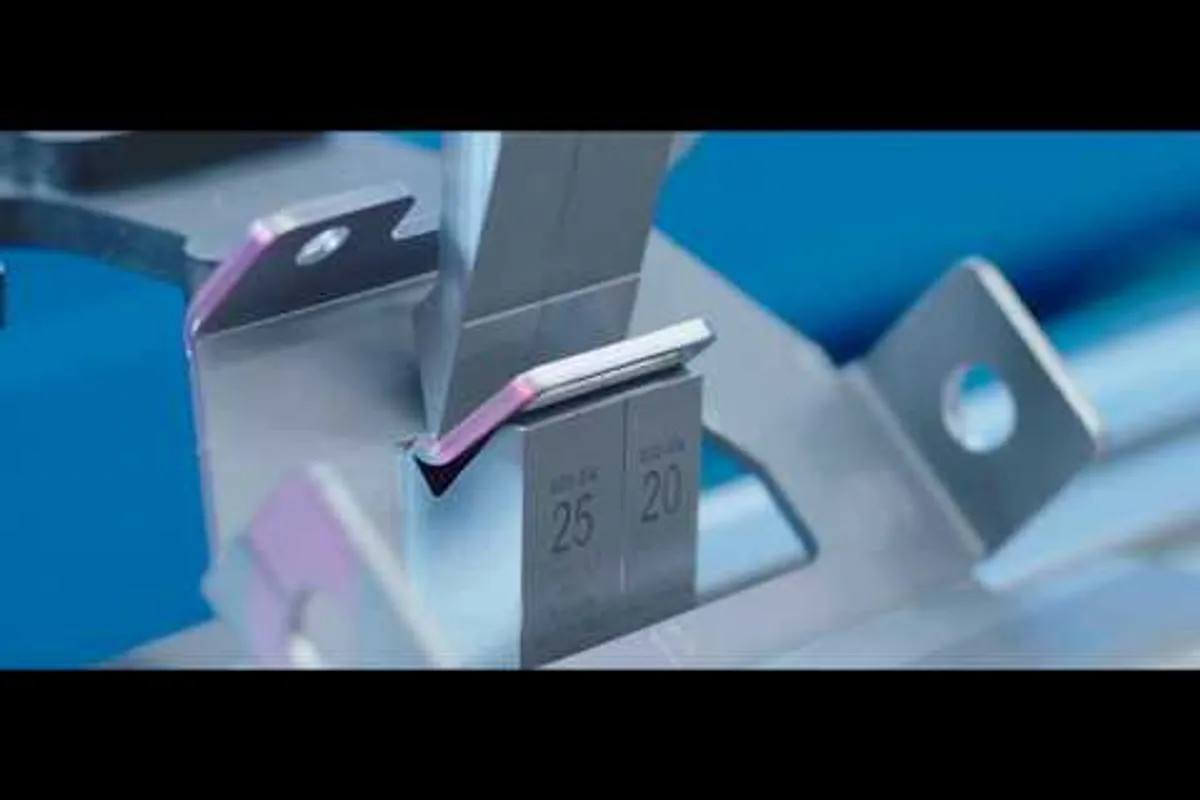
The Prima Power eP series is a fully electric servo-driven press brake line built on more than 20 years of Prima Power's experience applying servo-electronic drives to sheet metal bending. Unlike conventional hydraulic press brakes, the eP uses dual servo motors driving precision ball screws, eliminating hydraulic oil, reducing energy consumption by up to 50%, and delivering ram repeatability of ±0.005 mm. The lineup spans from the compact eP-0520 (50 tons, 2,100 mm) to the eP-2040 (200 tons, 4,100 mm), covering the full range of medium-thin sheet metal bending applications.

The most popular model in the range is the eP-1030, which delivers 105 US tons of bending force across a 3,060 mm bending length. With 700 mm of daylight, a 310 mm stroke, and a working speed of 10 mm/sec, it handles most production bending tasks efficiently. The eP-1336 steps up to 150 US tons with a 3,655 mm bending length, while the eP-2040 tops the range at 200 tons across 4,100 mm — the widest and most powerful fully electric brake available from Prima Power.

The electric drive architecture offers real advantages beyond energy savings. There's no hydraulic warm-up period — you press the start button and you're bending parts within seconds. Cycle times are typically 20-30% faster than equivalent hydraulic brakes because the servo motors accelerate the ram faster in approach and return strokes. The ±0.005 mm ram repeatability eliminates the angular drift that plagues hydraulic systems over long production runs, particularly in temperature-variable shop environments.

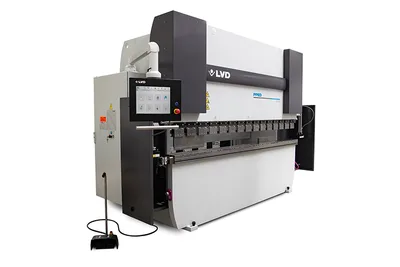
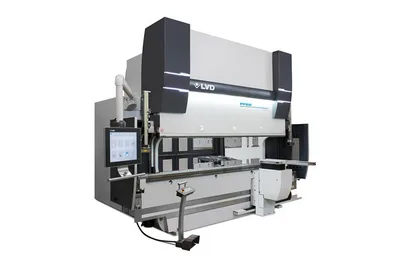
Prima Power pairs the eP brakes with their adaptive bending system, which uses real-time angle measurement to compensate for material springback variations on the fly. The control system stores bend sequences and tool setups, making repeat jobs a matter of selecting a program rather than re-teaching angles. For shops already running Prima Power laser cutting or punching equipment, the eP integrates into the TULUS production management ecosystem for end-to-end workflow tracking. Compared to the Amada HG series or LVD PPEB, the eP's fully electric architecture is its primary differentiator — no oil changes, no hydraulic leaks, no warm-up drift.

03

Full Specifications

Parameter Value
Drive Type Fully electric servo (dual ball screw)
Tonnage Range 50 - 200 US tons (eP-0520 to eP-2040)
Bending Length Ep1030 3,060 mm (120.5 in)
Bending Length Ep1336 3,655 mm (143.9 in)
Bending Length Ep2040 4,100 mm (161.4 in)
Tonnage Ep1030 105 US tons (935 kN)
Tonnage Ep1336 150 US tons (1,334 kN)
Tonnage Ep2040 200 US tons (1,779 kN)
Ram Repeatability ±0.005 mm (±0.0002 in)
Daylight Ep1030 700 mm (27.6 in)
Stroke Ep1030 310 mm (12.2 in)
Working Speed Ep1030 10 mm/sec (0.4 in/sec)
Approach Speed 200 mm/sec (7.9 in/sec)
Return Speed 200 mm/sec (7.9 in/sec)
Throat Depth Ep1030 410 mm (16.1 in)
CNC Control Prima Power proprietary CNC with touch-screen interface
Backgauge Axes Up to 6 axes (X, R, Z1, Z2, X2, R2)
Energy Consumption Up to 50% less than equivalent hydraulic press brakes
04

Strengths & Limitations

Strengths

  • Fully electric servo drive eliminates hydraulic oil, warm-up time, and hydraulic maintenance entirely
  • ±0.005 mm ram repeatability is best-in-class for electric brakes, eliminating angular drift over long production runs
  • Up to 50% energy savings compared to equivalent hydraulic press brakes, with no idle power consumption
  • Approach and return speeds of 200 mm/sec deliver 20-30% faster cycle times than comparable hydraulic machines
  • No hydraulic warm-up period — the machine is ready to bend accurately from a cold start
  • Clean, quiet operation with no risk of hydraulic leaks — ideal for climate-controlled or cleanroom-adjacent environments

Limitations

  • Maximum tonnage of 200 tons limits the eP to medium-thin sheet metal — heavy plate bending requires hydraulic machines like the LVD PPEB 320
  • Higher upfront cost than equivalent hydraulic brakes, though lower total cost of ownership over 5-10 years
  • Servo ball screw drives require periodic inspection and eventual replacement, which can be costly on high-cycle machines
  • Prima Power's North American service network is smaller than Amada's or Trumpf's, affecting response times in some regions
  • Limited to 4,100 mm maximum bending length on the eP-2040 — shops bending longer parts need hydraulic alternatives
05

Best For

Sheet metal fabrication shops bending stainless steel, aluminum, and mild steel up to 6 mm thick Precision bending applications requiring consistent angles across long production runs without drift Energy-conscious operations looking to reduce power consumption and eliminate hydraulic oil disposal Shops running Prima Power laser or punching equipment wanting unified production management through TULUS Contract manufacturers handling high-mix, short-run bending jobs where fast program recall saves setup time Clean manufacturing environments where hydraulic oil contamination is unacceptable
06

Frequently Asked Questions

01 How does the eP compare to hydraulic press brakes like the LVD PPEB?

The eP is faster in approach and return strokes (200 mm/sec vs ~120-130 mm/sec on hydraulic machines), more energy efficient, and more consistent in angle accuracy. However, hydraulic brakes like the PPEB 320 offer higher tonnage (320+ tons) and longer bending lengths for heavy plate work. The eP is the better choice for medium-thin sheet metal; hydraulic machines are necessary for thick plate and heavy forming.

02 What maintenance does an electric press brake require?

Significantly less than hydraulic machines. There's no hydraulic oil to change, no filters to replace, and no risk of seal leaks. Maintenance focuses on ball screw lubrication, guide cleaning, and periodic servo motor inspection. Total annual maintenance costs are typically 40-60% lower than equivalent hydraulic brakes.

03 Can the eP handle heavy-gauge bending?

The eP-2040 tops out at 200 tons, which handles mild steel up to about 10-12 mm depending on bend length and material grade. For bending 15 mm+ plate or working with high-strength steels, you need a hydraulic press brake with 300+ tons of capacity.

04 What is the expected lifespan of the servo ball screws?

Ball screw life depends on tonnage utilization and cycle count, but typical service life is 10-15 years in production environments running 2 shifts. Replacement is a planned maintenance event, not a catastrophic failure — the machine provides wear monitoring and advance warning.

05 Is the eP quieter than hydraulic brakes?

Yes, significantly. The electric drive produces roughly 65-70 dB during operation compared to 75-85 dB for hydraulic brakes. There's also no constant hydraulic pump noise during idle. This makes a noticeable difference in operator comfort, especially in shops running multiple brakes.

07

Videos

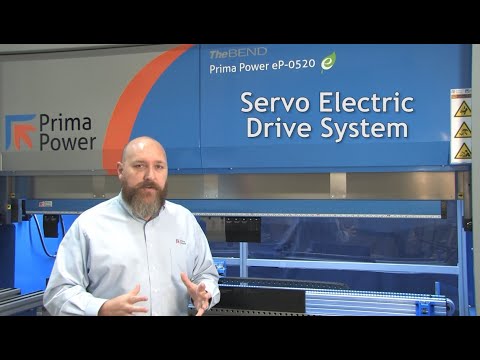
Prima Power eP-Series Overview with Paul Croft - Servo Electric Press Brake

Prima Power eP-Series Overview with Paul Croft - Servo Electric Press Brake

Prima Power North America

PRIMA POWER EP 0520 Press Brake

PRIMA POWER EP 0520 Press Brake

Surplex

Prima Power eP Power Consumption vs Hydraulic Press Brake for CNC

Prima Power eP Power Consumption vs Hydraulic Press Brake for CNC

Prima Power North America

Stability, automation, and performance with the Prima Power eP Genius press brake

Stability, automation, and performance with the Prima Power eP Genius press brake

MTDCNC

Prima Power eP Genius Press Brake

Prima Power eP Genius Press Brake

IMTS Machinery

08

Community Discussions

Practical Machinist

Press Brakes - Practical Machinist

Owner experience and review — Press Brakes - Practical Machinist

Practical Machinist

Press Brake Alignment (and inspection) - Practical Machinist

Community discussion — Press Brake Alignment (and inspection) - Practical Machinist

Practical Machinist

Any ideas about a jammed press brake. - Practical Machinist

Community discussion — Any ideas about a jammed press brake. - Practical Machinist

Practical Machinist

I need a cnc press brake. - Practical Machinist

Pricing and buying discussion — I need a cnc press brake. - Practical Machinist

CNCZone

Upstroke press brakes - Reccomendations? - cnczone.com

Community discussion — Upstroke press brakes - Reccomendations? - cnczone.com

CNCZone

Problem hydraulic press brake cnc upgrade - cnczone.com

Troubleshooting and problem-solving — Problem hydraulic press brake cnc upgrade - cnczone.com

CNCZone

HACO Pressbrake controls upgrade. - CNCzone

Options and configuration advice — HACO Pressbrake controls upgrade. - CNCzone

CNCZone

Press brake control - CNCzone

Community discussion — Press brake control - CNCzone

Reddit

Suggestions for Cheaper Press Brakes : r/Machinists - Reddit

Options and configuration advice — Suggestions for Cheaper Press Brakes : r/Machinists - Reddit

Reddit

Anyone ever make a lower die for a press brake? : r/Machinists

Community discussion — Anyone ever make a lower die for a press brake? :

Reddit

Leaking Hydraulic Press : r/Machinists - Reddit

Pricing and buying discussion — Leaking Hydraulic Press : r/Machinists - Reddit

Reddit

Benchtop Drill Presses That Don't Have Wobbly Spindles? : r ...

Pricing and buying discussion — Benchtop Drill Presses That Don't Have Wobbly Spindles? : r ...

Links to community discussions. Summaries are editorial — visit the original thread for full context.
09

Comparisons

10

Related Machines