Okuma MU-6300V
Key Specifications
Tool Capacity
Table Size
Rapid Traverse
max machining volume
spindle speed
spindle motor power
Overview
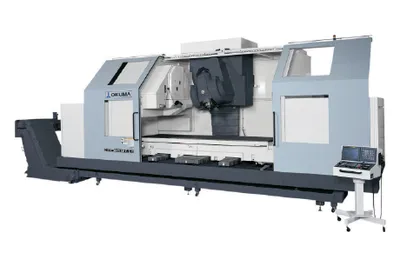
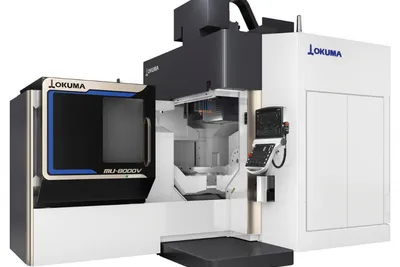
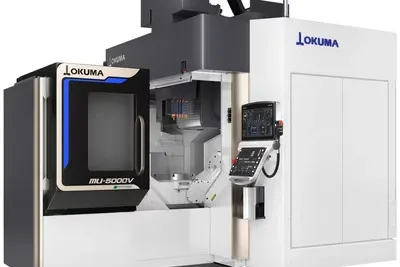
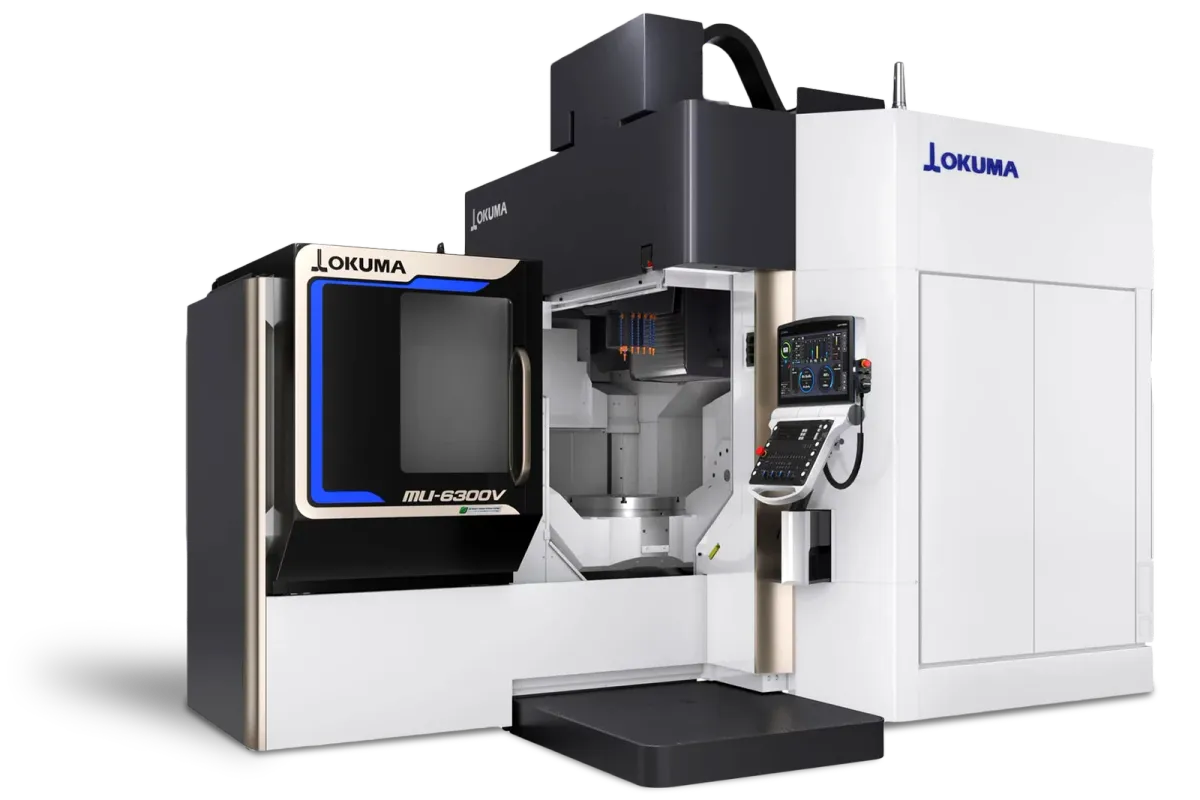
The Okuma MU-6300V is a simultaneous 5-axis vertical machining center built around a trunnion table of Ø630 mm (Ø24.80 in), accepting workpieces within a machining volume of Ø830 × 550 mm (Ø32.68 × 21.65 in). The gap between table and workpiece diameter is normal for this architecture and useful to know: parts can overhang the table, so fixture design and clearance through the tilt range, rather than table size alone, decide what actually fits.
The spindle is offered at 10,000 min⁻¹ or 6,000 min⁻¹, both on an 11/7.5 kW (15/10 hp) motor rated at the 10-minute and continuous ratings. Those are moderate power figures for a machine of this size, and they matter more than the speed choice. 7.5 kW continuous is a finishing and moderate-roughing budget, so the MU-6300V is best matched to precision work in aluminum, steel and light alloys, or to finishing operations on parts roughed elsewhere. Shops planning sustained heavy cuts in titanium or hardened material should size their expectations against that continuous rating rather than the 10-minute figure.
The lower 6,000 min⁻¹ spindle option exists for work where torque at low speed is more useful than top-end speed, typically larger-diameter tooling in tougher material. The choice is effectively permanent and should follow the dominant material rather than the occasional job.
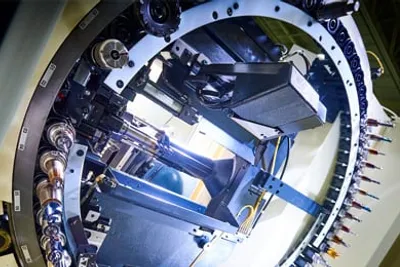
Rapid traverse is 50 m/min (1,969 ipm). Tool capacity is 32 as standard, with 48, 64 and matrix magazines available. For 5-axis work the larger options are worth considering: parts machined complete in one setup consume tooling quickly, and a magazine that holds a whole job plus duplicates is the precondition for running unattended.
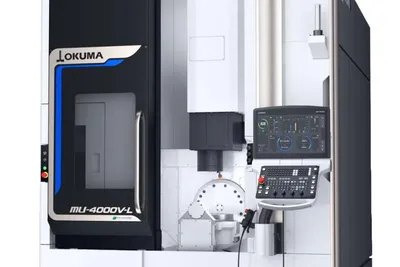
An L specification adds turning capability, letting the rotary table drive the workpiece against a stationary tool. That turns the machine into a mill-turn platform for round parts with prismatic features, which is the configuration that distinguishes it from a conventional 5-axis machining center.
The machine occupies 4,850 × 2,990 × 3,525 mm. It suits aerospace, medical and precision job shops working medium-sized complex components.
Full Specifications
| Parameter | Value |
|---|---|
| Max Machining Volume | Ø830 × 550 mm (Ø32.68 × 21.65 in) |
| Table Size | Ø630 mm (Ø24.80 in) |
| Spindle Speed | 10,000 min⁻¹ [6,000 min⁻¹] |
| Spindle Motor Power | 11/7.5 kW (15/10 hp), 10 min/cont |
| Rapid Traverse Rate | 50 m/min (1,969 ipm) |
| Tool Capacity | 32 tools [48, 64, matrix] |
| Machine Dimensions | 4,850 × 2,990 × 3,525 mm (190.94 × 117.72 × 138.78 in) |
| Spec Extension | L (turning specification) |
Specifications sourced from okuma.com — verified 2026-08-09
Strengths & Limitations
Strengths
- Trunnion table of Ø630 mm (Ø24.80 in) accepting a machining volume of Ø830 × 550 mm (Ø32.68 × 21.65 in), so parts can overhang the table
- Choice of a 10,000 min⁻¹ or 6,000 min⁻¹ spindle to match the dominant material
- Rapid traverse of 50 m/min (1,969 ipm) on a simultaneous 5-axis platform
- Tool capacity of 32 as standard with 48, 64 and matrix magazines available — the larger options are the precondition for running unattended
- An L specification adds turning capability, letting the rotary table drive the workpiece against a stationary tool
Limitations
- The spindle motor is 11/7.5 kW (15/10 hp) at the 10-minute and continuous ratings — moderate for a machine of this size, and 7.5 kW continuous is a finishing and moderate-roughing budget
- Sustained heavy cuts in titanium or hardened material should be sized against that continuous rating rather than the 10-minute figure
- The spindle speed choice is effectively permanent and should follow the dominant material rather than the occasional job
- The standard 32-pocket magazine fills quickly on parts machined complete in one setup
- At 4,850 × 2,990 × 3,525 mm the machine claims real floor area and height for its working envelope
Best For
Frequently Asked Questions
01
The trunnion table is Ø630 mm (Ø24.80 in) and the machining volume is Ø830 × 550 mm (Ø32.68 × 21.65 in). The gap between the two is normal for this architecture and useful to know: parts can overhang the table, so fixture design and clearance through the tilt range, rather than table size alone, decide what actually fits.
02
Both options use the same 11/7.5 kW (15/10 hp) motor, so the choice is about speed rather than power. The lower 6,000 min⁻¹ spindle exists for work where torque at low speed is more useful than top-end speed, typically larger-diameter tooling in tougher material. The decision is effectively permanent and should follow the dominant material.
03
It is a moderate figure for a machine of this size, and it matters more than the speed choice. The motor is rated 11/7.5 kW (15/10 hp) at the 10-minute and continuous ratings, so 7.5 kW continuous is a finishing and moderate-roughing budget. The machine is best matched to precision work in aluminum, steel and light alloys, or to finishing parts roughed elsewhere.
04
The L specification adds turning capability, letting the rotary table drive the workpiece against a stationary tool. That turns the machine into a mill-turn platform for round parts with prismatic features, and it is the configuration that distinguishes it from a conventional 5-axis machining center.
Videos
MTDCNC North America
Okuma Europe GmbH
OKUMA CORPORATION JAPAN
Morris
Community Discussions
Community discussion — Eccentric Reducer on Okuma mu6300v-l ...
Comparison and buying advice — Shopping for a 5 axis mill: DMG Monoblock 85 vs Okuma MU6300 ...
Community discussion — Need Help! Changing Work Envelope - cnczone.com
Community discussion — MU6300 c rotation - cnczone.com
Community discussion — Okuma - CNCzone
Capabilities and material handling — North America Renishaw TS27R capabilities - cnczone.com
Pricing and buying discussion — What are your experience with okuma machines? :
Capabilities and material handling — Okuma...Love or Hate? : r/Machinists - Reddit
Community discussion — Recommendations for CNC VMC : r/Machinists - Reddit
Comparison and buying advice — Matsuura vs. Okuma? : r/Machinists - Reddit
Links to community discussions. Summaries are editorial — visit the original thread for full context.