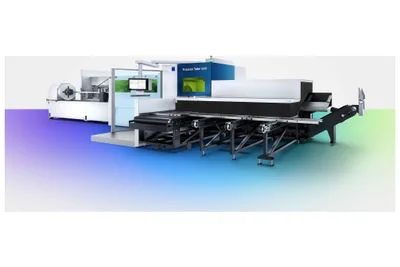
Mitsubishi Electric GX-F Advanced II
Key Specifications
Accuracy
Repeatability
working area
laser type
laser power
max sheet thickness mild steel
How much does the Mitsubishi Electric GX-F Advanced II cost?
Estimated price range
Our best estimate for a cnc laser cutting machine in this class — not a quote from Mitsubishi Electric. Configuration moves it a long way.
Overview
The Mitsubishi Electric GX-F Advanced II is listed as a linear-motor fiber laser for 3000 x 1500 mm sheet, with 6 kW, 9 kW or 12 kW of laser power and a rapid speed of over 150 m/min. No model under this exact name is on Mitsubishi Electric's current product pages, so this page works from the listed figures, and they should be confirmed against the paperwork of any machine on offer.
Material range is the reason to look at it. With 12 kW the table gives 25 mm for mild steel, 20 mm for stainless and 15 mm for aluminum, and it adds 8 mm each for copper and brass, two reflective metals. The copper and brass rows carry no power rating, so ask which of the three sources they were established with. A variable beam mode is listed for switching between thin-gauge and thick-plate optimization, which matters on a machine expected to cut both ends of that range in the same shift.
Sheets up to 920 kg can be loaded, and positioning is listed at ±0.03 mm with ±0.02 mm repeatability. The control is named as Mitsubishi CNC70L Advanced with Intelligent Adaptive Control (IAC). For scale, the GX-F is listed with 170 m/min simultaneous rapids and a 100 m/min maximum cutting feedrate on travels of 3,100 mm by 1,565 mm. The Advanced II table has no cutting feed, travel or machine weight row of its own.
Full Specifications
| Parameter | Value |
|---|---|
| Working Area | 3000 x 1500 mm |
| Laser Type | Fiber |
| Laser Power | 6 kW, 9 kW, or 12 kW |
| Max Sheet Thickness Mild Steel | 25 mm (12 kW) |
| Max Sheet Thickness Stainless | 20 mm (12 kW) |
| Max Sheet Thickness Aluminum | 15 mm (12 kW) |
| Max Sheet Thickness Copper | 8 mm |
| Max Sheet Thickness Brass | 8 mm |
| Positioning Accuracy | ±0.03 mm |
| Repeatability | ±0.02 mm |
| Max Axis Speed | over 150 m/min rapid (linear motor) |
| Max Sheet Weight | 920 kg |
| CNC Control | Mitsubishi CNC70L Advanced with Intelligent Adaptive Control (IAC) |
| Axis Drive | Linear motors |
| Beam Shaping | Variable beam mode (thin-gauge / thick-plate optimization) |
Specifications compiled from manufacturer literature and industry references. Not independently verified against a published spec sheet — confirm with the manufacturer or an authorised dealer before making a purchasing decision.
Strengths & Limitations
Strengths
- Three listed power levels, 6 kW, 9 kW or 12 kW, on a 3000 x 1500 mm working area
- Copper and brass are both listed to 8 mm, alongside 25 mm mild steel, 20 mm stainless and 15 mm aluminum at 12 kW
- Linear motor axis drives with a listed rapid speed of over 150 m/min
- Variable beam mode for thin-gauge and thick-plate optimization is part of the listed specification
- Listed positioning accuracy of ±0.03 mm and repeatability of ±0.02 mm
Limitations
- The 25 mm, 20 mm and 15 mm limits apply at 12 kW only; no thickness is listed for the 6 kW or 9 kW machines
- Maximum sheet weight is 920 kg, which restricts full-size plate at the upper end of the thickness range
- The listed figures give no machine weight, footprint or power requirement, so an installation cannot be planned from this table
- Aluminum is listed to 15 mm at 12 kW, well short of the 25 mm given for mild steel
Best For
Frequently Asked Questions
01
At 12 kW the listed figures are 25 mm for mild steel, 20 mm for stainless and 15 mm for aluminum. Copper and brass are each listed at 8 mm with no power stated. No limits are given for the 6 kW and 9 kW options.
02
From the listed figures, the Advanced II comes with 6 kW, 9 kW or 12 kW, a rapid speed of over 150 m/min and a 3000 x 1500 mm working area. The GX-F is listed with travels of 3,100 mm by 1,565 mm by 120 mm, 170 m/min simultaneous rapids and a machine weight of 7,000 kg. Travels and weight are not listed for the Advanced II, so the two cannot be compared on those rows.
03
The working area is 3000 x 1500 mm and the maximum sheet weight is 920 kg. Heavy plate at full sheet size is where that weight figure becomes the limit, so check it for the thickest material you run.
04
The listed control is Mitsubishi CNC70L Advanced with Intelligent Adaptive Control (IAC). The table also lists linear motor axis drives and a variable beam mode. It does not describe what IAC adjusts during a cut, so ask to see it run on your own material.
More from Mitsubishi Electric
Other CNC Laser Cutting Machines
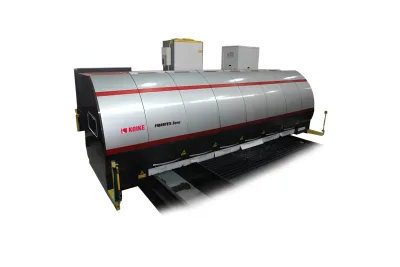
Koike Aronson Fibertex Zero DBC
Yawei YTF-9045
Dener FTL 9035
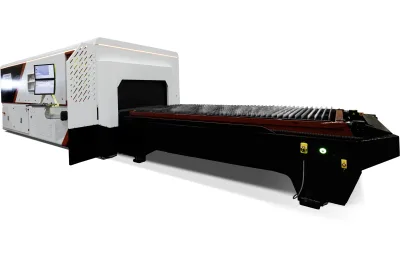
Cincinnati CI FiberMax 4020
Bystronic BySprint Fiber