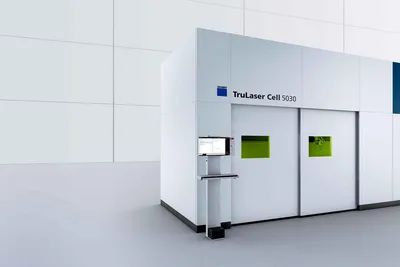
LVD Electra BL 3015
Key Specifications
Table Size
Accuracy
Repeatability
laser type
laser power
max cutting speed
Overview
The LVD Electra BL 3015 is a mid-power fiber laser cutting machine from Belgium's LVD Company, designed for production cutting of mild steel, stainless steel, aluminum, and non-ferrous sheet metal in a 3,000 x 1,500 mm (10 x 5 ft) sheet format. LVD is one of Belgium's leading sheet metalworking machine manufacturers, producing a comprehensive range of laser cutting, press brake, and punching equipment from their facility in Gullegem, Belgium.
The Electra BL 3015 uses a fiber laser source (typically 3–6 kW depending on configuration) with a cutting head designed for clean, precise cutting of common sheet metal thicknesses. The fiber laser's higher wall-plug efficiency compared to CO2 lasers, and its excellent beam quality (M² < 1.1), provides clean cuts on both thin and medium-thickness materials. The 'BL' designation indicates the Electra series with a flat-bed table format.
The machine features an automatic material handling interface for sheet loading/unloading, a cutting table with an intelligent support structure to minimize micro-welding and achieve clean part separation, and LVD's CADMAN-L software for offline programming and nesting. The Siemens CNC manages all axis motions and laser power modulation.
The Electra BL 3015 competes with the Trumpf TruLaser 3030 fiber, the Amada ENSIS-3015AJ, and the Bystronic ByStar Fiber 3015 in the mid-power fiber laser cutting market. LVD's differentiation is the integration with their CADMAN-L software suite for complete bend-and-cut process management, and the single-brand supply chain from laser through press brake. Pricing typically runs $350,000–$650,000 depending on laser power and options.
Full Specifications
| Parameter | Value |
|---|---|
| Table Size | 3,000 x 1,500 mm (10 x 5 ft) |
| Laser Type | Fiber laser (IPG or equivalent source) |
| Laser Power | 3 kW, 4 kW, 6 kW (configuration dependent) |
| Max Cutting Speed | 40 m/min (positioning); cutting speed material dependent |
| Max Mild Steel Thickness | 20 mm (0.79 in) at 6 kW |
| Max Stainless Steel Thickness | 12 mm (0.47 in) at 6 kW |
| Max Aluminum Thickness | 10 mm (0.39 in) at 6 kW |
| Positioning Accuracy | ±0.05 mm (DIN 55189) |
| Repeatability | ±0.02 mm |
| X Axis Travel | 3,080 mm (121 in) |
| Y Axis Travel | 1,565 mm (61.6 in) |
| Z Axis Stroke | 115 mm (4.5 in) |
| Maximum Sheet Weight | 900 kg (1,984 lb) |
| Machine Weight | 12,000 kg (26,455 lb) approximate |
| CNC Control | Siemens CNC with LVD CADMAN-L software |
| Electrical | 400 VAC 3-phase 50 Hz |
Specifications compiled from manufacturer literature and industry references. Not independently verified against a published spec sheet — confirm with the manufacturer or an authorised dealer before making a purchasing decision.
Strengths & Limitations
Strengths
- 3,000 x 1,500 mm table handles the most common sheet metal format (1,500 x 3,000 mm standard sheet) used in HVAC, enclosure, and general fabrication
- Fiber laser's high wall-plug efficiency reduces electricity consumption 30–40% compared to equivalent CO2 laser cutting — significant long-term operating cost reduction
- LVD CADMAN-L software integration with CADMAN-B (press brake) enables seamless programming of bent sheet metal parts from a single software environment
- LVD's Belgian manufacturing and European service network provides reliable support for European buyers, with US presence through LVD Americas
- Single-source supply for laser and press brake from LVD simplifies procurement, support, and the bend+cut process development
Limitations
- LVD has less market awareness than Trumpf, Amada, and Bystronic in North America — service network is more limited in the US than in Europe
- CADMAN-L software, while capable, has a smaller user community and fewer third-party post-processor integrations than Trumpf's TruTops or Bystronic's ByVision ecosystems
- Pricing at $350K–$650K positions the Electra BL against capable fiber laser competitors — buyers should evaluate total cost of ownership including consumables, electricity, and service coverage
Best For
Frequently Asked Questions
01
Fiber lasers use a solid-state fiber optic gain medium to produce a laser beam with a wavelength of approximately 1,070 nm, while CO2 lasers use a gas discharge tube to produce a 10,600 nm wavelength beam. Key differences: (1) Fiber lasers are 2-3x more energy efficient than CO2 for the same output power; (2) Fiber lasers cut reflective metals (copper, brass, aluminum) much more effectively than CO2 because the shorter wavelength is absorbed better by these metals; (3) Fiber laser beam delivery uses flexible optical fiber cable rather than CO2's rigid mirror/lens delivery system — faster response, less maintenance; (4) Fiber lasers have higher cutting speeds on thin material (<6 mm) but CO2 can produce superior edge quality on thick material (>20 mm).
02
The LVD Electra BL 3015 cuts: mild steel up to 20 mm (6 kW version), stainless steel up to 12 mm, aluminum alloys up to 10 mm, brass up to 6 mm, copper up to 4 mm, and galvanized steel. The fiber laser's short wavelength provides excellent absorption on copper and brass — materials that CO2 lasers cut poorly due to high reflectivity at 10,600 nm. Each material and thickness combination requires specific gas type (oxygen for mild steel, nitrogen for stainless and aluminum), gas pressure, cutting speed, and focus position — these are managed by the CADMAN-L software's material cutting tables.
03
Assist gas selection determines cut quality and oxidation on the cut edge: Oxygen (O2) is used for mild steel — it reacts with the steel to accelerate cutting (oxidative burning), producing faster speeds at the cost of an oxidized edge that may need preparation before painting or welding. Nitrogen (N2) is used for stainless steel and aluminum — it provides an inert atmosphere that prevents oxidation, producing a bright, scale-free cut edge ready for immediate use or welding. High-pressure nitrogen is increasingly used for all materials where edge quality is paramount. Gas purity and delivery pressure are critical — the Electra BL uses precision gas regulation with pressures up to 25 bar for high-pressure nitrogen cutting.
04
CADMAN-L is LVD's dedicated laser cutting CAM software. Unlike general-purpose CAM software, CADMAN-L is purpose-built for 2D flat sheet nesting, cutting path optimization, and LVD laser machine integration. Key features: automatic nesting from imported DXF/DWG parts to maximize sheet utilization; cutting parameter database for all LVD-supported materials and thicknesses; micro-joint and skeleton cutting strategies for part retention; automatic bridge cutting for nested parts; and direct machine program output with cut sequencing optimization. CADMAN-L integrates with CADMAN-B for press brake bending — flat parts programmed in CADMAN-L can be directly imported into CADMAN-B for bend programming.
05
The Trumpf TruLaser 3030 fiber is the dominant mid-size fiber laser benchmark. Both machines cover the 3x1.5m sheet format and similar power ranges. Trumpf's advantages are the largest installed base, the TruTops software ecosystem, and the most extensive global service network. LVD's advantages are the CADMAN suite for shops also using LVD press brakes, potentially faster delivery in some markets, and in European markets where LVD has comparable service coverage. For North American buyers, Trumpf and Amada generally have stronger local service support. For European buyers or those already in the LVD press brake ecosystem, the Electra BL 3015 is a strong competitor.
Videos
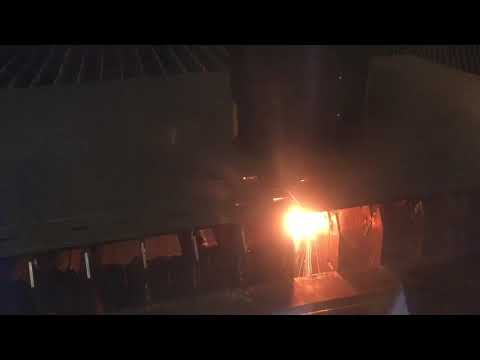
HEL C
Community Discussions
Community discussion — Does anyone have a handbook operator for the LVD Orion 3015
Community discussion — Aide pour laser lvd axel 3015 - cnczone.com
Community discussion — Aide pour laser lvd axel 3015 - cnczone.com
Troubleshooting and problem-solving — Mitsubishi 3015LXP Alarm I can't clear....please help!
Pricing and buying discussion — End mill coatings? : r/Machinists - Reddit
Pricing and buying discussion — Where do you buy your metal stock? : r/machining - Reddit
Community discussion — Belzona or alternatives. : r/Machinists - Reddit
Community discussion about this machine.
Links to community discussions. Summaries are editorial — visit the original thread for full context.
Related Machines
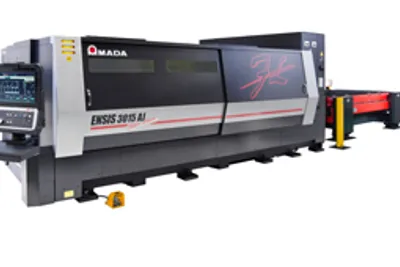
Amada ENSIS-3015AJ
Amada LCG-3015AJ
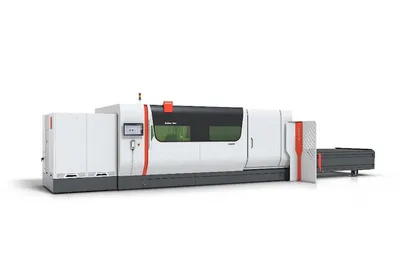
Bystronic ByStar Fiber 3015
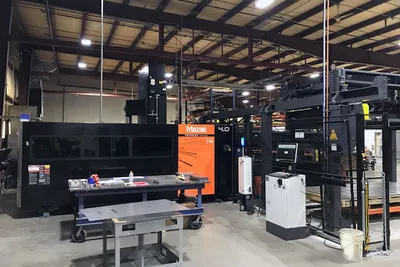
Mazak OPTIPLEX 3015 DDL
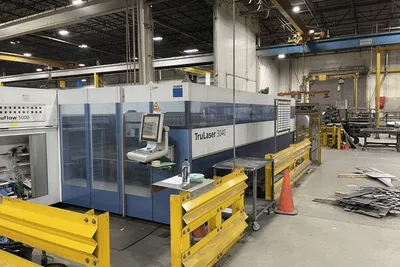
Trumpf TruLaser 3040