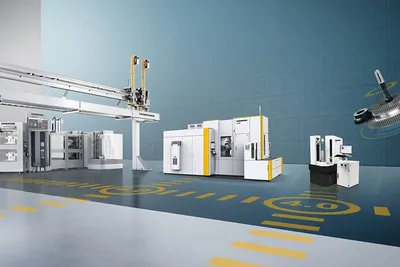
Liebherr LSF 1200
Key Specifications
axes
max workpiece outside diameter
max module
max face width
max helix angle
max workpiece weight
Overview
The Liebherr LSF 1200 is a large-capacity CNC gear skiving machine for internal and external cylindrical gears up to 1,200 mm (47.2 in) outside diameter. Gear skiving is a high-speed generating process that produces internal gears at rates far exceeding gear shaping, making the LSF 1200 particularly valuable for large internal ring gears used in planetary gearsets for wind turbines, large industrial transmissions, and heavy machinery.
Gear skiving on the LSF 1200 uses a hardened skiving cutter rotating on an axis inclined to the workpiece axis. The simultaneous rotational and axial motion of the cutter generates the full involute tooth profile in a continuous process, similar in kinematic principle to hobbing but applied to internal gears. Compared to gear shaping for internal gears, skiving is 3-8x faster in cycle time for the same gear size — a transformative productivity advantage for large ring gear production.
The LSF 1200's capacity for gears up to 1,200 mm makes it one of the largest dedicated gear skiving machines available globally. At this scale, the machine is primarily used for planetary ring gears in wind turbine gearboxes (where ring gear diameters of 600-1,000 mm are common), large construction equipment planetary drives, and heavy industrial transmissions. The machine structure is reinforced to handle the cutting forces and workpiece weights associated with large ring gear production.
Liebherr's LHGearSkive software on Siemens Sinumerik 840D sl provides the synchronized axis control and skiving process optimization required for this demanding process. In-process probing monitors gear geometry and provides closed-loop correction for consistent quality across production batches. New LSF 1200 machines are typically priced in the $1,800,000-$2,800,000 range.
Full Specifications
| Parameter | Value |
|---|---|
| Axes | 6 CNC synchronized axes |
| Max Workpiece Outside Diameter | 1,200 mm (47.2 in) |
| Max Module | 12 mm (internal gears), 16 mm (external) |
| Max Face Width | 400 mm (15.7 in) |
| Max Helix Angle | ±30 degrees |
| Max Workpiece Weight | 5,000 kg (11,023 lb) |
| Process | CNC gear skiving (internal and external) |
| Workpiece Spindle | Direct-drive, vertical orientation |
| Skiving Spindle | High-speed inclined spindle with CNC axis tilt |
| In Process Measurement | Integrated probing with closed-loop correction |
| CNC Control | Siemens Sinumerik 840D sl with LHGearSkive |
| Machine Dimensions | 5,500 x 3,500 x 3,800 mm (217 x 138 x 150 in) |
Specifications compiled from manufacturer literature and industry references. Not independently verified against a published spec sheet — confirm with the manufacturer or an authorised dealer before making a purchasing decision.
Strengths & Limitations
Strengths
- Gear skiving of internal gears is 3-8x faster than gear shaping for comparable ring gear sizes — transformative cycle time reduction for large planetary ring gear production
- 1,200 mm capacity covers the dominant range of wind turbine planetary ring gears and large industrial transmission ring gears in a single machine
- Continuous generating process (vs. reciprocating shaping) eliminates the velocity reversal and associated chatter of gear shaping, improving surface finish and tool life on large gears
- Combined internal and external skiving capability provides flexibility for different gear types without machine changeover
Limitations
- Gear skiving requires significantly higher machine precision and axis synchronization than hobbing or shaping — process setup and optimization requires specialized expertise
- Skiving cutter tooling for large modules is expensive and has shorter life than hobbing cutters due to the demanding cutting kinematics
- Price of $1.8M-$2.8M is among the highest in the gear cutting market — application must deliver clear productivity advantage over lower-cost alternatives
Best For
Frequently Asked Questions
01
Gear shaping uses a reciprocating cutting motion — the cutter strokes down, cuts, then retracts and returns, generating the tooth profile in sequential strokes. At large gear diameters and many teeth, the number of strokes required and the return time make shaping slow. Gear skiving is a continuous rotary process: the cutter and workpiece rotate simultaneously with no reversal, generating teeth in a single continuous pass. This eliminates the non-cutting return stroke time, producing 3-8x faster cycle times depending on gear size.
02
Standard CNC gear skiving is a soft-cutting process performed before heat treatment. Hard skiving (skiving after hardening) is possible with appropriate cutter materials and is an active area of development, but is generally limited to smaller modules and lighter cuts. For the large modules handled by the LSF 1200, heat treatment is typically performed after skiving, followed by gear grinding for final accuracy. Liebherr's applications team can advise on hard skiving feasibility for specific gear and material combinations.
03
Gear skiving on the LSF 1200 achieves DIN 6-8 quality in production conditions, comparable to gear hobbing and better than gear shaping in many cases due to the continuous cutting motion. The pre-heat-treatment accuracy determines the grinding stock required for finish grinding, so higher skiving accuracy directly reduces grinding cost. With closed-loop probing correction, the LSF 1200 maintains consistent skiving quality across long production runs.
04
Gear skiving on the LSF 1200 is applicable to the standard gear steels: case-hardening grades (20MnCr5, 16MnCr5, 18CrNiMo7-6) and through-hardening grades in the soft-cut (pre-heat treatment) state. Stainless steel and other materials are skivable with appropriate cutter selection. Liebherr's applications team provides material-specific cutting parameter recommendations and cutter recommendations for the LSF 1200.
05
For large ring gears (600-1,200 mm diameter, module 8-12), the LSF 1200's skiving process is typically 3-5x faster in cycle time than a gear shaper of equivalent capacity. The capital cost of the LSF 1200 is higher than a comparable gear shaper, but the cycle time advantage delivers a compelling payback period in high-volume ring gear production. For low-volume or prototype ring gear production, a gear shaper may be more economical given its lower initial cost and simpler process setup.
Videos

fluffnuggetrocks

Páginas Amarelas

BFM Lyon
Community Discussions
Maintenance and service — Lns bar feeder alarm - CNCzone
Maintenance and service — LNS bar feeder alarm - CNCzone
Community discussion — Need Help! Info on LNS bar feeders? - CNCzone
Community discussion — Need Help! Newbie to Citizen and bar feed programming - CNCzone
Links to community discussions. Summaries are editorial — visit the original thread for full context.
Related Machines
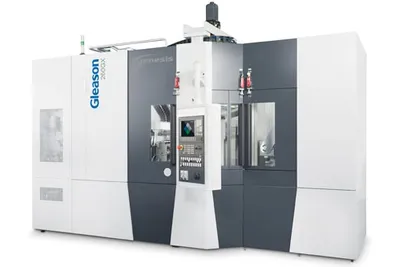
Gleason Genesis 200GX
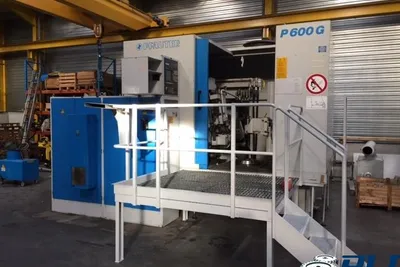
Gleason P600G
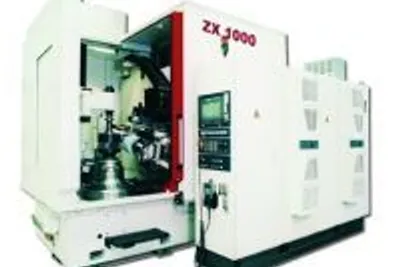
KAPP NILES KX 300 P