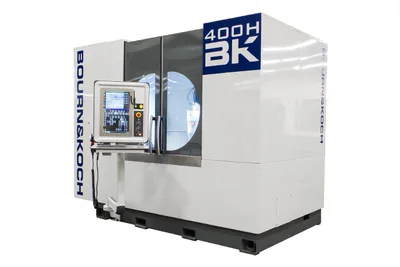
Liebherr LCS 380
This model was not found in Liebherr's current lineup when we checked on 2026-10-03 . It may be a superseded or older model; the specifications below are as we last recorded them.
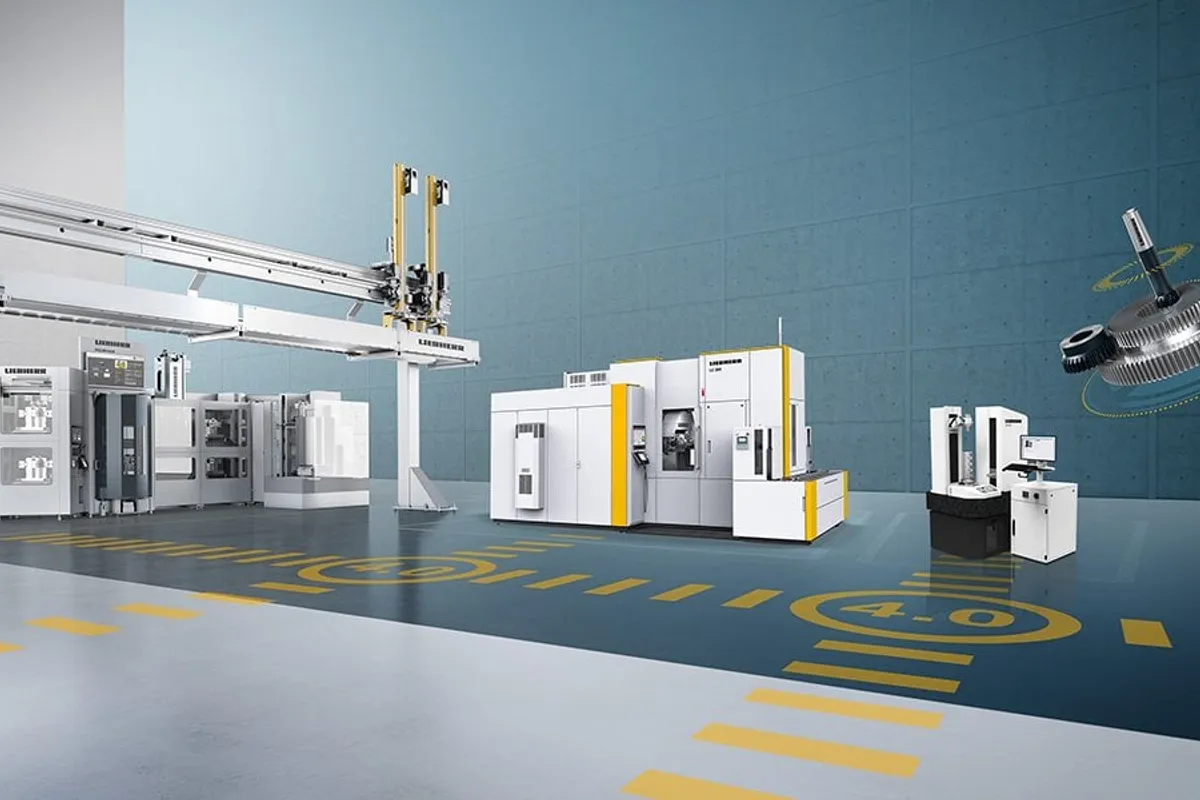
Key Specifications
workpiece diameter max
module generating
module profile
axial travel
shift travel
grinding spindle speed
How much does the Liebherr LCS 380 cost?
Estimated price range
Our best estimate for a cnc gear cutting machine in this class — not a quote from Liebherr. Configuration moves it a long way.
Overview
The Liebherr LCS 380 is listed as a gear grinding machine for workpieces up to 380 mm (14.96 in) in diameter that works by two methods: continuous generating grinding and single-index profile grinding. The listed module limit depends on the method, up to 8 mm for generating and up to 14 mm for profile grinding, so the coarser gears in a mixed workload would run as profile jobs.
Axial travel is listed as 600 mm (23.6 in), or 1,000 mm (39.4 in) in an extended version, with 320 mm (12.6 in) of shift travel. The grinding spindle is listed at 12,000 RPM. Tool diameter is given as 320 mm / 170 mm (12.6 / 6.7 in) and tool length as 230 mm (9.06 in), without a note on which diameter goes with which method. Tools can be dressable conventional wheels or plated CBN, clamped actively on both ends.
The listed achievable quality is DIN 3-5 (AGMA 12-14), and ring loader, pick-up or gantry automation appear as options. Liebherr's current product pages do not show this model, so these are listed figures only. Anyone assessing a machine should confirm the travel version, the tool sizes and the automation fitted from its own documentation.
Full Specifications
| Parameter | Value |
|---|---|
| Workpiece Diameter Max | 380 mm (14.96 in) |
| Module Generating | Up to 8 mm |
| Module Profile | Up to 14 mm |
| Axial Travel | 600 mm (23.6 in) / 1,000 mm (39.4 in) extended |
| Shift Travel | 320 mm (12.6 in) |
| Grinding Spindle Speed | 12,000 RPM |
| Tool Diameter | 320 mm / 170 mm (12.6 / 6.7 in) |
| Tool Length | 230 mm (9.06 in) |
| Grinding Methods | Generating (continuous) and profile (single-index) |
| Tool Types | Dressable conventional and plated CBN |
| Tool Clamping | Active clamping on both ends |
| Quality Achievable | DIN 3-5 (AGMA 12-14) |
| CNC Control | Siemens Sinumerik 840D sl |
| Automation Options | Ring loader, pick-up, or gantry automation |
Specifications compiled from manufacturer literature and industry references. Not independently verified against a published spec sheet — confirm with the manufacturer or an authorised dealer before making a purchasing decision.
Strengths & Limitations
Strengths
- Generating and profile grinding on one machine, with listed module limits of up to 8 mm and up to 14 mm respectively
- Axial travel of 600 mm (23.6 in), or 1,000 mm (39.4 in) in the extended version
- Takes dressable conventional tools and plated CBN, with active clamping on both ends
- Ring loader, pick-up or gantry automation are listed as options
Limitations
- Generating grinding is listed only up to module 8 mm; coarser teeth fall to single-index profile grinding
- The 1,000 mm (39.4 in) axial travel is an extended version, not the base 600 mm (23.6 in)
- Automation appears only as an option, so loading equipment is not part of the listed base machine
Best For
Frequently Asked Questions
01
The listed methods are generating grinding, which is continuous, and profile grinding, which is single-index. The listed tool types are dressable conventional wheels and plated CBN. The listing does not tie a tool type to a method, so ask which combinations a particular machine is set up for.
02
The listed figures are up to 8 mm for generating grinding and up to 14 mm for profile grinding, on workpieces up to 380 mm (14.96 in) in diameter. A gear between those two module limits can only be ground by the profile method.
03
Axial travel is listed as 600 mm (23.6 in), with a 1,000 mm (39.4 in) extended version. Shift travel is 320 mm (12.6 in). When looking at a particular machine, check which travel version it has, because the two differ by a wide margin.
04
The listing gives a tool diameter of 320 mm / 170 mm (12.6 / 6.7 in) and a tool length of 230 mm (9.06 in), with a grinding spindle speed of 12,000 RPM. It does not say which diameter belongs to which grinding method, so confirm that before buying tooling.
Videos

Liebherr
More from Liebherr
Liebherr LC 500 CNC Gear Hobbing Machine
Liebherr LC 280 CNC Gear Hobbing Machine
Liebherr LGP 2000
Liebherr LC 180 CNC Gear Hobbing Machine
Liebherr LC 180
Liebherr LC 280
Other CNC Gear Cutting Machines
Nidec Machine Tool ZFA260
EMAG CLC 500 H
Klingelnberg P 100