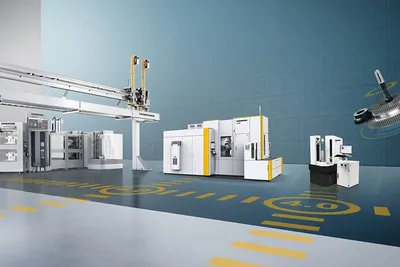
Liebherr LKe 1200
Key Specifications
Max Workpiece ⌀
process
gear types
max module
workpiece spindle
skiving angle
Overview
The Liebherr LKe 1200 is a large-capacity CNC gear skiving machine for internal and external cylindrical gears up to 1,200 mm (47.2 in) in diameter. Gear skiving is a high-speed generating process that combines the motion principles of hobbing and profile grinding into a single high-productivity operation, particularly suited for internal gears that are difficult to cut efficiently with other processes. The LKe 1200 brings skiving capability to large-diameter industrial gears in a machine platform designed for the workpiece sizes encountered in wind turbines, large industrial gearboxes, and heavy drive systems.
Gear skiving on the LKe 1200 uses a rotating skiving tool — similar in principle to a hob but ground with relief angles for free-cutting action — that crosses the workpiece spindle axis at a defined skiving angle. The combination of workpiece rotation, tool rotation, and axial feed generates the involute gear form through a continuous generating motion at cutting speeds substantially higher than gear shaping. For internal gears in particular, skiving is 4–8 times faster than gear shaping and does not require the reciprocating motion and tool approach/retraction that limits shaping speeds.
At 1,200 mm workpiece diameter, the LKe 1200 handles internal ring gears, large sun gears, and external cylindrical gears for wind turbine planetary stages, large industrial planetary gearboxes, and heavy-duty vehicle transmission components where inside diameter constraints eliminate hobbing as a practical option. The vertical workpiece spindle allows crane loading of large ring gear and housing workpieces without specialized tipping fixtures, consistent with Liebherr's approach across its large gear machine line.
Liebherr equips the LKe 1200 with a CNC skiving head that provides accurate control of the skiving angle and tool position, which are critical parameters for achieving correct involute form and tooth thickness in the skiving process. The Sinumerik 840D sl control runs Liebherr's LHGearSkive software, which handles the complex synchronized motion calculations required for gear skiving and provides operators with gear-specific input parameters rather than requiring manual synchronization calculations.
New LKe 1200 machines are typically priced in the $1,200,000–$2,000,000 range depending on configuration and tooling. The LKe 1200 competes with large-capacity gear shapers for internal gear applications, offering substantially higher productivity for production quantities where the cycle time advantage of skiving over shaping justifies the investment in skiving tooling and the LKe platform.
Full Specifications
| Parameter | Value |
|---|---|
| Max Workpiece Diameter | 1,200 mm (47.2 in) |
| Process | CNC gear skiving (generating) |
| Gear Types | Internal and external cylindrical gears, spur and helical |
| Max Module | Approx. 8–10 mm (process dependent) |
| Workpiece Spindle | Direct-drive, vertical orientation |
| Skiving Angle | CNC-controlled skiving head |
| CNC Control | Siemens Sinumerik 840D sl with LHGearSkive |
| Max Workpiece Weight | Approx. 5,000 kg |
| Machine Dimensions | Available on request |
| Machine Weight | Approx. 20,000 kg |
Specifications compiled from manufacturer literature and industry references. Not independently verified against a published spec sheet — confirm with the manufacturer or an authorised dealer before making a purchasing decision.
Strengths & Limitations
Strengths
- Gear skiving is 4–8x faster than gear shaping for internal gears, making the LKe 1200 transformative for production throughput on ring gears and internal splines
- 1,200 mm workpiece diameter capacity covers large wind turbine planetary ring gears and industrial planetary gearbox internals in a single setup
- Processes both internal and external gears with the same machine platform, reducing capital investment versus separate hobbing and shaping machines
- LHGearSkive software on Sinumerik 840D sl manages complex skiving synchronization automatically, reducing setup complexity for operators
- Vertical spindle with crane loading capability simplifies handling of large, heavy ring gear and housing workpieces
Limitations
- Skiving tooling (solid carbide or PM-HSS skiving cutters) is more expensive than hobbing hobs and requires more frequent replacement, particularly on hardened materials
- Gear skiving is highly sensitive to machine rigidity and thermal stability; any compliance in the tooling system degrades tooth form accuracy
- Maximum module capability is lower than hobbing at the same machine size, limiting the LKe 1200 to medium-module applications and excluding the coarsest-pitch large gears
Best For
Frequently Asked Questions
01
Gear shaping uses a reciprocating rack or pinion-form cutter that removes material on the cutting stroke and retracts on the return stroke — an inherently intermittent process. Gear skiving uses a rotating cutter crossing the workpiece axis at a skiving angle, generating the gear form through continuous rotary motion at much higher cutting speeds. Skiving eliminates the return stroke and allows 4–8x faster cycle times for internal gears.
02
Gear skiving is primarily a soft-cutting process for pre-hardened gear blanks. Cutting hardened gears (60+ HRC) with carbide skiving tools is technically possible in some applications but is not the primary use case. For post-hardening finishing of large internal gears, internal gear grinding or honing are the appropriate processes.
03
Gear skiving works well on case-hardening steels (16MnCr5, 18CrNiMo7-6), through-hardening steels, stainless steels, and some aluminum alloys in the soft or pre-hardened condition. Material hardness above approximately 40 HRC significantly limits cutting speeds and tool life.
04
The Sinumerik 840D sl control with LHGearSkive software precisely synchronizes the rotation of the workpiece spindle and the skiving tool spindle at the correct ratio while controlling axial feed and skiving head angle. This synchronized multi-axis motion generates the correct involute profile on each tooth flank with the accuracy required for industrial gear quality.
05
The LKe 1200 is designed to achieve DIN 6–7 quality in the soft-cut condition on well-prepared workpieces using quality skiving tools. For tighter tolerances, subsequent gear grinding is required after heat treatment. The primary advantage of skiving is cycle time rather than ultimate achievable quality relative to grinding.
Videos

PFEIFERgroup

Liebherr

Chan27

Liebherr

Liebherr
Community Discussions
Community discussion — How to make a wiper die - Practical Machinist
Pricing and buying discussion — Clausing 12 x 60 - Practical Machinist
Community discussion — Need help identifying model number or year of a lathe and ...
Pricing and buying discussion — 12 X 36 Import lathe - Practical Machinist
Links to community discussions. Summaries are editorial — visit the original thread for full context.
Related Machines
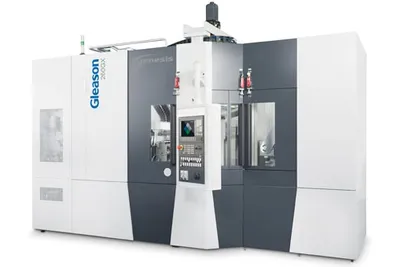
Gleason Genesis 200GX
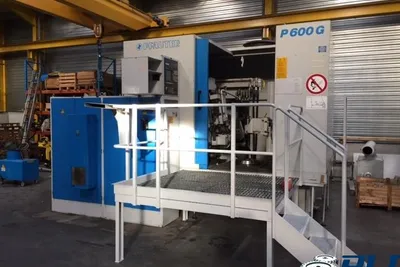
Gleason P600G
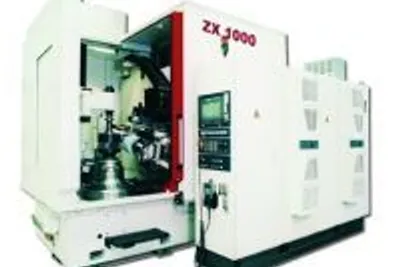
KAPP NILES KX 300 P