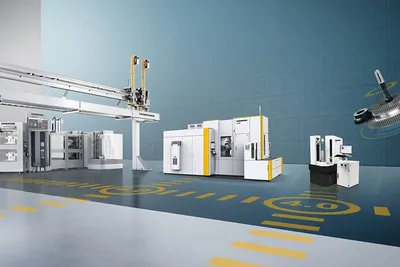
Liebherr LGH 280
Key Specifications
Max Workpiece ⌀
max module
min module
max face width
process
honing principle
Overview
The Liebherr LGH 280 is a CNC gear honing machine engineered for the precision hard-fine finishing of hardened cylindrical gears up to 280 mm (11.02 in) in diameter. Manufactured by Liebherr-Verzahntechnik GmbH in Kempten, Germany, the LGH 280 uses the generating gear honing (also called gear finishing or gear honing) process to simultaneously improve tooth profile accuracy, surface texture, and noise behavior of hardened gears that have already been hobbed, shaved (if applicable), and case-hardened or through-hardened. Gear honing on the LGH 280 is particularly valuable for automotive transmission gears, where noise-vibration-harshness (NVH) performance requirements demand both geometric precision (DIN 4–6) and exceptionally smooth tooth surface finish (Ra 0.2–0.4 µm) after hardening.
The gear honing process on the LGH 280 operates by meshing the hardened gear workpiece with an abrasive-impregnated honing ring (an internal gear-shaped tool) and driving both in a crossed-axis generating motion. The abrasive action of the honing ring simultaneously refines the tooth profile, corrects minor geometry deviations introduced during hardening, and creates a fine, directional surface texture on the tooth flanks. This surface texture is favorable for lubrication film retention and reduces sliding friction in the gear mesh, directly improving transmission efficiency and reducing acoustic emission. Unlike gear grinding, gear honing is a gentle abrasive process that does not generate significant heat in the workpiece, eliminating the risk of grinding burn and residual tensile stresses that can reduce gear fatigue life.
The LGH 280 features Liebherr's double-flank honing principle, where both tooth flanks are processed simultaneously in a bi-directional honing cycle. This approach maintains the honing ring in continuous contact with the gear, maximizing material removal rate per unit time compared to single-flank alternatives. The machine's workpiece spindle is driven by a direct-drive torque motor for precise speed control and phase synchronization with the honing ring spindle, which is essential for maintaining the crossed-axis motion geometry. Honing ring dressing is performed on the machine with a dedicated diamond dressing device, allowing the honing ring profile to be corrected or retopographed to introduce specific gear tooth modifications.
In automotive transmission production lines, the LGH 280 is typically positioned downstream from a hardening cell and upstream from gear inspection, forming the final manufacturing step before assembly. Automated loading via gantry or robotic cell is standard in high-volume automotive applications, with the LGH 280 control managing production counters, honing ring wear compensation, and statistical process control data output. Liebherr integrates the LGH 280 with its Gear Technology Center quality management system, enabling real-time monitoring of honing process parameters across multiple machines in a production line.
The LGH 280 competes with the Gleason Genesis 200 HSD gear honing machine and the Kapp Niles KNH series. New LGH 280 machines are priced between $450,000 and $650,000 depending on automation level and dressing configuration. In automotive transmission manufacturing, the LGH 280 is valued as a productivity alternative to gear grinding for gears where DIN 4–6 quality and smooth surface finish after honing meet application requirements, offering shorter cycle times and lower per-part tooling costs than profile or generating grinding.
Full Specifications
| Parameter | Value |
|---|---|
| Max Workpiece Diameter | 280 mm (11.02 in) |
| Max Module | 6 mm |
| Min Module | 0.5 mm |
| Max Face Width | 160 mm (6.30 in) |
| Process | Generating gear honing |
| Honing Principle | Double-flank honing |
| Honing Ring Diameter | Up to 320 mm (12.60 in) |
| Workpiece Spindle Speed | Up to 800 RPM |
| Workpiece Spindle Drive | Direct-drive torque motor |
| Dressing | On-machine diamond dressing |
| Axes | 5 CNC axes |
| CNC Control | Siemens SINUMERIK 840D sl with WOP-G |
| Gear Quality Achievable | DIN 4–6 |
| Surface Finish Achievable | Ra 0.2–0.4 µm |
| Machine Weight | 7,500 kg (16,534 lb) |
Specifications compiled from manufacturer literature and industry references. Not independently verified against a published spec sheet — confirm with the manufacturer or an authorised dealer before making a purchasing decision.
Strengths & Limitations
Strengths
- Gear honing does not generate significant workpiece heat, eliminating grinding burn and residual tensile stresses that reduce gear fatigue life — critical for automotive transmission gears loaded near their material limits
- Double-flank honing processes both tooth flanks simultaneously, maximizing productivity compared to single-flank methods and enabling the LGH 280 to fit into high-volume automotive production line takt times
- Surface texture produced by honing (Ra 0.2–0.4 µm with directional lay) is particularly favorable for lubricant film retention and reduced mesh friction, contributing directly to transmission efficiency and acoustic performance
- Cycle times are typically shorter than profile or generating grinding for the same gear geometry and quality target, reducing per-part finishing cost in high-volume automotive production
- On-machine honing ring dressing allows introduction of topological tooth modifications (crowning, taper) without additional setups, adapting the finishing process to application-specific gear contact requirements
- Liebherr's well-established automotive production line expertise and global service network provide reliable production support in automotive manufacturing environments
Limitations
- Gear honing achieves DIN 4–6, less precise than profile or generating grinding (DIN 1–4) — for the highest precision gears required in aerospace, robotics, or ultra-low-noise drivetrains, grinding remains necessary
- Honing rings are consumable tooling with finite life that requires on-machine or off-machine dressing and eventual replacement — tooling management and cost must be factored into the economic analysis vs. grinding
- Gear honing is limited to hardened gears (typically 58–62 HRC case hardened) and cannot process soft gears — a dedicated hobber or shaper is still required upstream for the pre-honing cutting operation
Best For
Frequently Asked Questions
01
Gear honing uses an abrasive-impregnated honing ring meshing with the hardened workpiece to gently abrade tooth surfaces in a generating motion, removing very small amounts of material (typically 0.005–0.020 mm). Gear grinding uses a hard abrasive wheel at high wheel speeds to remove larger stock (0.05–0.20 mm), generating significant heat. Honing avoids grinding burn and thermal residual stresses, and produces a tooth surface texture favorable for lubrication. Grinding achieves higher accuracy (DIN 1–4 vs. DIN 4–6 for honing) but costs more per part and requires more careful process control to avoid thermal damage.
02
Gear honing on the LGH 280 is a finishing process for hardened gears, typically removing 0.005–0.020 mm of stock from tooth flanks. This means the pre-honing gear must be hobbed or shaped with accurate finish tolerances — typically DIN 6–8 before hardening, distorting slightly to DIN 7–9 after case hardening. The honing process corrects the hardening distortion and achieves DIN 4–6 final quality. For greater stock removal or larger distortion correction, profile or generating grinding is more appropriate.
03
Yes, through on-machine dressing of the honing ring, the LGH 280 can introduce specific topological modifications to the honed gear including lead crowning (barreling) to reduce edge loading under misalignment, profile crowning to reduce tip and root contact stress concentrations, and lead taper for differential load sharing in multi-gear sets. These modifications are dressed into the honing ring profile and transferred to the workpiece during honing. The extent of modifications achievable is limited compared to gear grinding, but covers the range required for most automotive transmission applications.
04
The Liebherr LGH 280 and Gleason Genesis 200 HSD are both mid-capacity CNC gear honing machines targeting automotive transmission manufacturers. The Genesis 200 HSD has a maximum workpiece diameter of approximately 200 mm vs. 280 mm for the LGH 280. Both machines use double-flank generating honing principles and direct-drive workpiece spindles. Liebherr WOP-G and Gleason GEMS are both parameter-entry operator interfaces. Liebherr has a particularly strong installed base in European automotive production lines; Gleason has broader North American and Asian presence.
05
Honing ring life depends on the gear material, hardness, stock removal, and surface finish targets. In automotive production of case-hardened steel gears (58–62 HRC), a honing ring typically finishes several thousand to tens of thousands of gear pairs before requiring replacement, depending on how many dressing cycles are used and how much material is dressed off per cycle. Honing rings are manufactured with an internal gear form and abrasive layer — as the abrasive layer is consumed through dressing and wear, the ring must eventually be replaced. Tooling cost per part for honing is generally lower than for grinding wheel systems.
Videos

DREAM MACHINES

LGH North America

Gorbel Inc.

M.O. Baumaschinen und Nutzfahrzeuge GmbH & Co. KG

MARDI NOIR - BLACK TUESDAY
Community Discussions
Community discussion — Help with Weiler LZ 280 - Practical Machinist
Maintenance and service — Manual for Weiler LZ 280 wanted - Practical Machinist
Comparison and buying advice — Weiler LZ 280 S Vs Emco Maximat V10-P - Practical Machinist
Community discussion — OT-Help on ID of this Liebherr compressor? - Practical Machinist
Community discussion — Light Machine Corp CNC Lathe - CNCzone
Community discussion — Cleaning Linear Glass Scales - cnczone.com
Options and configuration advice — Need Help! CAV bar feeder/bar loader--part numbers? - CNCzone
Comparison and buying advice — Taigmach vs Tormach 440 - CNCzone
Community discussion — Good beginner’s lathe? : r/Machinists - Reddit
Owner experience and review — Can you help me pick a used Swiss? : r/Machinists - Reddit
Community discussion — Actual current "Made in USA" large engine lathes? - Reddit
Community discussion — benchtop lathe/mill recommendations? : r/Machinists - Reddit
Links to community discussions. Summaries are editorial — visit the original thread for full context.
Related Machines
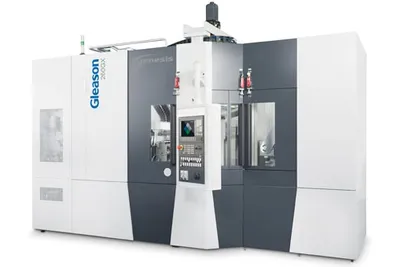
Gleason Genesis 200GX
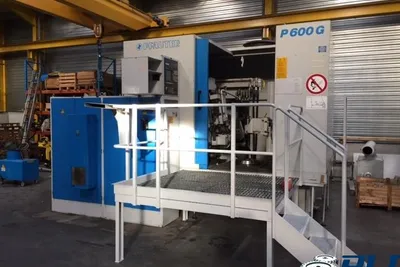
Gleason P600G
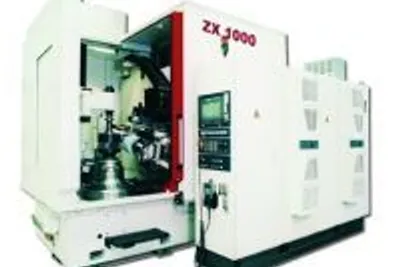
KAPP NILES KX 300 P