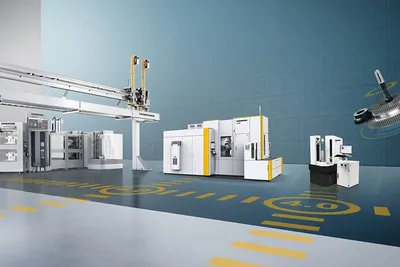
Klingelnberg C 25
Key Specifications
Max Workpiece ⌀
machine type
grinding type
max module
min module
max face width
Overview
The Klingelnberg C 25 is a CNC cylindrical gear grinding machine designed for high-precision generating grinding and profile grinding of external and internal spur and helical gears up to 260 mm outside diameter. Klingelnberg, based in Zurich and Hückeswagen, is a leading manufacturer of gear production technology and gear measuring systems — the C series represents their offering for the automotive transmission, e-mobility, and industrial gear precision grinding market. The C 25 delivers gear quality levels reaching DIN 3962 Class 3-4 (AGMA Q13-14), making it suitable for the most demanding noise-critical applications in electric vehicle drivetrains and precision gearboxes.
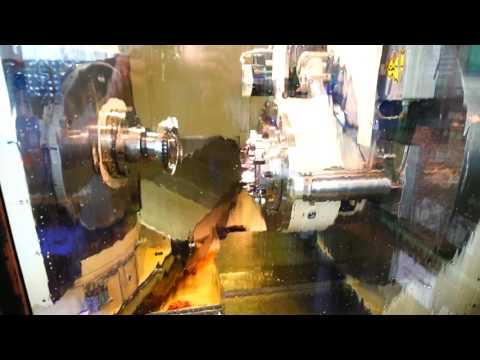
The C 25 uses a generating grinding process with CBN (cubic boron nitride) grinding wheels as the primary production approach, combined with optional profile grinding capability for gears where generating grinding is not optimal. CBN grinding wheels maintain their profile for millions of parts before redressing, dramatically reducing wheel change frequency and dressing downtime compared to conventional aluminum oxide wheels. The integrated CNC dressing system conditions the CBN wheel profile automatically, ensuring consistent gear geometry throughout long production runs without operator intervention.
Machine kinematics on the C 25 are based on a compact, thermally symmetric machine bed with direct-drive motors on the workpiece spindle and grinding spindle. Direct drives eliminate backlash from mechanical transmission elements and provide precise speed synchronization between grinding wheel and workpiece — the fundamental requirement for generating gear grinding. Thermal management is comprehensive: temperature sensors monitor all heat-generating components, and the CNC applies real-time thermal compensation to maintain bore-position accuracy as the machine reaches operating temperature. Workpiece loading is handled by an integrated gantry loader or ring loader for automated production.
At $1,200,000–$2,000,000 new, the C 25 is positioned as a premium production gear grinder targeting automotive Tier 1 and e-mobility drivetrain manufacturers. It competes with the Reishauer RZ 260, Liebherr LGG 280, and Gleason 260GX in the sub-260 mm production grinding segment. Klingelnberg's integrated gear metrology expertise — the company also makes the leading gear measuring machines (P series) — means the C 25 benefits from tight feedback loops between grinding process parameters and gear quality measurement that are built into the control software.
Full Specifications
| Parameter | Value |
|---|---|
| Machine Type | CNC Cylindrical Gear Grinding Machine |
| Grinding Type | Generating grinding (CBN) and profile grinding |
| Max Workpiece Diameter | 260 mm (10.2 in) |
| Max Module | 6 mm |
| Min Module | 0.5 mm |
| Max Face Width | 250 mm (9.84 in) |
| Gear Types | External and internal spur and helical gears |
| Workpiece Spindle Drive | Direct-drive (backlash-free) |
| Grinding Spindle Drive | Direct-drive (backlash-free) |
| Grinding Wheel Type | CBN (primary) or conventional abrasive |
| Dressing System | Integrated CNC diamond roller dressing |
| Number Of Axes | 6 CNC axes |
| Thermal Compensation | Real-time sensor-based thermal compensation |
| Loading | Integrated gantry or ring loader |
| CNC Control | Klingelnberg proprietary CNC |
| Quality Achievable | DIN 3962 Class 3-4 / AGMA Q13-14 |
| Machine Weight | Approx. 14,000 kg (30,865 lb) |
Specifications compiled from manufacturer literature and industry references. Not independently verified against a published spec sheet — confirm with the manufacturer or an authorised dealer before making a purchasing decision.
Strengths & Limitations
Strengths
- CBN grinding wheels maintain profile for millions of parts before redressing, dramatically reducing wheel change frequency and production interruptions compared to conventional abrasive systems
- Direct-drive workpiece and grinding spindles eliminate backlash from mechanical transmissions, providing the precise speed synchronization essential for generating grinding to DIN Class 3-4
- Klingelnberg's integrated gear technology expertise — including P-series gear measuring machines — means the C 25 control integrates gear quality measurement feedback directly into the grinding process
- Real-time thermal compensation maintains dimensional accuracy as the machine heats up during production, ensuring consistent gear quality from the first part to the last in a long run
Limitations
- Capital investment of $1.2M–$2M is among the highest in the production gear grinding segment — only justified at automotive-scale production volumes of hundreds of thousands of gears per year
- CBN wheel specification and initial setup for a new gear requires skilled gear grinding engineers — the technology is not accessible to shops without dedicated gear grinding expertise
- Maximum 260 mm workpiece diameter limits the machine to passenger car and light commercial vehicle gears — medium and large industrial gears require the C 50 or larger machines
Best For
Frequently Asked Questions
01
New C 25 machines typically price between $1,200,000 and $2,000,000 depending on configuration, automation level, and CBN wheel and dressing system setup for the target gear range. CBN wheel initial investment adds $50,000–$150,000 beyond the machine price.
02
Generating grinding uses a threaded grinding wheel that meshes with the gear, grinding all teeth simultaneously through a generating motion. Profile grinding uses a wheel shaped to the exact tooth profile, grinding one tooth space at a time. Generating grinding is faster for mass production; profile grinding offers more flexibility for special tooth forms.
03
Both are premium production cylindrical gear grinders in the sub-260 mm class. Klingelnberg's C 25 emphasizes CBN grinding technology and the company's integrated gear metrology expertise. Reishauer's RZ 260 uses threaded wheel continuous generating grinding with a long production heritage. Both achieve DIN Class 3-5. Selection often comes down to existing process relationships, application-specific process development support, and service network proximity.
Videos

EMUK GmbH Werkzeugmaschinen

KLINGELNBERG Group

Van Vliet Engineering B.V.
LHmachine

KLINGELNBERG Group
Community Discussions
Community discussion — Klingelnbergmachine monitor
Community discussion — Need Help! Klingelnberg Germany Make B27 Blade Grinding ...
Community discussion — Need Help! C AXIS CONTOURING PROGRAM - CNCzone
Community discussion — Need Help! I NEED BALL SCREW FOR KLINGELNBERG B27 - CNCzone
Electrical and installation requirements — CNCzone Classifieds
Community discussion — Which one of y’all did this? : r/Machinists - Reddit
Community discussion — Greetings, fellow clausing owners : r/Machinists - Reddit
Community discussion — Tos FNK-25, anyone know anything about these? :
Community discussion — PM-25MV - Is it enough? : r/Machinists - Reddit
Links to community discussions. Summaries are editorial — visit the original thread for full context.
Related Machines
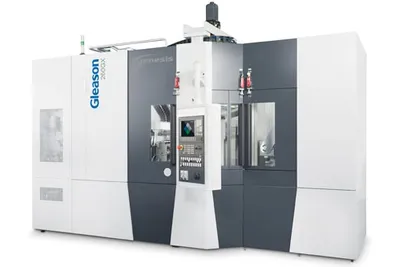
Gleason Genesis 200GX
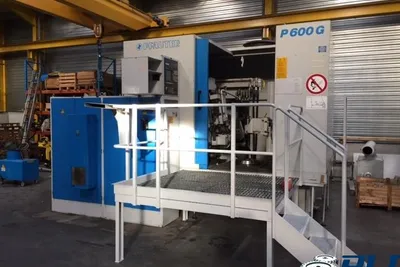
Gleason P600G
KAPP NILES KX 300 P