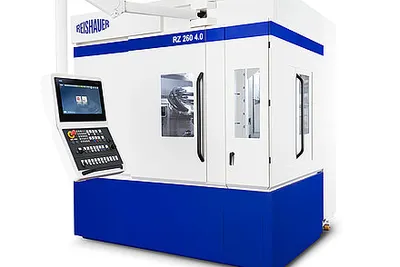
KAPP NILES KX 500
This model was not found in KAPP NILES's current lineup when we checked on 2026-10-03 . It may be a superseded or older model; the specifications below are as we last recorded them.
Key Specifications
model designation
nominal workpiece diameter
max workpiece length
max radial travel x
max tangential travel y
max tooth width z
How much does the KAPP NILES KX 500 cost?
Estimated price range
Our best estimate for a cnc gear cutting machine in this class — not a quote from KAPP NILES. Configuration moves it a long way.
Overview
The KAPP NILES KX 500 documented here is a KX 500 FLEX gear grinding center for generating and profile grinding, as described on a dealer datasheet for a 2009 machine. It has a nominal workpiece diameter of 500 mm (19.7 in) and takes parts up to 1,000 mm (39.4 in) long. A machine under the plain KX 500 name is not in KAPP NILES's current lineup, so these figures describe that 2009 build and are most useful to someone assessing a second-hand machine.
The two processes have different module ranges: 1.0 – 8 mm for generating grinding and 0.5 – 12 mm for profile grinding. Tooth width along Z is up to 520 mm (20.5 in), radial travel in X is 525 mm (20.7 in) and tangential travel in Y is 250 mm (9.8 in). The grinding spindle swivels ±45° on the A axis, and the datasheet counts 7 simultaneously controlled CNC axes.
The grinding spindle is the B axis. It runs to 7,500 min-1 and carries wheels up to Ø 320 mm with integrated automatic balancing (Dittel). Profile dressing is handled by a GMN TSE 100cg unit on the B3 axis, a single-roll design with a Ø 100 mm dressing wheel rated 1.25 kW (S1) at 6,000 min-1. Rapid traverse is 20,000 mm/min in X and 10,000 mm/min in Y and Z, with the A axis swivelling at 50°/s. A rotary indexing table with a 270° driving range and a maximum swivel speed of 210°/s completes the list.
Installation needs planning. The machine weighs approx. 11,200 kg (24,692 lb), occupies approx. 6.8 x 5.3 x 3.2 m (22.3 x 17.4 x 10.5 ft) and has a connected load of approx. 80 kVA at 400 V, 50 Hz. The control is a Siemens Sinumerik 840D with Simodrive 611D digital drives, not the 840D sl listed for the KX 260, so the support position for a control of that age is worth establishing before a purchase.
Full Specifications
| Parameter | Value |
|---|---|
| Model Designation | KX 500 FLEX gear grinding center (generating and profile grinding), as documented on a dealer datasheet for a 2009 machine |
| Nominal Workpiece Diameter | 500 mm (19.7 in) |
| Max Workpiece Length | 1,000 mm (39.4 in) |
| Max Radial Travel X | 525 mm (20.7 in) |
| Max Tangential Travel Y | 250 mm (9.8 in) |
| Max Tooth Width Z | 520 mm (20.5 in) |
| Module Range Generating Grinding | 1.0 – 8 mm |
| Module Range Profile Grinding | 0.5 – 12 mm |
| Grinding Spindle Swivel Angle A | ±45° |
| CNC Axes | 7 simultaneously controlled |
| Rotary Indexing Table | 270° driving range, max. swivel speed 210°/s |
| Profile Dressing Unit | GMN TSE 100cg (B3-axis), 1.25 kW (S1), 6,000 min-1, dressing wheel Ø 100 mm, single-roll design |
| Grinding Spindle | B-axis, max. 7,500 min-1, max. grinding wheel Ø 320 mm, integrated automatic balancing (Dittel) |
| Feeds and Rapid Traverse | X 20,000 mm/min; Y 10,000 mm/min; Z 10,000 mm/min; A 50°/s |
| CNC Control | Siemens Sinumerik 840D (Simodrive 611D digital drives) |
| Space Requirement | approx. 6.8 x 5.3 x 3.2 m (22.3 x 17.4 x 10.5 ft) |
| Machine Weight | approx. 11,200 kg (24,692 lb) |
| Connected Load | approx. 80 kVA, 400 V, 50 Hz |
Specifications sourced from static.machinetools.com (authorised dealer / distributor, not the manufacturer's own site) — verified 2026-09-24
Strengths & Limitations
Strengths
- Generating and profile grinding on one machine, with module ranges of 1.0 – 8 mm and 0.5 – 12 mm respectively
- Tooth width up to 520 mm (20.5 in) on workpieces up to 1,000 mm (39.4 in) long
- Grinding spindle to 7,500 min-1 with integrated automatic balancing (Dittel) and wheels up to Ø 320 mm
- Rapid traverse of 20,000 mm/min in X and 10,000 mm/min in Y and Z
- Rotary indexing table with a 270° driving range and 210°/s maximum swivel speed
Limitations
- Not in KAPP NILES's current lineup under this name; the figures describe a 2009 machine on a dealer datasheet
- Generating grinding starts at 1.0 mm module, so finer pitches down to 0.5 mm are profile ground only
- The control is a Siemens Sinumerik 840D with Simodrive 611D drives, not the 840D sl listed for the KX 260
- Needs approx. 6.8 x 5.3 x 3.2 m (22.3 x 17.4 x 10.5 ft) of space and a connected load of approx. 80 kVA
Best For
Frequently Asked Questions
01
Not under the plain KX 500 name. The figures here are those of a KX 500 FLEX as documented on a dealer datasheet for a 2009 machine. The headline sizes on that datasheet are a 500 mm (19.7 in) nominal workpiece diameter, a 1,000 mm (39.4 in) workpiece length and a 520 mm (20.5 in) tooth width. A later machine may differ in control and equipment, so match the datasheet to the build year.
02
1.0 – 8 mm in generating grinding and 0.5 – 12 mm in profile grinding. Gears finer than 1.0 mm module or coarser than 8 mm are therefore profile-ground jobs on this machine, which affects cycle time more than it affects whether the gear fits.
03
The grinding spindle is the B axis, with a maximum of 7,500 min-1, a maximum grinding wheel of Ø 320 mm and integrated automatic balancing (Dittel). The profile dressing unit is a GMN TSE 100cg on the B3 axis: single-roll design, Ø 100 mm dressing wheel, 1.25 kW (S1) and 6,000 min-1.
04
The datasheet gives a space requirement of approx. 6.8 x 5.3 x 3.2 m (22.3 x 17.4 x 10.5 ft), a machine weight of approx. 11,200 kg (24,692 lb) and a connected load of approx. 80 kVA at 400 V, 50 Hz. A site on a different supply will need that addressed as part of the installation.
05
Feeds and rapid traverse are listed as 20,000 mm/min in X, 10,000 mm/min in Y, 10,000 mm/min in Z and 50°/s on the A axis. X, the radial axis with 525 mm (20.7 in) of travel, is twice as fast as the other two linear axes. The rotary indexing table swivels at up to 210°/s over a 270° driving range.
Videos

KAPP NILES

KAPP NILES
KAPP NILES

KAPP NILES
Comparisons
More from KAPP NILES
KAPP NILES KX 300 P
KAPP NILES KX 100
KAPP NILES KX 500 Flex Gear Grinding Machine
Kapp Niles ZPI
KAPP NILES KX 260
Kapp Niles KX 160
Other CNC Gear Cutting Machines
Gleason P600G
Liebherr LC 280 CNC Gear Hobbing Machine
Fellows 20-4 CNC Gear Shaping Machine
HNK HGG-4000
Klingelnberg P 40