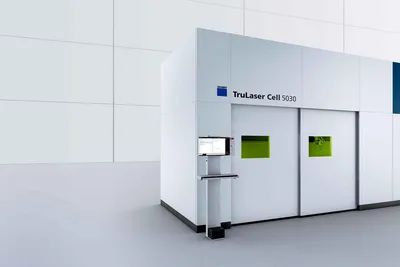
IPG Photonics YBR Series
Key Specifications
Laser Technology
Wavelength
Output Power Range
Beam Quality (M²)
Process Fiber Core Diameter
Output Connector
Overview
The IPG Photonics YBR Series represents IPG's beam-combined high-brightness fiber laser platform, designed to deliver the highest available single-output power from a fiber laser source while maintaining beam quality sufficient for high-speed thick-plate cutting. Beam combining technology merges the outputs of multiple individual fiber laser modules into a single delivery fiber, enabling multi-kilowatt to tens-of-kilowatt power levels with beam quality (M²) values that fall between the near-perfect single-mode YLR and the fully multimode YLM — a deliberate engineering trade-off that maximizes both power and cutting speed on thick metal plate.
The YBR Series occupies the high end of the cutting laser market, where users require simultaneous high average power (10 kW–100 kW class) and sufficient beam brightness to maintain the focused spot intensity needed for keyhole-mode cutting through thick mild steel, stainless steel, and aluminum. At these extreme power levels, beam quality degradation is unavoidable with simple multimode fiber; IPG's beam combining architecture preserves brightness by spectrally or spatially combining multiple single-mode or few-mode laser modules, each contributing a portion of the total power while the combined output retains usable beam quality for cutting applications.
Primary applications include ultra-high-power laser cutting systems for thick plate (40 mm to 100+ mm mild steel), high-speed cutting of medium-thickness sheet at production rates beyond what standard single-laser cutting systems achieve, and specialist industrial processes such as large-format laser welding of heavy structures, shipbuilding component fabrication, and directed energy applications. Machine builders integrating the YBR Series into cutting systems include Trumpf, Bystronic, and Prima Power for their premium high-power system lines.
The YBR Series is the laser source technology behind the industry's push into ultra-high-power fiber laser cutting — the segment where 20 kW, 30 kW, and beyond ratings are now commercially available on production laser cutting systems. IPG's beam combining intellectual property and manufacturing capability has been central to enabling this market transition from the 6–12 kW range that dominated the fiber laser cutting market through the early 2020s.
Full Specifications
| Parameter | Value |
|---|---|
| Laser Technology | Beam-combined High-Brightness Ytterbium Fiber Laser |
| Wavelength | 1070 – 1080 nm |
| Output Power Range | 10 kW – 100 kW (configuration dependent) |
| Beam Quality (M²) | 2 – 10 (power dependent) |
| Process Fiber Core Diameter | 100 µm – 300 µm |
| Output Connector | QBH (high-power variant) |
| Power Stability | < ±1% RMS |
| Modulation | Analog 0–100%, digital pulse capability |
| Cooling | Water-cooled (high-capacity chiller required) |
| Electrical Efficiency | > 35% wall-plug efficiency |
| Operating Temperature | 10 – 35°C |
| Back-Reflection Tolerance | High (fiber laser inherent advantage) |
Specifications compiled from manufacturer literature and industry references. Not independently verified against a published spec sheet — confirm with the manufacturer or an authorised dealer before making a purchasing decision.
Strengths & Limitations
Strengths
- Beam combining technology delivers 10–100 kW class output power while preserving sufficient beam brightness for thick-plate cutting — enabling a capability that single emitters cannot match
- Higher wall-plug efficiency (>35%) than CO2 laser, diode-pumped solid-state, or disk laser at equivalent power levels reduces operating cost at scale
- High back-reflection tolerance — a fundamental fiber laser advantage — protects the source from reflections off copper, aluminum, and brass at high power
- Scalable architecture allows power upgrades by adding beam combining modules rather than replacing the entire laser system
- IPG's deep installed base and service infrastructure provide reliable support for high-power systems in production environments globally
Limitations
- Sold exclusively as an OEM laser source component — complete cutting or welding system requires significant integration by a machine builder or systems integrator
- High-capacity water cooling infrastructure (large chillers, high-flow plumbing) is mandatory and represents a significant facility investment at 20 kW+ power levels
- At maximum power levels, beam quality degrades relative to single-mode YLR sources, limiting fine-feature cutting performance even as thick-plate capability expands
Best For
Frequently Asked Questions
01
Beam combining merges the outputs of multiple individual fiber laser modules into a single output beam. Spectral beam combining (SBC) stacks lasers at slightly different wavelengths and combines them with a wavelength-selective element; spatial beam combining uses optical elements to overlay beams. Each individual module contributes its power at near-single-mode quality, and the combined output achieves much higher power than any individual module while maintaining beam quality (M²) better than simple multimode incoherent combination.
02
A well-optimized 20 kW fiber laser cutting system using YBR-class sources can cut mild steel up to 50–60 mm with nitrogen or oxygen assist, with practical cutting speeds sufficient for production use. At 30 kW and above, mild steel beyond 80 mm becomes achievable. The combination of high average power and sufficient beam quality to maintain keyhole cutting mode is what enables these thicknesses — parameters that were previously only achievable by high-power CO2 laser or plasma.
03
The YLR Series is available up to approximately 6–10 kW in single-mode or near-single-mode (M² ~1.0–1.1), optimized for thin-to-medium sheet cutting at maximum speed. The YBR Series extends to 10–100 kW using beam combining but with M² values of 2–10 depending on power level. For thin sheet cutting speed, the YLR's better beam quality wins; for thick plate cutting where raw power is the limiting factor, the YBR's higher power capability wins. Most production cutting systems pair the right source class to the material thickness range they target.
04
At 30 kW laser output with approximately 35% wall-plug efficiency, the electrical input is roughly 85–90 kW, with approximately 55–60 kW dissipated as heat requiring removal by the chiller system. A cooling capacity of 60–80 kW (50,000–70,000 BTU/hr) is typically required for the laser alone, with additional capacity needed for the beam delivery optics and cutting head. Industrial chillers in the 20–30 ton range are commonly specified for 20–30 kW fiber laser installations.
05
IPG Photonics is a known supplier of high-power fiber laser modules to defense programs, and beam-combined high-brightness fiber lasers are the underlying technology in several national directed energy programs. However, IPG does not publicly detail specific defense program applications. The commercial YBR Series is positioned for industrial cutting and welding OEM applications; defense-grade configurations involve separate procurement and specification processes.
Community Discussions
Community discussion — Trouble with 700 watt IPG laser cutter - cnczone.com
Troubleshooting and problem-solving — Need Help! IPG Laser:System Error! - CNCzone
Troubleshooting and problem-solving — Problem Diagnosing root cause of no laser output - cnczone.com
Troubleshooting and problem-solving — Fiber laser cutting machine alarm - CNCzone
Owner experience and review — iGaging DRO : r/Machinists - Reddit
Owner experience and review — End mill coatings? : r/Machinists - Reddit
Comparison and buying advice — Indicator tip materials ruby vs carbide : r/Machinists - Reddit
Community discussion about this machine.
Links to community discussions. Summaries are editorial — visit the original thread for full context.
Related Machines
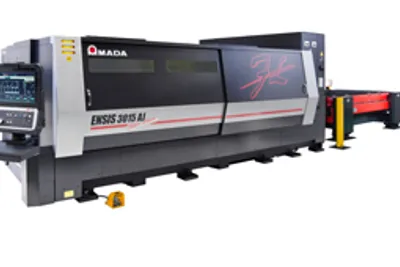
Amada ENSIS-3015AJ
Amada LCG-3015AJ
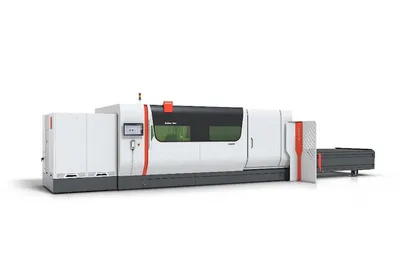
Bystronic ByStar Fiber 3015
Mazak OPTIPLEX 3015 DDL
Trumpf TruLaser 3040