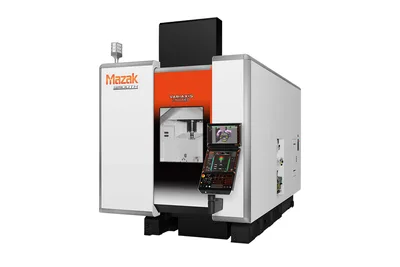
Hyundai WIA F400D
This model was not found in Hyundai WIA's current lineup when we checked on 2026-09-24 (lineup page). It may be a superseded or older model; the specifications below are as we last recorded them.
Key Specifications
Max Spindle
Spindle Taper
Spindle Power
Max Workpiece ⌀
Accuracy
Repeatability
How much does the Hyundai WIA F400D cost?
Estimated price range
Our best estimate for a 5-axis machining center in this class — not a quote from Hyundai WIA. Configuration moves it a long way.
Overview
The Hyundai WIA F400D is a 5-axis machining center built around a 400 mm (15.7 in) tilting rotary table, with listed travels of 600 × 500 × 500 mm (23.6 × 19.7 × 19.7 in) and a 15,000 rpm BT40 built-in motor spindle. It is not in Hyundai WIA's current lineup, so anyone weighing one up is looking at a used machine and should confirm the listed figures against that machine's own documentation.
The rotary side is what defines it. The A axis tilts ±110° and the C axis turns a continuous 360°, both on direct-drive torque motors with a listed rapid of 50 rpm. A part can be up to 500 mm (19.7 in) in diameter, 350 mm (13.8 in) tall and 300 kg (661 lb), which is more than the 250 kg (551 lb) table load of the current KF3500/5A. Listed positioning accuracy is ±0.004 mm (±0.00016 in), with repeatability of ±0.002 mm (±0.00008 in).
Spindle power is listed as 22/18.5 kW (30/25 hp) and no torque figure is given, so the table points to finishing and medium milling with small and mid-sized cutters more than to heavy roughing. The arm-type changer holds 30 tools. Linear roller guides carry rapids of 42 m/min (1,654 ipm), and at 13,500 kg (29,762 lb) the machine needs a floor and a rigging plan to match. The listed control is FANUC 0i-MF Plus (5-axis).
Full Specifications
| Parameter | Value |
|---|---|
| Table Diameter | 400 mm (15.7 in) |
| X Travel | 600 mm (23.6 in) |
| Y Travel | 500 mm (19.7 in) |
| Z Travel | 500 mm (19.7 in) |
| A Axis Range | ±110° |
| C Axis Range | 360° (continuous) |
| Max Spindle Speed | 15,000 RPM |
| Spindle Motor Power | 22/18.5 kW (30/25 hp) |
| Spindle Taper | BT40 |
| Spindle Type | Built-in motor spindle |
| A C Axis Drive | Direct-drive torque motors |
| Max Workpiece Diameter | 500 mm (19.7 in) |
| Max Workpiece Height | 350 mm (13.8 in) |
| Max Workpiece Weight | 300 kg (661 lb) |
| ATC Capacity | 30 tools |
| ATC Type | Arm-type ATC |
| Guideway Type | Linear roller guides |
| Rapid Traverse Linear | 42 m/min (1,654 ipm) |
| Rapid Traverse A C | 50 RPM |
| Positioning Accuracy | ±0.004 mm (±0.00016 in) |
| Repeatability | ±0.002 mm (±0.00008 in) |
| Machine Weight | 13,500 kg (29,762 lb) |
| CNC Control | FANUC 0i-MF Plus (5-axis) |
Specifications compiled from manufacturer literature and industry references. Not independently verified against a published spec sheet — confirm with the manufacturer or an authorised dealer before making a purchasing decision.
Strengths & Limitations
Strengths
- Direct-drive torque motors on both rotary axes, with ±110° of A tilt, a continuous 360° C axis and a listed 50 rpm rotary rapid
- 15,000 rpm built-in motor spindle with a BT40 taper and a listed 22/18.5 kW (30/25 hp)
- Takes parts up to 500 mm (19.7 in) in diameter, 350 mm (13.8 in) tall and 300 kg (661 lb) on a 400 mm (15.7 in) table
- Listed positioning accuracy of ±0.004 mm (±0.00016 in) and repeatability of ±0.002 mm (±0.00008 in)
- Linear roller guides with 42 m/min (1,654 ipm) rapids and a 30-tool arm-type changer
Limitations
- Not in Hyundai WIA's current lineup, so a buyer is looking at a used machine and should confirm each listed figure on the machine itself
- No spindle torque figure is listed, which makes roughing capacity hard to judge from the table alone
- Part height is limited to 350 mm (13.8 in) and part weight to 300 kg (661 lb), fixture included
- 30 tools is the only magazine size listed
Best For
Frequently Asked Questions
01
No. The F400D is not in Hyundai WIA's current lineup, so it is a machine you would find used. The listed figures are 600 × 500 × 500 mm (23.6 × 19.7 × 19.7 in) of travel, a 400 mm (15.7 in) table and a 15,000 rpm BT40 spindle. Check them against the nameplate and manuals of the specific machine before relying on them.
02
The listed limits are 500 mm (19.7 in) in diameter, 350 mm (13.8 in) in height and 300 kg (661 lb), on a table 400 mm (15.7 in) across. Fixture height and weight count against those limits, so a tall vise or a riser reduces what is left for the part.
03
A tilts ±110° and C rotates a continuous 360°. Both are listed with direct-drive torque motors and a rapid of 50 rpm. With more than a quarter turn of tilt on either side, the tool can reach slightly past the side of a part in both directions, which helps on undercut features.
04
Both have 600 mm (23.6 in) of X and 500 mm (19.7 in) of Z. The KF3500/5A has 655 mm (25.8 in) of Y against 500 mm (19.7 in) here, with a Ø350 mm (13.8 in) table and a 250 kg (551 lb) table load, where the F400D is listed with a 400 mm (15.7 in) table and 300 kg (661 lb). The KF3500/5A starts at 12,000 rpm with 15,000 rpm and 20,000 rpm optional, while the F400D is listed at 15,000 rpm.
More from Hyundai WIA
Other 5-Axis Machining Centers
Mazak VC-Ez X
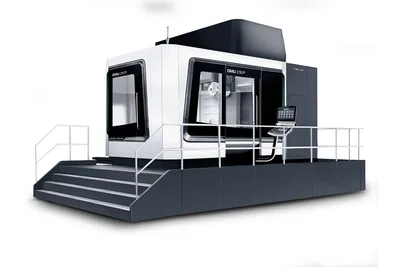
DMG Mori DMU 210 P FD
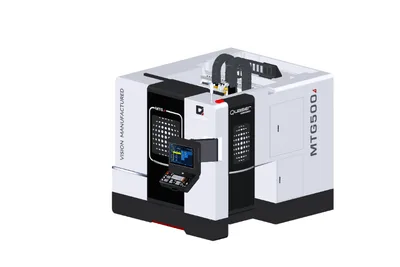
Quaser MTG500
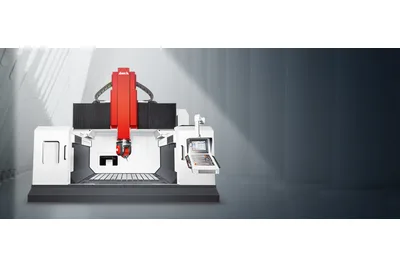
AWEA RG5-3225
Makino MAG A9