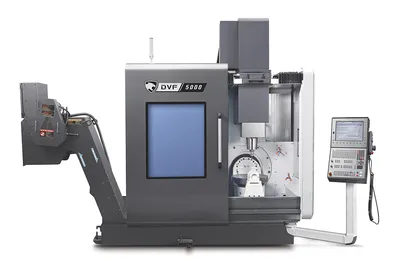
Handtmann PBD 200
Key Specifications
Max Spindle
Spindle Taper
Spindle Power
Accuracy
max profile length
y axis travel
Overview
The Handtmann PBD 200 is a CNC 5-axis profiling machining center from Albert Handtmann Maschinenfabrik, a German company based in Biberach an der Riß that specializes in high-speed 5-axis machining centers for the aerospace, railway, and automotive industries — particularly for the machining of aluminum structural profiles, extrusions, and structural components at the large format and high throughput rates characteristic of aerospace and rail vehicle manufacturing.
Handtmann's PBD (Profile Bearbeitungs-Durchlaufanlage) series is designed for the high-speed machining of aluminum extruded profiles — the long, continuous cross-section aluminum sections used in aircraft fuselage, wing, and floor structure; railway car body frames; and automotive space frame structures. These profiles (up to 20,000 mm in length in some configurations) require 5-axis machining to produce the complex pocket geometries, feature locations, and end-face operations that aerospace and rail engineering specifications require.
The PBD 200's 5-axis head provides full simultaneous 5-axis contouring at high feedrates — up to 60 m/min in X (along the profile length) — enabling high throughput on long profiles. The machine's horizontal spindle configuration with a traveling gantry over a fixed profile bed provides the optimal architecture for long-profile machining: the profile is fixed; the machine moves along it at production speed. HSK-A63 spindle at 24,000-42,000 RPM handles the full range from aluminum structural pocket machining (roughing at 24K) through complex curved surface finishing (42K).
Handtmann's aerospace customers include Airbus (Hamburg and Toulouse), FACC, Premium AEROTEC, and other European aerospace structural component manufacturers. Their rail vehicle customers include Alstom, Siemens Mobility, and Bombardier Transportation (now Alstom). At $1,500,000-$3,500,000, the PBD 200 is a production investment for facilities with sustained aluminum profile machining volume.
Full Specifications
| Parameter | Value |
|---|---|
| Max Profile Length | 8,000 mm (315 in) standard; up to 20,000 mm on extended bed |
| Y Axis Travel | 2,000 mm (78.7 in) |
| Z Axis Travel | 800 mm (31.5 in) |
| Max Spindle Speed | 42,000 RPM (24,000 RPM standard) |
| Spindle Taper | HSK-A63 |
| Spindle Motor Power | 40 kW (53.6 hp) |
| X Rapid Traverse | 60 m/min |
| A B Axis | Full simultaneous 5-axis |
| Positioning Accuracy | < 0.008 mm |
| CNC Control | Siemens Sinumerik 840D sl |
| Machine Weight | ~25,000 kg (55,115 lb) |
Specifications compiled from manufacturer literature and industry references. Not independently verified against a published spec sheet — confirm with the manufacturer or an authorised dealer before making a purchasing decision.
Strengths & Limitations
Strengths
- Up to 20,000 mm profile length capacity in extended bed configuration — covers the full length of commercial aircraft fuselage panels
- 60 m/min X-axis rapid traverse enables high throughput on long-profile machining programs
- 42,000 RPM spindle option provides high-speed aluminum machining for aerospace profile production rates
- Horizontal profile bed architecture is optimized for chip evacuation from long aluminum profile machining
- Handtmann is the preferred supplier for aerospace aluminum profile machining in European aircraft manufacturing
Limitations
- $1.5M-$3.5M investment requires sustained aerospace or rail vehicle aluminum profile production programs
- Specialized configuration for profile machining — not a general-purpose 5-axis machining center
- Handtmann's North American presence is limited to aerospace facilities with European parent relationships
- Long machine bed requires correspondingly large facility floor area and overhead crane for profile loading/unloading
Best For
Frequently Asked Questions
01
A profile machining center (like the Handtmann PBD 200) is designed for machining long, constant cross-section aluminum profiles — lengths from 3 to 20 meters. The workpiece is fixed on a long bed and the machine gantry travels along the profile, machining features along its length. Conventional 5-axis machining centers have a relatively compact work envelope (0.5-3m) with a stationary gantry or column and moving table. Profile machining centers trade compact work envelope for extreme length, optimizing the machine architecture for the aerospace and rail aluminum profile machining application.
02
Common PBD 200 applications include: fuselage frame profiles (curved C-sections and Z-sections with pocket machining), floor beam profiles (I-section aluminum beams with precise end-face features and lightening pockets), stringer profiles (flat or curved sections with precise hole patterns for rivet assembly), door frame profiles (complex curved sections with machined attachment features), and railway car body side profile sections (long extruded aluminum sections with window cutouts, seat attachment holes, and edge features). All share the characteristic of being long (2-20m), constant cross-section, requiring 5-axis access to all faces.
03
The PBD 200 can machine titanium profiles, but at significantly lower feedrates than aluminum (titanium machines at 1/5 to 1/10 the speed of aluminum due to its poor thermal conductivity and tendency to work-harden). For production titanium profile machining, the economics are challenging — the machine's high aluminum throughput is its core value proposition. For occasional titanium profiles, the PBD 200 is capable but not optimized. Carbon fiber composite profiles require specialized tooling and dust extraction; Handtmann offers CFRP machining configurations as an option.
Videos

ELCEE
Community Discussions
Troubleshooting and problem-solving — Handtmann CNC? - Practical Machinist
Owner experience and review — 5 Axis recommendation - Practical Machinist
Community discussion — Hold-down "Combs" for Non-magnetic ...
Community discussion — Strange but cool old tapping machine. - Practical Machinist
Pricing and buying discussion — Has anyone had experience with the Bantam Tool Desktop CNC ...
Pricing and buying discussion — Mini Lathe for first Lathe? : r/Machinists - Reddit
Owner experience and review — Water jet recommendations? : r/Machinists - Reddit
Options and configuration advice — $200-300 Mini Lathe Recommendations? : r/Machinists - Reddit
Links to community discussions. Summaries are editorial — visit the original thread for full context.
Related Machines
DMG Mori DMU 50
Haas UMC-750
Makino D500
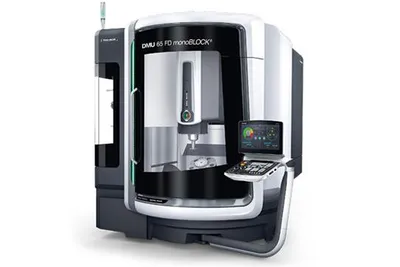
DMG Mori DMU 65 monoBlock
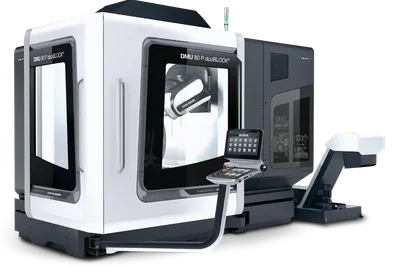
DMG Mori DMU 80P duoBLOCK