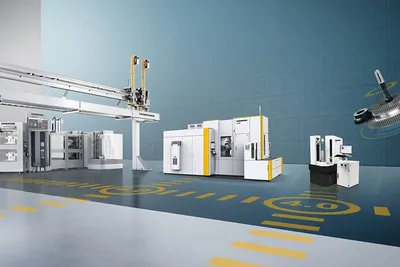
Gleason G35
Key Specifications
Max Workpiece ⌀
max module
min module
max face width
cutting process
skiving cutter diameter
Overview
The Gleason G35 is a CNC gear skiving machine built specifically around the power skiving process — a continuous, high-speed rotary cutting method that generates internal and external gears in a single operation, combining the productivity advantages of gear hobbing with the ability to cut internal gears that hobbing cannot reach. Designed and manufactured by Gleason Corporation in Rochester, New York, the G35 targets manufacturers of internal ring gears, planetary carrier gear sets, automotive transmission components, and shaft gears where cycle time reduction and part consolidation are strategic priorities. Power skiving on the G35 achieves gear quality of DIN 5–7 in a single cut, displacing the conventional multi-step sequence of gear shaping followed by deburring.
Power skiving is a synchronized cutting process where a skiving cutter — resembling a helical gear — rotates at high speed while feeding axially through the gear blank. The cutter and workpiece rotate in a precisely synchronized ratio with a crossed-axis angle between their spindles. Each cutting edge of the skiving cutter removes a small chip with each revolution, and after many revolutions the complete gear tooth form is generated across the full face width. The process is inherently more productive than shaping because the cutter is always engaged in cutting rather than reciprocating, and cycle times are 3–10× faster than gear shaping for equivalent gears.
The G35 features a rigid cast-iron structure with a 350 mm maximum workpiece diameter. The high-speed cutting spindle accommodates skiving cutters up to 120 mm in diameter and is driven by a direct-drive motor to eliminate backlash and vibration transmission through belt drives. Axis interpolation is managed by the Siemens SINUMERIK 840D sl control running Gleason's GEMS operator software, which calculates the complex synchronized axis motions required for power skiving from gear design parameters entered by the operator. Cutting is supported wet with high-pressure coolant to manage the heat generated during the continuous chip formation process, extending tool life and maintaining workpiece accuracy.
The G35 is particularly well suited to internal gear production — a traditionally difficult operation where boring machine or gear shaping was previously the only viable method. Internal ring gears for planetary gearsets, automotive automatic transmission ring gears, and robot joint ring gears are prime applications. External spur and helical gears are also producible on the G35, making the machine versatile across a typical gear shop's part mix. Gleason offers an automation package for the G35 with a pick-and-place unit or gantry loader for high-volume automotive and robotics production, enabling unmanned machining of internal gear families.
The G35 competes with Liebherr's LSE series skiving machines and with gear shaping alternatives from Mitsubishi Heavy Industries and Nachi. New G35 machines are priced between $500,000 and $750,000 depending on automation configuration and tooling packages. The machine's ability to replace or significantly reduce shaping operations — while matching or exceeding shaping quality — makes it a strong productivity investment for shops with significant internal gear production volume.
Full Specifications
| Parameter | Value |
|---|---|
| Max Workpiece Diameter | 350 mm (13.78 in) |
| Max Module | 5 mm |
| Min Module | 0.5 mm |
| Max Face Width | 180 mm (7.09 in) |
| Cutting Process | Power skiving |
| Skiving Cutter Diameter | Up to 120 mm (4.72 in) |
| Cutting Spindle Speed | Up to 5,000 RPM |
| Workpiece Spindle Speed | Up to 2,000 RPM |
| Crossed Axis Angle | Up to ±25° |
| Axes | 5 CNC axes |
| CNC Control | Siemens SINUMERIK 840D sl with GEMS |
| Gear Types | Internal and external spur and helical gears |
| Machine Weight | 8,500 kg (18,739 lb) |
| Gear Quality | DIN 5–7 |
Specifications compiled from manufacturer literature and industry references. Not independently verified against a published spec sheet — confirm with the manufacturer or an authorised dealer before making a purchasing decision.
Strengths & Limitations
Strengths
- Power skiving cycle times are 3–10× faster than gear shaping for equivalent internal gears, dramatically reducing cost per part for ring gears, planetary gear sets, and automated transmission components
- Capable of cutting internal gears that gear hobbing cannot reach, consolidating internal ring gear production onto a single machine type and eliminating the need for dedicated gear shapers
- Continuous cutting process means the skiving cutter is always engaged, unlike reciprocating gear shaping where only the cutting stroke removes material — resulting in superior cutting efficiency and surface finish
- GEMS software computes all synchronized axis motions from gear parameters, reducing the specialized knowledge barrier to power skiving and shortening process development time significantly
- Gleason's extensive application engineering team and global service network provide specialized power skiving support, including cutter design, process optimization, and troubleshooting for new applications
- Automation-ready design with pick-and-place integration supports lights-out production of automotive ring gears and robot joint gears in high-volume schedules
Limitations
- Power skiving cutters are precision tools that require specialized re-sharpening equipment and expertise — cutter management costs are higher than for standard gear hobs or shaper cutters
- The 350 mm maximum workpiece diameter and module 5 mm limit restrict the G35 to small-to-medium gears; large planetary ring gears in wind turbines and industrial gearboxes require larger skiving or shaping machines
- Power skiving is a relatively advanced process requiring careful attention to cutter runout, axis synchronization accuracy, and coolant delivery — operator training and process setup time exceed those for gear hobbing
Best For
Frequently Asked Questions
01
Power skiving is a continuous rotary cutting process where a skiving cutter and workpiece rotate in synchronized ratio with their axes crossed at an angle. Each cutting edge generates a chip on every revolution, producing the gear tooth form progressively across the face width. Gear shaping is a reciprocating process where a rack or pinion-shaped cutter cuts on the forward stroke and retracts on the return stroke. Power skiving is 3–10× faster than shaping because there is no return stroke — the cutter is always cutting. Both methods can produce internal gears, which hobbing cannot.
02
Yes, the G35 is designed to cut both internal and external spur and helical gears using the power skiving process. Internal gears are the primary application where skiving provides its greatest advantage over hobbing (which cannot cut internal gears) and shaping (which is much slower). External gears can also be skived on the G35, though hobbing is generally more productive for external gears due to simpler tooling and higher cutting speeds. Many shops use the G35 as a dedicated internal gear machine and hobbers for external gears.
03
Power skiving on the G35 achieves DIN 5–7 in production conditions, comparable to gear shaping quality. DIN 6–7 is typical for finish-skived gears destined for hardening and subsequent grinding. DIN 5–6 is achievable with optimized tooling, rigid workholding, and careful process development. For applications requiring DIN 3–5 quality, skived gears should be subsequently ground on a profile or generating grinder. The G35 is not a finishing machine for highest-precision gears.
04
Skiving cutter life depends on the gear material, cutting parameters, cutter coating, and cooling conditions. In steel cutting with coated carbide or HSS-PM skiving cutters and proper coolant, cutter life of 1,000–5,000 internal gear ring gear cuts is typical before resharpening is required. Skiving cutters are manufactured with multiple usable cutting faces (typically 15–25) and can be resharpened on specialized cutter grinding machines multiple times before the cutter diameter is consumed, giving a total life of tens of thousands of cuts per cutter.
05
Shops replacing gear shaping with power skiving on the G35 typically see 3–8× productivity increases for internal gears, translating to equivalent output from one G35 replacing three to eight shapers. The cycle time reduction reduces direct labor content per part and floor space requirements. At production volumes of 10,000+ ring gears per year, the $500,000–$750,000 G35 investment often pays back in 2–4 years through labor savings and capacity gains, though payback depends heavily on part geometry, volume, labor rates, and automation level.
Videos

KLINGELNBERG Group

wurtz

matthew gleason

KLINGELNBERG Group

kii
Related Machines
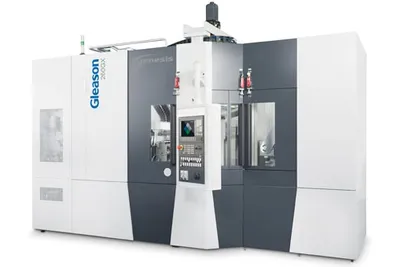
Gleason Genesis 200GX
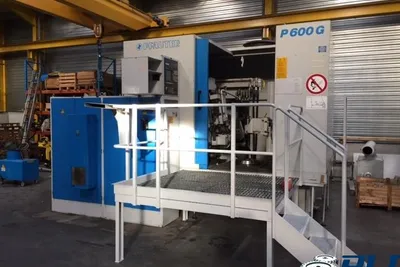
Gleason P600G
KAPP NILES KX 300 P