Industrial CNC Machine Directory

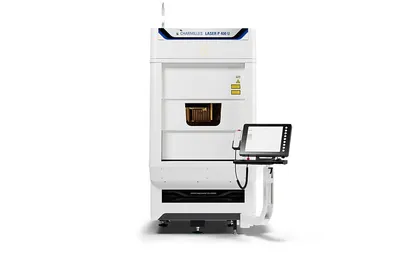
GF LASER S 500 U

$400,000 - $700,000 Updated 2025-03-15
01

Key Specifications

X Travel

550 mm (21.7 in)

Y Travel

400 mm (15.7 in)

Z Travel

500 mm (19.7 in)

b axis

-110° to +110°

c axis

0° to 720° (continuous)

number of axes

5 (simultaneous)

02

Overview

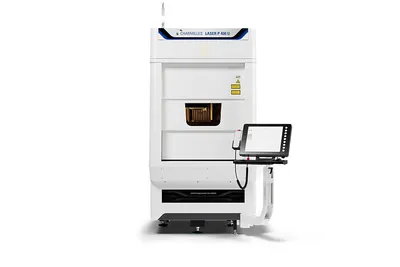
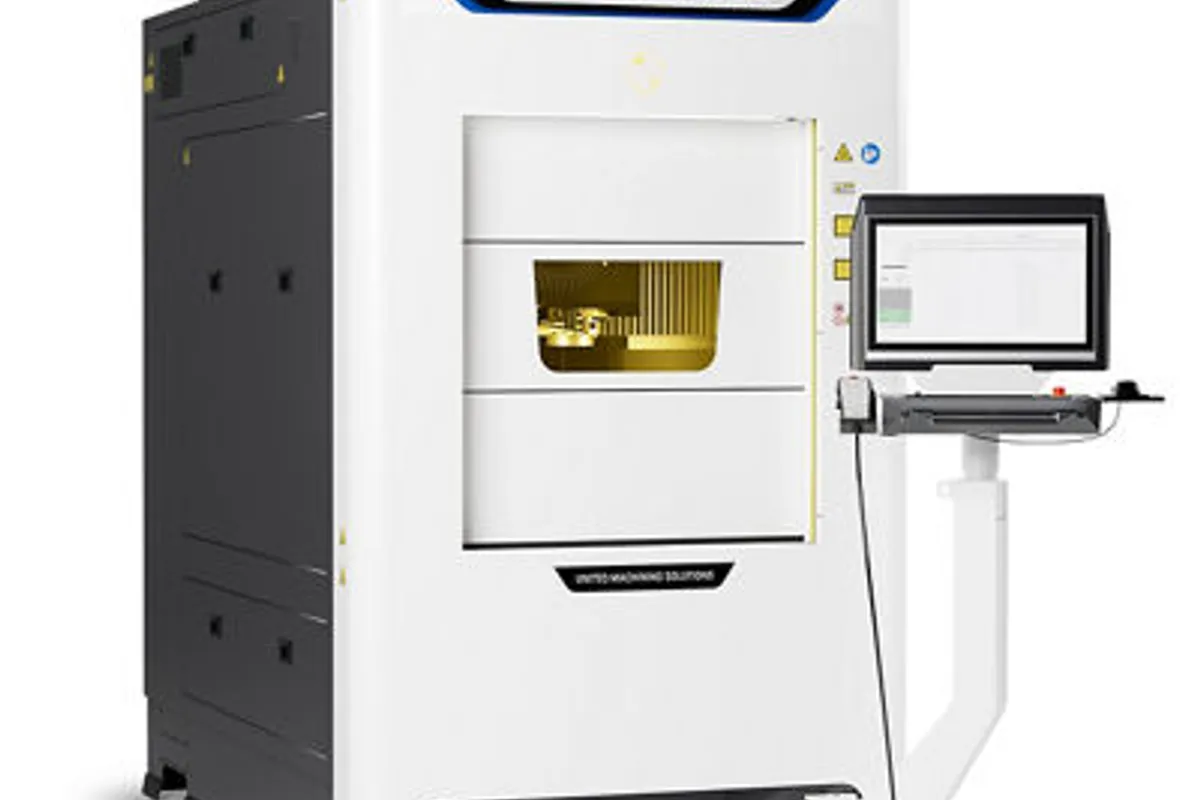
The GF LASER S 500 U is a 5-axis laser texturing and micromachining system from GF Machining Solutions (formerly AgieCharmilles), designed to replace chemical etching and manual texturing processes with digital, repeatable laser surface engineering. This isn't a laser cutter in the sheet metal sense -- it's a precision surface modification tool that ablates material at the micron level to create textures, microstructures, functional surfaces, and fine engravings on 3D workpieces.

The machine runs up to 5 simultaneous axes: 550 x 400 x 500 mm (21.7 x 15.7 x 19.7 in) of linear X/Y/Z travel plus a B-axis swiveling from -110 to +110 degrees and a continuous C-axis with 720 degrees of rotation. This full 5-axis capability means you can texture complex curved surfaces -- injection mold cavities, automotive interior components, medical implants, and watch cases -- without repositioning the workpiece. The table handles up to 15 kg (33 lb) of workpiece mass in 5-axis mode.

Laser source flexibility is a core strength. GF offers the machine with their proprietary Femto Flexipulse sources (20 W or 40 W infrared, or 40 W IR-GR dual wavelength) for ultrashort-pulse processing, or Nano Flexipulse sources (50 W or 100 W infrared) for nanosecond-regime work. You can configure the machine with one or two laser sources simultaneously. Femtosecond pulses are critical for heat-sensitive materials like polymers and hardened steels where thermal damage would ruin the surface; nanosecond pulses work faster on less sensitive materials.

The SPOT interface running on a Beckhoff Industrial PC provides a 21.5-inch multi-touch display for programming and monitoring. GF's proprietary software handles everything from importing 3D texture maps to generating the laser scan paths across complex freeform surfaces. The integration between CAD texture design and machine execution is where GF's laser texturing platform has a significant lead over competitors trying to adapt general-purpose laser marking or cutting systems for texturing applications.

The machine fits in a compact 3,600 x 2,500 mm footprint and weighs approximately 4,000 kg (8,818 lb) with coolant. Electrical requirements are modest at 15 kVA, reflecting the low power consumption of laser texturing compared to material removal machining. Pneumatic supply at 6-8 bar and 300 l/min is standard shop air.

New GF LASER S 500 U systems typically price between $400,000 and $700,000 depending on laser source configuration (single vs. dual, femto vs. nano), automation options, and software packages. Dual femtosecond laser configurations with full 5-axis capability sit at the top of that range. Used machines are extremely rare due to the specialized nature of the application and small install base. Specs sourced from GF Machining Solutions published technical data.

03

Full Specifications

Parameter Value
X-Axis Travel 550 mm (21.7 in)
Y-Axis Travel 400 mm (15.7 in)
Z-Axis Travel 500 mm (19.7 in)
B Axis -110° to +110°
C Axis 0° to 720° (continuous)
Number Of Axes 5 (simultaneous)
Max Workpiece Weight 5axis 15 kg (33 lb)
Max Permissible Inertia 0.17 kg-m2
Table Dimensions 590 x 470 mm (23.2 x 18.5 in)
Laser Sources Femto GF Femto Flexipulse: 20 W IR, 40 W IR, or 40 W IR-GR
Laser Sources Nano GF Nano Flexipulse: 50 W IR or 100 W IR
Laser Configuration 1 or 2 laser sources simultaneously
CNC Control Beckhoff Industrial PC (C6640) with SPOT interface (21.5 in multi-touch)
Machine Dimensions 2,174 x 1,387 x 2,556 mm (85.6 x 54.6 x 100.6 in)
Floor Space Required 3,600 x 2,500 mm
Machine Weight 4,000 kg (8,818 lb) with coolant
Electrical 15 kVA nominal
Pneumatic 6-8 bar; 300 l/min max flow

Specifications sourced from gfms.com — verified 2026-03-28

04

Strengths & Limitations

Strengths

  • Full 5-axis simultaneous capability enables laser texturing of complex freeform surfaces like injection mold cavities and automotive interior trim without workpiece repositioning
  • Dual laser source configuration with femtosecond and nanosecond options lets you match the pulse regime to the material -- cold ablation for heat-sensitive surfaces, faster nanosecond for bulk texturing
  • Replaces chemical etching processes that involve hazardous chemicals, inconsistent results, and environmental compliance costs with digital, repeatable laser texturing
  • GF's proprietary SPOT software integrates 3D texture design with machine execution better than competitors adapting general-purpose laser marking platforms for texturing
  • Compact 3,600 x 2,500 mm footprint and modest 15 kVA power requirement make installation straightforward compared to the chemical etching lines it replaces
  • Femtosecond pulse capability produces virtually zero heat-affected zone, enabling texturing on hardened tool steels and temperature-sensitive materials without surface degradation

Limitations

  • Entry price above $400K with dual femto configurations pushing past $700K -- significant investment for a machine dedicated to surface texturing rather than material removal
  • 15 kg workpiece capacity in 5-axis mode severely limits the size of parts you can texture -- large mold halves and automotive body panels require the larger LASER P platform
  • Laser texturing is inherently slow compared to chemical etching for large surface areas -- a full mold cavity texture can take days of continuous machine time
  • Extremely specialized application means limited resale market and almost no used-machine availability, making capital recovery difficult if business needs change
  • Requires specialized operator training in laser process parameters, texture design software, and 5-axis programming that's distinct from conventional machining skills
05

Best For

Injection mold shops replacing chemical etching with digital laser texturing for automotive interior components, consumer electronics housings, and medical device enclosures Watch and luxury goods manufacturers requiring micro-scale surface textures, engravings, and decorative patterns on complex 3D surfaces Medical device companies creating functional surface textures on implants and surgical instruments for osseointegration, grip enhancement, and fluid management Automotive suppliers producing mold textures for interior trim, dashboards, and steering wheel components with consistent, repeatable surface quality across multiple cavities Tool and die operations seeking to eliminate hazardous chemical etching processes and associated environmental compliance costs R&D facilities developing functional microstructures for applications like hydrophobic surfaces, light management, and tribological optimization
06

Frequently Asked Questions

01 What does a new GF LASER S 500 U cost?

New LASER S 500 U systems typically price between $400,000 and $700,000. A single nanosecond laser configuration falls at the lower end, while dual femtosecond sources with full 5-axis capability push toward the top. Software packages and automation options add to the total. Used machines are virtually unavailable due to the specialized application and small install base worldwide.

02 What's the difference between femtosecond and nanosecond laser sources?

Femtosecond lasers deliver ultrashort pulses (less than 1 picosecond) that ablate material through cold processing -- the pulse is so short that heat doesn't have time to spread into surrounding material. This produces virtually no heat-affected zone, which is critical for hardened tool steels, polymers, and any surface where thermal damage would compromise the texture. Nanosecond lasers deliver more energy per pulse and work faster, but create a small heat-affected zone. Most shops choose femtosecond for precision texturing on sensitive materials and nanosecond for faster processing on more tolerant substrates.

03 How does laser texturing compare to chemical etching?

Laser texturing is digital, repeatable, and environmentally clean -- no hazardous chemicals, no inconsistent acid bath results, and no regulatory compliance headaches. You can reproduce the exact same texture across multiple cavities or tools with micron-level consistency. Chemical etching is faster for very large surface areas and less expensive per-process, but involves toxic chemicals, generates waste, and produces less consistent results. The industry trend is strongly toward laser texturing, especially in automotive and medical where traceability and consistency matter.

04 Can the LASER S 500 U cut or drill material?

The LASER S 500 U is designed for surface modification -- texturing, engraving, and micromachining -- not through-cutting of sheet metal or plate. It can drill micro-holes and create shallow features through laser ablation, but it's not a replacement for a fiber laser cutter, waterjet, or EDM for through-cutting applications. Think of it as a surface engineering tool rather than a material separation tool.

05 What materials can the LASER S 500 U process?

The machine processes virtually any material that absorbs laser energy: tool steels (hardened and unhardened), stainless steels, aluminum alloys, titanium, copper alloys, carbide, ceramics, polymers, composites, and even glass with appropriate laser source selection. The femtosecond sources are particularly effective on materials that are challenging to texture conventionally, including hardened steels above 60 HRC and engineering polymers.

06 How does the LASER S 500 U compare to the LASER P series?

The LASER S 500 U is the compact, high-precision platform for smaller workpieces up to 15 kg, with travels of 550 x 400 x 500 mm. The LASER P series (P 600 U, P 1000 U, P 1200 U) offers progressively larger work envelopes and higher payload capacity -- up to 1,200 kg on the P 1200 U -- for large mold halves, automotive body panels, and oversized tooling. The S 500 U delivers higher precision and faster axis dynamics on smaller parts; the P series handles the big stuff. Choose based on your maximum workpiece size.

07

Videos

GF Machining Solutions' AgieCharmilles FORM S Series

GF Machining Solutions' AgieCharmilles FORM S Series

United Machining (USA)

Microlution ML-5 - GF Machining Solutions

Microlution ML-5 - GF Machining Solutions

Peak Machine Sales (Peak EDM)

Laser S 2500 U GF Machining Solutions - Reichle Technologiezentrum GmbH

Laser S 2500 U GF Machining Solutions - Reichle Technologiezentrum GmbH

Reichle Technologiezentrum GmbH

Agility for the future: GF Machining Solutions Mikron MILL P 500 U

Agility for the future: GF Machining Solutions Mikron MILL P 500 U

United Machining (USA)

08

Related Machines