Industrial CNC Machine Directory

Fidia D218

$900,000 - $2,200,000+ Updated 2026-03-17
01

Key Specifications

Spindle Taper

HSK-A63

Rapid Traverse

50 m/min

Spindle Power

35 kW (47 hp)

machine type

5-axis double-column bridge machining center

x travel

2,000 – 4,000 mm (configurable)

y travel

2,500 mm (98.4 in) — ram travel

02

Overview

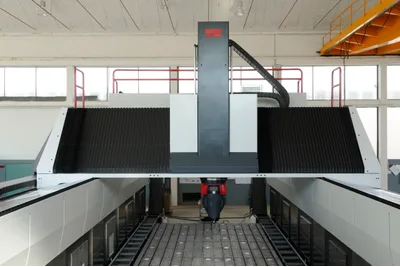
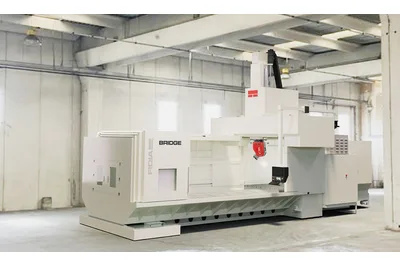
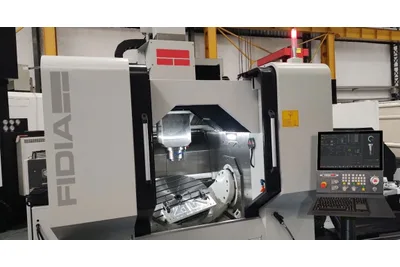
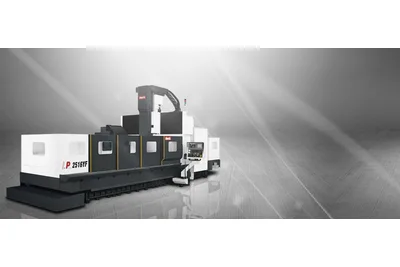
The Fidia D218 is a 5-axis double-column bridge machining center developed by Fidia for high-precision mold and die machining, aerospace component production, and large structural part machining where the double-column architecture provides superior rigidity and thermal stability compared to cantilever or moving-gantry designs. Fidia's D-series occupies a distinct position in the Italian builder's range, applying the same high-speed machining philosophy and proprietary CNC technology as the K-series gantry line within a fixed-column bridge structure optimized for maximum stiffness and positional accuracy on demanding precision workpieces.

The double-column bridge configuration of the D218 places the spindle carriage between two fixed vertical columns connected by a rigid overhead bridge, creating a closed-loop structural architecture that resists the thermal and cutting force deflections that limit accuracy in single-column or moving-gantry designs. This structural approach makes the D218 particularly well-suited to long machining cycles on precision tooling, hardened die blocks, and complex structural aluminum components where sustained accuracy over multi-hour programs is critical to dimensional conformance. The fixed-column design also simplifies thermal management, as the primary heat sources remain in known positions relative to the machine structure.

Fidia equips the D218 with their proprietary CNC and high-speed spindle technology, maintaining continuity with the K-series high-speed machining capability within the bridge format. The 5-axis head provides simultaneous A and C axis contouring with RTCP for complex mold cavity machining, die face finishing, and aerospace structure profiling operations. The machine's Y-axis ram travel provides access to tall workpieces and deep mold cavities that would otherwise require additional setups on machines with limited ram extension.

The D218 targets precision mold makers, aerospace machining centers, and heavy tooling manufacturers who prioritize the structural advantages of the double-column bridge format and are willing to accept the longer machine footprint and higher acquisition cost that the architecture entails. Fidia's high-speed CNC technology differentiates the D218 in this segment against double-column machines from Mazak, Makino, and Burkhardt+Weber that use conventional control platforms.

03

Full Specifications

Parameter Value
Machine Type 5-axis double-column bridge machining center
X Travel 2,000 – 4,000 mm (configurable)
Y Travel 2,500 mm (98.4 in) — ram travel
Z Travel 1,200 mm (47.2 in)
A Axis Range +/- 110°
C Axis Range 360° continuous
Spindle Speed 30,000 RPM
Spindle Motor Power 35 kW (47 hp)
Spindle Taper HSK-A63
Rapid Traverse Rate 50 m/min
Tool Changer Automatic, 30-60 position
CNC Control Fidia proprietary CNC (C20 / NUM-based)
Frame Fixed double-column bridge, cast iron structure
Table Load Up to 8,000 kg (17,600 lb)
Maximum Storage Duration 1 Year Type: HTTP Cookie

Specifications sourced from static.machinetools.com — verified 2026-03-28

04

Strengths & Limitations

Strengths

  • Double-column bridge architecture provides a closed-loop structural design that resists thermal and cutting force deflections more effectively than single-column or moving-gantry machines on long-cycle precision tooling programs
  • 30,000 RPM HSK-A63 spindle supports high-speed finishing of hardened tool steel mold cavities and precision die faces at surface finish quality levels demanded by injection molding and stamping tooling customers
  • Fixed-column structure simplifies thermal management, maintaining more stable geometric accuracy over multi-hour machining cycles than machines where primary structural members translate through the work zone
  • High table load capacity up to 8,000 kg enables direct fixturing of large, heavy die blocks and mold bases without requiring workpiece decomposition or specialized lightweight fixturing
  • Fidia's proprietary CNC with advanced contouring algorithms exploits the machine's structural rigidity for superior surface finish in 5-axis high-speed finishing operations on complex 3D mold and die geometries

Limitations

  • Double-column bridge architecture requires significantly more floor space than an equivalent-envelope single-column machine, limiting installation feasibility in facilities without large open bay areas
  • The D218's price point at the high end of the precision machining center market requires strong justification in terms of accuracy and surface finish improvement over competitive platforms to achieve acceptable ROI
  • Fidia's proprietary control system and limited service network outside Europe present support and staff training challenges for North American and Asian customers without local Fidia dealer infrastructure
05

Best For

Precision injection mold manufacturers machining large mold bases, cavity inserts, and core blocks in P20, H13, and S7 tool steels where sustained geometric accuracy over long cycles determines mold dimensional conformance Aerospace structural component manufacturers machining aluminum wing spars, bulkheads, and large structural frames where the bridge structure's rigidity ensures dimensional accuracy in long surface machining programs Automotive stamping die producers machining large progressive die blocks and trim/pierce tooling in hardened D2 and A2 tool steel where high-speed finishing surface quality reduces polishing labor Heavy tooling and pattern makers machining large casting patterns, forging dies, and precision master tooling from aluminum, steel, and nickel alloy materials requiring maximum structural rigidity during cutting
06

Frequently Asked Questions

01 What is the advantage of a double-column bridge design over a moving gantry for precision machining?

A double-column bridge design — where both vertical columns are fixed and the spindle carriage moves along a rigid overhead bridge — creates a closed-loop structural architecture. This resists deflection from cutting forces more symmetrically than a moving gantry, where one side of the structure is unsupported at large Y positions. For long machining cycles on precision mold and tooling work, the fixed-column bridge maintains more consistent geometric accuracy as the machine heats up and cutting forces vary during program execution.

02 What spindle options are available on the Fidia D218?

The standard D218 spindle provides 30,000 RPM at 35 kW through an HSK-A63 interface, covering high-speed aluminum and hardened steel finishing applications. Fidia offers alternative spindle configurations for specific applications — including higher-torque options for heavy roughing in steel and nickel alloys and extended-speed options for graphite electrode machining. Contact Fidia or an authorized dealer for the current spindle configuration options available for specific application requirements.

03 Can the D218 handle both roughing and finishing in the same program?

Yes. The D218's 35 kW spindle power supports aggressive roughing of aluminum and tool steel blocks, while Fidia's high-speed CNC algorithms optimize the machine's contouring capability for high-speed finishing passes at elevated feed rates with fine stepover values. Many mold and die customers run complete programs — rough, semi-finish, and finish — on the D218 without transferring workpieces to a separate finishing machine, leveraging the bridge structure's accuracy advantage through the full machining sequence.

04 How does the Fidia D218 compare to the Makino T-series bridge machines?

Both the Fidia D218 and Makino T-series target the precision mold and die bridge machining center market with similar double-column architectures. Makino T-series machines are widely adopted in North American and Asian precision mold shops with established Makino service infrastructure. Fidia's D218 differentiates through Fidia's proprietary high-speed CNC and linear motor options on some configurations. For shops already standardized on Makino, the support and familiarity advantage is significant. For shops prioritizing high-speed contouring surface finish, Fidia's CNC technology is worth evaluating directly.

05 What is the table load capacity and maximum workpiece weight for the D218?

The Fidia D218 table is rated for workpieces up to 8,000 kg (17,600 lb). This accommodates large mold bases, die blocks, and structural aluminum components without workpiece decomposition for fixturing on lighter machines. Customers with workpieces approaching the table load limit should confirm specific fixture weight, table clamping configuration, and any dynamic load considerations with Fidia engineering during machine specification.

07

Videos

FIDIA D218/BSH 5-axis vertical machining center

FIDIA D218/BSH 5-axis vertical machining center

Surplex

FIDIA D 218/5 A Universal Machining Centre

FIDIA D 218/5 A Universal Machining Centre

Surplex

FIDIA Open House with TDT Machine Tools

FIDIA Open House with TDT Machine Tools

MTDCNC

CENTRO MECANIZADO FIDIA D218

CENTRO MECANIZADO FIDIA D218

Ferrotall

FIDIA K211 CNC High Performance Machining Centre

FIDIA K211 CNC High Performance Machining Centre

Surplex

08

Community Discussions

09

Related Machines