Industrial CNC Machine Directory

EMAG HLC 150 H

$300,000 - $450,000 Updated 2026-03-19
EMAG HLC 150 H CNC Gear Cutting
01

Key Specifications

Max Workpiece ⌀

150 mm (6 in)

max hobbing diameter

120 mm (4.5 in)

max workpiece length

500 mm (19.5 in)

module range

mm

main spindle speed

4,000 RPM

max torque

140 Nm (103.5 ft-lb)

02

Overview

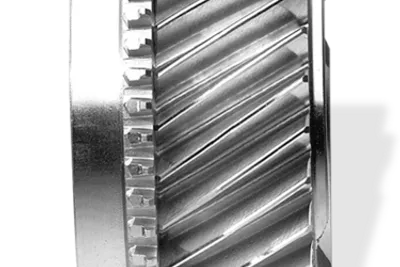
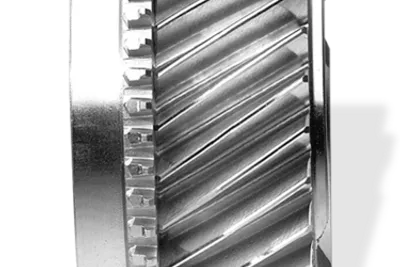
The EMAG HLC 150 H is a horizontal CNC gear hobbing machine designed for high-precision production of small spur gears, helical gears, and worm gears with workpiece diameters up to 150 mm (6 in) and modules ranging from 0.3 to 3.0 mm. The horizontal spindle configuration provides excellent chip evacuation and accessibility for setup, making the HLC 150 H particularly well suited for small-pinion production in automotive, instrument, and power tool applications where module sizes below DP 6 are standard.

The machine features direct-driven, water-cooled workpiece and tool spindles capable of speeds up to 4,000 RPM with maximum torque of 140 Nm (103.5 ft-lb). Water cooling extends spindle bearing life and maintains thermal stability during extended production runs. The direct-drive architecture eliminates mechanical gear trains between the motor and spindle, providing zero-backlash synchronization between the hob and workpiece axes — critical for achieving the tight pitch accuracy and involute profile tolerances demanded by fine-pitch automotive gearing.

The HLC 150 H accommodates workpiece lengths up to 500 mm (19.5 in) with a maximum hobbing diameter of 120 mm (4.5 in), and features 220 mm (8.5 in) of hob shift distance for maximizing tool life across the full hob length. The hob head swivel range of 180 degrees with the 220 mm shifting capability creates what EMAG describes as a "virtual Y-axis," enabling flexible positioning of the cutting zone without physical Y-axis hardware. This approach simplifies machine construction while maintaining full process flexibility for spur and helical gear hobbing, worm machining via single-index milling with disc cutters, and other specialized gear forms.

The machine supports dry hobbing with coated carbide hobs as well as wet hobbing with oil or emulsion coolant, giving shops flexibility to match their cutting strategy to the workpiece material and required surface finish. For automotive transmission pinion production at volumes exceeding 100,000 parts annually, the HLC 150 H delivers the combination of speed, precision, and reliability needed to maintain competitive cycle times while holding AGMA 10-12 quality levels consistently.

03

Full Specifications

Parameter Value
Max Workpiece Diameter 150 mm (6 in)
Max Hobbing Diameter 120 mm (4.5 in)
Max Workpiece Length 500 mm (19.5 in)
Module Range mm
Main Spindle Speed 4,000 RPM
Max Torque 140 Nm (103.5 ft-lb)
Hob Shift Distance 220 mm (8.5 in)
Hob Head Swivel 180°
Spindle Cooling Water-cooled, direct-driven
Cutting Method Dry or wet (oil/emulsion)
CNC Control Siemens SINUMERIK 840D sl
Workpiece Dia Max mmin
Workpiece Length Max mmin
Shift Distance mmin
Hobbing Diameter Max mmin
Torque Max Nmft-lb
Main Spindle Speed Max rpm
Hobbing Speed Max rpm

Specifications sourced from emag.com — verified 2026-03-28

04

Strengths & Limitations

Strengths

  • Direct-driven, water-cooled spindles deliver zero-backlash synchronization and extended bearing life for consistent gear quality across production lots
  • Horizontal configuration provides excellent chip evacuation and operator accessibility for setup — critical advantages for small-module gear production
  • 220 mm hob shift with 180-degree swivel creates a virtual Y-axis, maximizing hob life and process flexibility without additional axis hardware
  • Module range of 0.3-3.0 mm covers the full spectrum of small automotive and instrument gearing from fine-pitch pinions to moderate-module drive gears
  • 4,000 RPM spindle speed enables aggressive cutting parameters on small-diameter workpieces, reducing cycle times for high-volume production
  • Supports both dry and wet hobbing, giving shops flexibility to optimize cutting strategy for different materials and surface finish requirements

Limitations

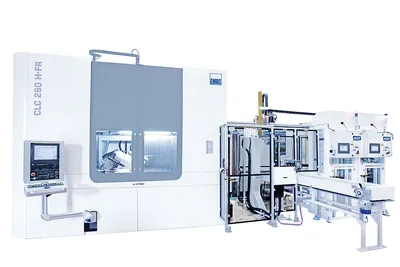
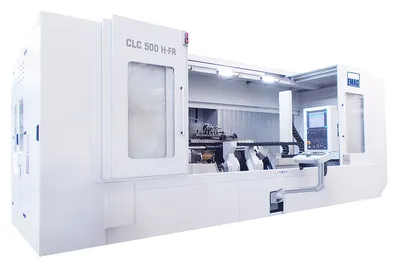
  • 150 mm maximum workpiece diameter limits the HLC 150 H to small gears — larger components require the CLC 260 H or CLC 500 H platforms
  • Module 3.0 mm maximum excludes medium and large-module gearing common in heavy truck, off-highway, and industrial gearbox applications
  • Horizontal configuration requires more floor space than vertical hobbers for the same workpiece envelope
  • Specialized gear cutting machine requires operators with gear manufacturing knowledge for optimal setup and process development
05

Best For

Automotive transmission suppliers producing small pinions, sun gears, and planetary gears in volumes exceeding 100,000 parts annually Power tool and small appliance manufacturers hobbing fine-pitch spur and helical gears for motor-driven assemblies Instrument and servo motor gear producers requiring AGMA 10-12 quality on small-module gears below 3.0 mm module Contract gear shops specializing in prototype to medium-volume small gear production with frequent job changeovers Electric vehicle drive unit manufacturers producing small, high-precision helical gears for compact reduction gearboxes
06

Frequently Asked Questions

01 What is the advantage of horizontal hobbing over vertical hobbing?

Horizontal hobbing provides superior chip evacuation since gravity pulls chips away from the cutting zone, reducing the risk of chip re-cutting and improving surface finish. The horizontal configuration also offers better operator accessibility for workpiece loading and hob changes, which reduces setup time. For small gears where chip management is critical to surface quality, the horizontal layout of the HLC 150 H is advantageous.

02 What gear quality can the HLC 150 H achieve?

The HLC 150 H with its direct-drive spindles and zero-backlash axis synchronization typically achieves AGMA 10-11 quality (DIN 6-7) in production hobbing, with AGMA 12 (DIN 5) achievable under optimal conditions with premium hob tooling. For applications requiring higher quality, the hobbed gears can be finished with subsequent shaving or grinding operations.

03 How does the virtual Y-axis work on the HLC 150 H?

The virtual Y-axis combines 220 mm of linear hob shift travel with a 180-degree hob head swivel. By coordinating these two motions, the control can position the hob cutting point anywhere within a working envelope equivalent to having a physical Y-axis. This approach reduces machine complexity and cost while providing the positioning flexibility needed for various gear forms and hob utilization strategies.

04 Can the HLC 150 H cut worm gears?

Yes, the HLC 150 H supports worm machining via single-index milling with disc cutters. The machine's direct-drive spindles and CNC synchronization enable the precise speed ratios required for worm gear production. However, the 150 mm diameter and 3.0 mm module limits constrain worm gear size to smaller applications such as instrument drives and small actuators.

07

Videos

HLC 150 H - Complete Gear Cutting Solution - EMAG

HLC 150 H - Complete Gear Cutting Solution - EMAG

EMAGLLC

EMAG HLC 150 H Gear Hobbing Machine

EMAG HLC 150 H Gear Hobbing Machine

MTDCNC

HLC 150 H - Kombiniertes Wälzschälen und Wälzfräsen von Stufenplanetenräder

HLC 150 H - Kombiniertes Wälzschälen und Wälzfräsen von Stufenplanetenräder

EMAG

Machine in Focus: HLC 150 H - Solution for E-Car Production

Machine in Focus: HLC 150 H - Solution for E-Car Production

EMAGLLC

EMAG HLC - NEW at EMO 2017

EMAG HLC - NEW at EMO 2017

MTDCNC

08

Related Machines