Industrial CNC Machine Directory

EMAG ELC 160

$350,000 - $600,000 Updated 2026-03-19
EMAG ELC 160 CNC Laser Cutting
01

Key Specifications

Max Workpiece ⌀

160 mm (6.3 in)

nc axes

3-axis NC machining module

configurations

Standard, DUO, TRIO

laser types

CO2, fiber-guided solid-state (fiber, disk)

joining capability

CNC joining press with force/displacement monitoring

process monitoring

CNC-controlled parameters, actual dimension monitoring

02

Overview

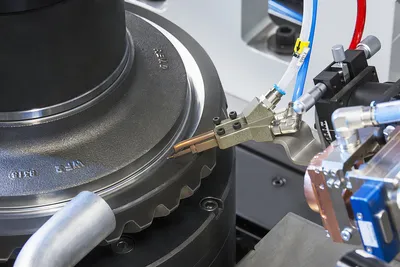
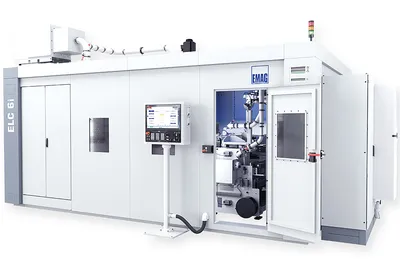
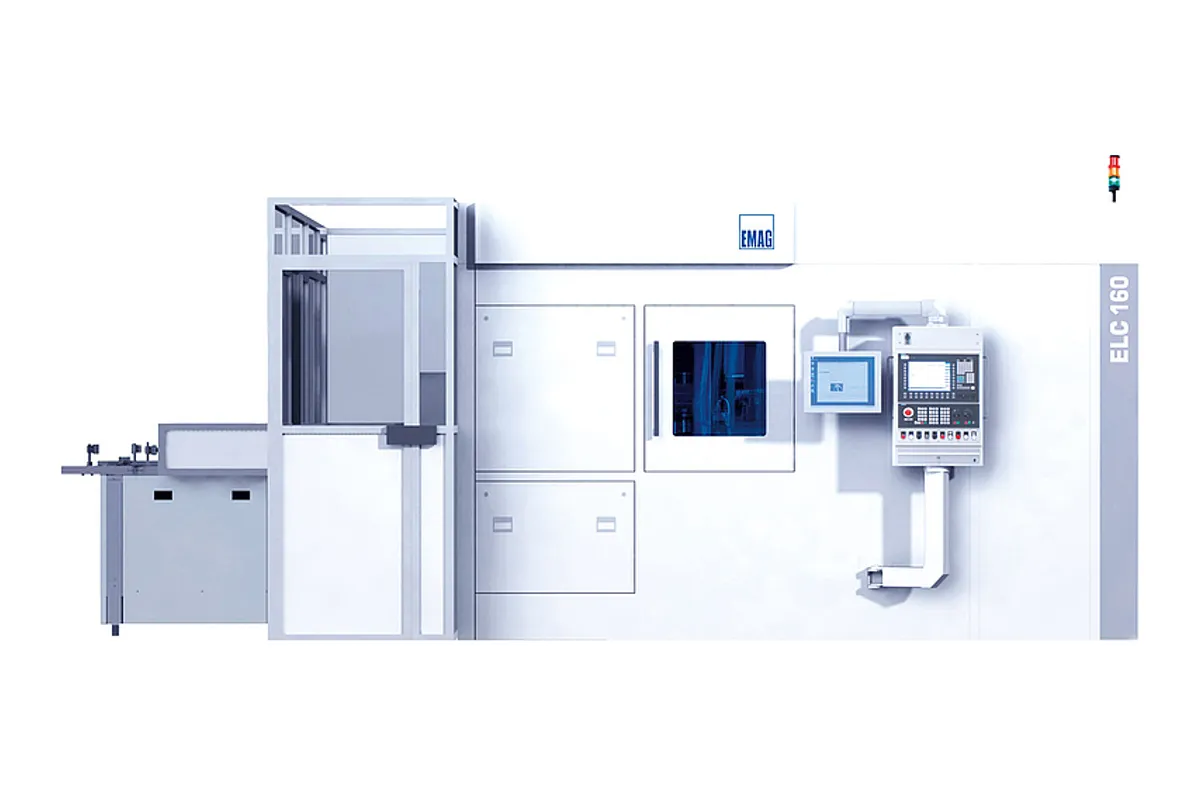
The EMAG ELC 160 is a modular laser welding machine designed for maximum flexibility in production laser welding of automotive and industrial components up to 160 mm in diameter. The machine's modular architecture allows it to be configured for diverse welding tasks across different part families, making it one of the most versatile platforms in EMAG's laser machine lineup. Available in standard, DUO, and TRIO configurations, the ELC 160 scales from single-station applications to high-throughput multi-station production cells.

The heart of the ELC 160 is a three-axis NC machining module that positions the laser beam relative to the workpiece with the precision and repeatability required for production laser welding. The machine supports all major laser technologies including CO2 lasers and fiber-guided solid-state systems (fiber lasers and disk lasers), selected based on the material, joint configuration, and quality requirements of each application. EMAG specifies the use of the latest CO2 lasers with the best possible beam quality for applications demanding it.

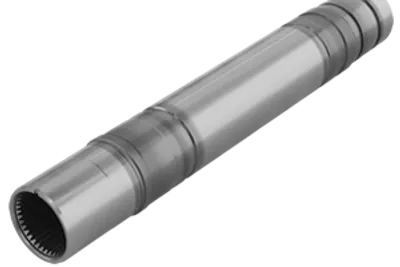
For applications requiring pre-assembly before welding, the ELC 160 integrates a CNC joining press that press-fits synchro bodies and other interference-fit assemblies with integrated force/displacement monitoring to verify the joining process. This combination of joining and welding in a single machine eliminates a standalone press station and the handling between press and weld operations. All quality-related parameters are CNC-controlled and reproducible, with actual dimensions monitored throughout the process.

The DUO and TRIO configurations multiply throughput by adding parallel stations that operate independently, allowing simultaneous production of different parts on the same machine. Each station handles its own loading, clamping, welding, and unloading cycle while sharing the laser source, controls, and enclosure. For component manufacturers producing multiple part numbers at moderate volumes, this multi-station capability provides the throughput of dedicated machines with the flexibility of a single reconfigurable platform.

03

Full Specifications

Parameter Value
Max Workpiece Diameter 160 mm (6.3 in)
Nc Axes 3-axis NC machining module
Configurations Standard, DUO, TRIO
Laser Types CO2, fiber-guided solid-state (fiber, disk)
Joining Capability CNC joining press with force/displacement monitoring
Process Monitoring CNC-controlled parameters, actual dimension monitoring
Magnetic Heating Available for demanding materials
CNC Control Siemens SINUMERIK 840D sl
Independent Stations Up to 3 (TRIO configuration)
Name Matomo(To data protection)
Purpose Tracking/analysis

Specifications sourced from emag.com — verified 2026-03-28

04

Strengths & Limitations

Strengths

  • Modular DUO and TRIO configurations scale throughput with independent stations sharing a single laser source and control
  • Supports all major laser technologies (CO2, fiber, disk) for optimal process matching to material and joint requirements
  • Integrated CNC joining press combines press-fit and welding operations, eliminating a standalone press station
  • Force/displacement monitoring on the joining process and CNC-controlled weld parameters ensure production quality
  • Independent station operation allows simultaneous production of different part numbers on the same machine
  • Magnetic heating capability handles demanding materials that require pre-heating for crack-free welding

Limitations

  • 160 mm maximum diameter limits the machine to small components; larger parts require the ELC 600 or ELC 6 platforms
  • Multi-station TRIO configuration adds significant cost and complexity compared to a single-station setup
  • Application-specific laser source selection adds engineering lead time for new part introductions
  • EMAG's laser welding service expertise is concentrated in Europe, with limited field support in some regions
05

Best For

Automotive powertrain manufacturers welding synchronizer assemblies, clutch components, and small gear assemblies at production rates Component suppliers needing combined press-fit joining and laser welding in a single automated cell Manufacturers producing multiple small part numbers who benefit from independent multi-station operation on a shared platform Precision component producers requiring CNC-controlled welding parameters with in-process quality monitoring Plants needing flexible laser welding capacity that can be reconfigured for different products without replacing the machine
06

Frequently Asked Questions

01 What is the difference between the ELC 160 Standard, DUO, and TRIO?

The Standard has one welding station, the DUO has two, and the TRIO has three independent stations sharing a single laser source and control system. Each station operates independently, allowing simultaneous production of different parts. The multi-station configurations provide higher throughput without requiring multiple complete machines.

02 What does the integrated CNC joining press do?

The CNC joining press performs interference-fit assembly operations (like press-fitting synchro bodies onto hubs) with integrated force and displacement monitoring. This combines the press-fit and welding operations in a single machine, ensuring that joining parameters are verified before welding begins.

03 Which laser type should I choose?

The laser source is selected based on material, joint geometry, and quality requirements. CO2 lasers offer excellent beam quality for certain applications. Fiber and disk lasers provide high efficiency and low maintenance for most production welding. EMAG's application engineering team recommends the optimal laser source during project specification.

04 What materials can the ELC 160 weld?

The ELC 160 welds a range of steels, including carbon steel, alloy steel, and case-hardened materials. The optional magnetic heating capability enables pre-heating for crack-sensitive materials like high-carbon steels. Specific material suitability depends on the laser source and process parameters configured for each application.

07

Videos

EMAG Laser welding systems ELC 160 - EMAG Videos

EMAG Laser welding systems ELC 160 - EMAG Videos

EMAG

EMAG ELC 160 - The EMAG Laser Cell

EMAG ELC 160 - The EMAG Laser Cell

MTDCNC

EMAG Video Laserschweißmaschine ELC 160 HP

EMAG Video Laserschweißmaschine ELC 160 HP

EMAG

EMAG K 160 Gear Hobbing Solution - Robust Gear

EMAG K 160 Gear Hobbing Solution - Robust Gear

EMAGLLC

LC 4-2 Laser Cleaning Machine from EMAG LaserTec - EMO 2019

LC 4-2 Laser Cleaning Machine from EMAG LaserTec - EMO 2019

EMAGLLC

08

Related Machines